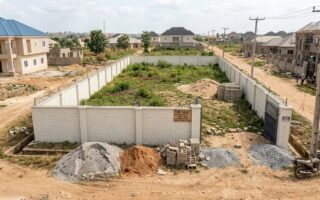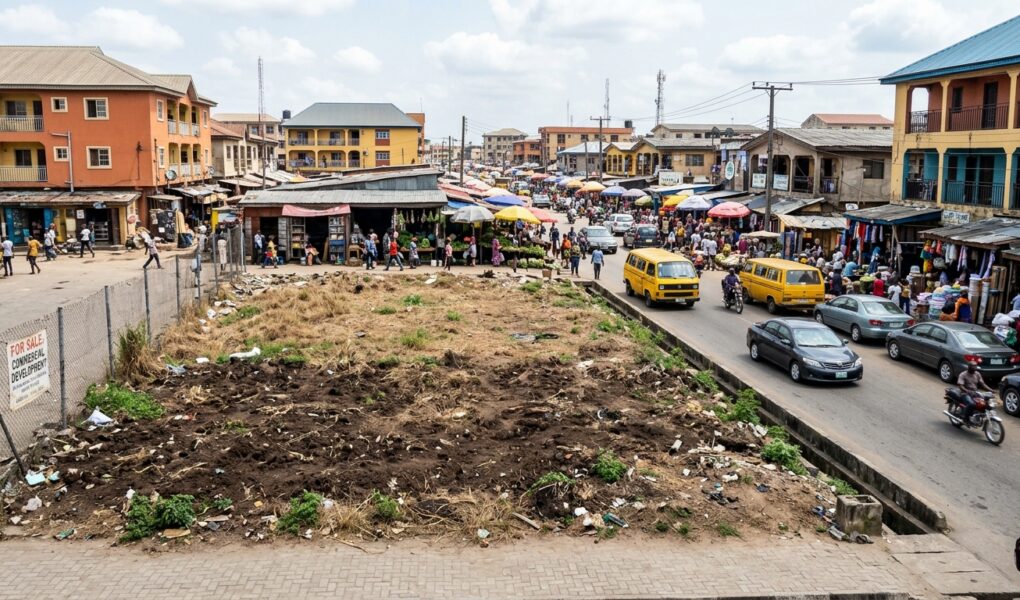
Buying land near a commercial market can be an attractive real estate investment in Nigeria. Markets attract traders, shoppers, transport operators, wholesalers, retailers, and other businesses that depend on regular customer traffic. As a result, land located close to a busy market may offer opportunities for commercial development, rental income, and long-term property appreciation.
However, not every plot beside a market is a good investment. Some locations experience heavy traffic, poor drainage, excessive noise, sanitation problems, and land disputes. Others may be affected by market expansion, government road projects, or restrictions on the type of buildings permitted in the area.
Before investing your money, it is important to understand the advantages, risks, and factors that determine whether land beside a commercial market is worth buying.
This guide explains what Nigerian property buyers should consider before purchasing land near a market and how to determine whether the location offers genuine investment potential.
1. Why Land Beside a Commercial Market Can Be Valuable
The location of a property plays an important role in its potential value. Commercial markets bring together people who buy and sell goods and services every day. This activity can create demand for nearby properties.
For example, traders may need shops, storage facilities, offices, parking spaces, and accommodation for workers. Transport operators may also require convenient locations for their activities.
When land is situated in an area where these needs are not adequately met, property owners may benefit from the demand.
However, proximity alone does not guarantee profitability. The market must generate sustainable economic activity, and the land must be suitable for the intended use.
2. Potential Benefits of Buying Land Near a Market
A. Opportunities for Commercial Development
Land beside a busy market may be suitable for developing shops, small shopping complexes, warehouses, offices, or other commercial properties.
For example, an investor who purchases a suitable plot near a growing market in Ibadan, Lagos, Abeokuta, or another Nigerian city might eventually develop lock-up shops for rent.
The success of such a project depends on factors such as the number of traders, customer demand, available parking, road accessibility, and competing commercial properties.
Before purchasing land for this purpose, investigate whether the relevant planning authorities permit commercial development on the property.
B. Potential for Rental Income
One major attraction of commercial property is the possibility of generating recurring rental income.
Businesses often prefer locations that are convenient for their customers and suppliers. If your property is accessible and offers the facilities tenants need, you may be able to rent it to traders, distributors, service providers, or other businesses.
Nevertheless, do not assume that every market location has strong rental demand. Some markets already have too many vacant shops, while others may be expanding faster than the demand for commercial space.
Speak with existing landlords and local property professionals to understand actual rental rates and vacancy levels before making a decision.
C. Possible Long-Term Appreciation
Land in a commercially active area may appreciate when the surrounding neighbourhood develops.
Improvements such as better roads, increased trading activity, new residential estates, improved public transportation, and additional businesses can make a location more attractive.
However, appreciation is not automatic. Land prices may remain stagnant or decline if the market loses customers, access becomes difficult, the area deteriorates, or too much commercial space is developed.
Consider the long-term development prospects of the neighbourhood rather than relying solely on the market’s current popularity.
D. Multiple Potential Uses
Depending on the land’s size, location, accessibility, and permitted use, a plot near a commercial market may support different projects.
Possible uses include:
- Retail shops and small commercial complexes.
- Warehouses and storage facilities.
- Offices and business centres.
- Food outlets and other customer-facing businesses.
- Parking facilities, where permitted.
- Mixed-use buildings with commercial space and residential accommodation, where planning rules allow.
These possibilities can provide flexibility if your original investment plan changes.
However, the availability of several potential uses does not mean you can legally use the property for all of them. Confirm the applicable land-use designation and development requirements before purchasing.
3. The Risks of Buying Land Beside a Commercial Market
Although market-side land can offer opportunities, it also comes with risks that buyers should investigate carefully.
A. Traffic Congestion and Difficult Access
Busy markets often attract commercial vehicles, buses, motorcycles, private cars, and pedestrians.
If the surrounding roads are narrow or poorly designed, traffic congestion may make it difficult for customers, tenants, and suppliers to reach your property.
A plot that appears attractive during a quiet inspection may become inconvenient during peak trading hours.
Before buying, visit the location on a busy market day. Observe how vehicles move, whether customers can access nearby properties easily, and whether loading and unloading activities obstruct entrances.
Also consider whether road expansion could affect the land in the future.
B. Noise and Environmental Pollution
Markets can generate significant noise from traders, vehicles, generators, loading activities, and public announcements.
Waste disposal, smoke, dust, and unpleasant odours may also affect the surrounding environment.
These conditions can reduce the attractiveness of a property intended for residential use.
For instance, a plot directly beside a busy food market may be suitable for shops but less appealing for a quiet family home.
Your intended use should therefore influence your purchasing decision.
C. Drainage and Flooding Problems
Poor drainage is a serious issue in some Nigerian commercial districts.
Markets generate waste, and blocked drainage channels can contribute to flooding during the rainy season. Water may accumulate on nearby roads or flow into adjoining properties.
Before paying for land, inspect the drainage system and ask people who live or work nearby about previous flooding incidents.
If possible, visit after heavy rainfall to see how water moves through the area.
A plot with poor drainage may require additional development costs, while severe flooding can discourage potential tenants and reduce the property’s long-term appeal.
D. Market Expansion and Encroachment
A market that is expanding may create opportunities for nearby landowners. However, expansion can also introduce uncertainty.
Informal trading structures may spread onto adjoining land, access roads may become obstructed, and disagreements may arise over property boundaries.
In some locations, public authorities may also undertake road widening, market redevelopment, or other infrastructure projects that affect nearby plots.
Confirm your boundaries with a qualified surveyor and investigate any proposed public projects that could affect the property.
Do not assume that a fence alone will resolve an ownership or boundary dispute.
E. High Purchase Prices
Sellers may demand premium prices for land near a popular market because they expect strong commercial demand.
Unfortunately, an expensive plot is not necessarily a profitable investment.
A seller might quote a price based on future development potential that has not yet materialised. If you buy at an inflated price, the cost of the land and subsequent development may exceed what the market can reasonably support.
Compare recent transactions involving similar plots, rather than relying exclusively on asking prices.
Calculate the total cost of acquisition and development before deciding whether the investment makes financial sense.
F. Oversupply of Shops and Commercial Properties
A market can be busy without creating enough demand for every nearby commercial property.
If numerous developers construct shops at the same time, the area may experience high vacancy rates and competition for tenants.
Before buying, investigate the number of vacant shops, the length of time properties remain unoccupied, and whether existing landlords are reducing their rents.
These details may reveal more about the investment’s prospects than the apparent popularity of the market.
4. Is Land Beside a Market Better for Commercial or Residential Use?
The answer depends on the property’s exact location, its permitted use, and your investment objectives.
Commercial Use
Commercial development may be appropriate when the land is easily accessible, customer traffic is strong, businesses need additional space, and the relevant planning authorities permit the proposed development.
Potential projects include retail shops, offices, storage facilities, and other business premises.
The most important consideration is whether the expected rental income or resale value can justify the purchase and development costs.
Residential Use
Residential development may be more suitable when the plot is slightly removed from the market’s busiest activities.
For example, a property located on a quiet street a short distance from a commercial market may offer residents convenient access to shopping without exposing them to constant noise and congestion.
However, residential development should only proceed where the applicable planning rules permit it.
Mixed-Use Development
In some locations, a mixed-use building may provide a balance between commercial and residential opportunities.
The ground floor could accommodate shops, while the upper floors might provide offices or residential accommodation, subject to planning approval and suitable building design.
This arrangement may diversify rental income, but it can also introduce additional construction, management, security, and maintenance costs.
Do not choose a mixed-use project simply because it appears to offer more income streams. Confirm that there is genuine demand for each component.
5. Seven Things to Check Before Buying Market-Side Land
If you are considering purchasing land beside a commercial market in Nigeria, investigate these seven areas before making payment.
1. Verify the Land Documents
Do not assume that land is safe to buy simply because it is located in a commercially attractive area.
Ask for the relevant title documents and have a qualified property lawyer investigate the ownership history, the seller’s authority to transfer the property, and any existing encumbrances.
Depending on the location and circumstances, the checks may involve a registered title, a Certificate of Occupancy, a deed of assignment, survey documents, or other relevant records.
The appropriate documents and verification process depend on the property’s legal status and the applicable state laws.
Where necessary, conduct searches with the relevant land registry and other appropriate authorities.
2. Confirm the Survey and Boundaries
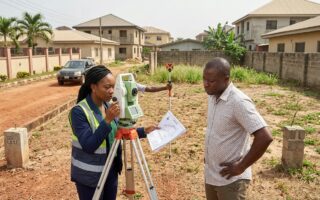
Engage a qualified surveyor to establish the property’s location, dimensions, and boundaries.
The survey should help determine whether the plot corresponds with the land being offered for sale and whether any boundary issues require further investigation.
Pay particular attention to roads, drainage channels, adjoining market structures, and areas where informal trading may have spread.
If the seller claims that a plot is beside the market, verify its actual position rather than relying on photographs or verbal descriptions.
3. Check the Permitted Land Use
A plot close to a market may appear ideal for shops, but that does not automatically mean commercial development is permitted.
Contact the appropriate planning authority to determine the property’s land-use designation and the requirements for your proposed project.
Find out whether approvals, setbacks, access requirements, environmental considerations, or other restrictions could affect development.
This step can prevent you from purchasing land that cannot legally be used for your intended purpose.
4. Investigate Drainage and Flood Risk
Inspect the plot and surrounding roads for signs of flooding, erosion, stagnant water, and blocked drains.
Ask neighbouring property owners about conditions during the rainy season.
Check whether the land sits below the surrounding road level and whether development would require substantial drainage or filling work.
Where necessary, obtain professional advice about the site’s suitability for construction.
5. Assess Commercial Demand
Speak with traders, shop owners, landlords, and property agents operating in the area.
Ask about current rents, vacancy rates, customer traffic, and the demand for new commercial space.
Determine whether businesses are expanding or struggling to attract customers.
If your plan is to build shops, estimate the rental income that the property could realistically generate rather than assuming that every unit will be occupied.
6. Examine Access Roads and Parking
A commercially attractive property should be accessible to the people expected to use it.
Check the road conditions, pedestrian access, vehicle movement, loading areas, and availability of parking.
Consider whether customers can enter and leave the premises conveniently during busy periods.
A plot beside the market entrance may receive significant exposure but also suffer from congestion. A slightly more distant plot on a better road might provide a more practical investment.
7. Calculate the Full Investment Cost
The purchase price is only one part of the investment.
Your budget should account for applicable legal and documentation costs, survey expenses, taxes and statutory charges, professional fees, planning approvals, site preparation, construction, drainage, security, maintenance, and a contingency for unexpected expenses.
If the land is intended to generate rental income, also estimate vacancy periods, ongoing management expenses, and the cost of attracting tenants.
Compare the expected returns with the total amount you will invest.
A property that appears cheap at first may become expensive when development and operating costs are included.
6. How to Determine Whether the Investment Can Be Profitable
Before purchasing the land, create a simple financial projection.
Suppose you are considering a plot near a commercial market and intend to construct six shops.
For illustration, assume the following figures:
- Land purchase and acquisition costs: ₦15,000,000.
- Construction and development costs: ₦12,000,000.
- Total initial investment: ₦27,000,000.
- Number of shops: 6.
- Illustrative annual rent per shop: ₦1,200,000.
If all six shops are occupied and pay the stated rent for a full year, the total annual rental income would be:
6 × ₦1,200,000 = ₦7,200,000.
The simple gross rental yield would be:
₦7,200,000 ÷ ₦27,000,000 × 100 = approximately 26.7%.
At first glance, this may appear attractive. However, this is a hypothetical example, not a statement of current Nigerian land prices or market rents.
It also assumes full occupancy and excludes expenses such as repairs, property management, taxes and statutory charges, insurance where applicable, periods without tenants, and other operating costs.
Actual net returns could be substantially lower.
You should also account for financing costs if you borrow money to purchase or develop the property.
The example demonstrates why you should estimate both potential income and total expenditure before making a purchase.
Consider the Break-Even Point
Ask how long it could take for the investment to recover its initial cost from net rental income.
For example, if the total investment is ₦27 million and the property generates ₦4.5 million in annual net income after operating expenses, the simple payback period would be six years.
This calculation assumes that net income remains constant and does not account for the time value of money, major future repairs, financing arrangements, or resale proceeds.
Use conservative estimates rather than assuming that every shop will remain occupied or that rents will increase every year.
7. Questions to Ask Before Paying for the Land
Before committing your money, ask the seller and investigate the following:
- Who legally owns the land, and can the ownership be independently verified?
- Are the title documents genuine and appropriate for the transaction?
- Is the land affected by any dispute, government acquisition, mortgage, or other encumbrance?
- Is the plot approved for the type of development I intend to undertake?
- Does the area experience flooding or serious drainage problems?
- Are there existing commercial properties nearby with vacant units?
- What are the realistic rental rates for similar properties?
- Is the asking price supported by comparable transactions?
- Are there planned roadworks, market expansions, or public projects that could affect the land?
- Will the expected returns justify the total acquisition and development costs?
Do not rely exclusively on the seller’s answers. Verify important claims independently through the appropriate professionals and authorities.
8. Common Mistakes Investors Should Avoid
Several mistakes can turn an apparently attractive market-side investment into a financial burden.
Buying because the market is busy: High customer traffic does not automatically mean strong demand for additional shops or warehouses.
Ignoring the property’s legal status: A valuable location cannot compensate for defective title, disputed ownership, or restrictions that prevent your intended use.
Underestimating development costs: Construction, drainage, access improvements, security, and approvals can significantly increase the total investment.
Assuming prices will always rise: Commercial areas can decline, and land appreciation is never guaranteed.
Failing to investigate flooding: Poor drainage can increase maintenance expenses and make the property difficult to develop or rent.
Paying without inspecting the site: Photographs and descriptions may not reveal access problems, encroachment, boundary disputes, or environmental concerns.
Ignoring competition: Too many similar commercial properties can reduce rental income and increase vacancy periods.
Buying without an exit strategy: Consider who might purchase the land from you if you later need to sell. A property with a narrow range of potential buyers may be harder to dispose of quickly.
9. When Should You Avoid Buying Land Beside a Commercial Market?
You should consider walking away if serious problems emerge during your investigation.
These may include unresolved ownership disputes, suspicious documentation, unclear boundaries, significant flood risks, prohibited development, or evidence that the property is affected by government acquisition.
You should also be cautious when the seller demands immediate payment but refuses to allow independent legal and survey checks.
Financial concerns matter too. If the asking price depends on unrealistic rental projections or if similar commercial properties remain vacant for extended periods, the investment may not justify the risk.
A seller’s claim that the land will double in value within a short period should never replace independent research.
Remember that declining a risky transaction is often better than trying to recover money after a costly mistake.
10. How to Choose the Right Plot Near a Market
If you decide that market-side land suits your investment goals, compare several plots instead of buying the first one you see.
Look for a location with reliable access, appropriate planning status, verified ownership, manageable environmental risks, and evidence of genuine commercial demand.
Consider the distance from the market, the condition of surrounding roads, the availability of utilities, the character of neighbouring properties, and the potential for future development.
Also assess whether the land is close enough to benefit from commercial activity without being exposed to the worst effects of congestion, noise, and waste.
Most importantly, match the plot to a clear investment strategy.
An investor planning to construct shops should focus on customer access, rental demand, and development costs. Someone buying land to hold for appreciation should investigate long-term infrastructure plans, neighbourhood growth, legal security, and the likely demand for the land in the future.
The right property is not necessarily the one closest to the market. It is the one whose location, legal status, price, and potential use align with your objectives.
Conclusion: Is Land Beside a Commercial Market a Good Investment?
Yes, land beside a commercial market can be a good investment in Nigeria, particularly when the area has sustainable trading activity, convenient access, strong demand for commercial space, and realistic prospects for development.
It may offer opportunities to build shops, create rental income, establish business premises, or benefit from long-term appreciation.
However, these benefits are not guaranteed. Traffic congestion, flooding, environmental problems, oversupply, legal disputes, and excessive purchase prices can undermine the investment.
Before buying, verify the property’s ownership and boundaries, confirm the permitted land use, inspect the location carefully, investigate rental demand, and calculate the total cost of acquisition and development.
The smartest approach is to buy based on verified facts, realistic financial projections, and a clear investment plan—not simply because a plot is beside a busy market.
A commercially active location can create opportunities, but careful investigation is what helps you distinguish a promising investment from an expensive mistake.