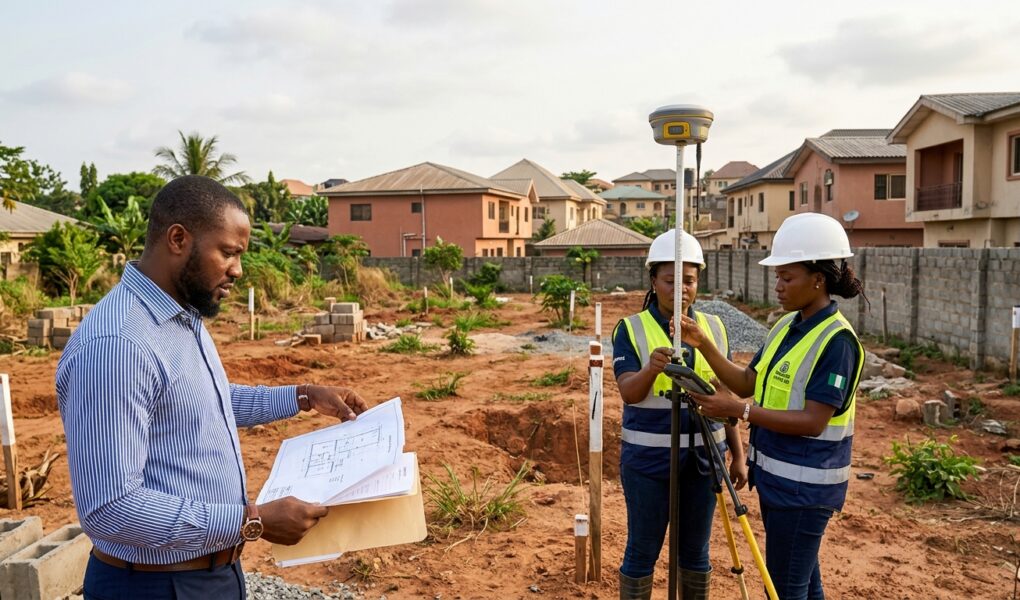
Imagine buying a plot of land in Nigeria after the seller assures you that it measures 500 square metres. You pay the agreed price, collect your documents, and begin planning your building project.
However, when you hire a registered surveyor to measure the land, you discover that the actual plot is significantly smaller than the size you were promised.
Instead of 500 square metres, the survey reveals only 380 square metres.
What happens next? Have you lost part of your investment? Can you demand a refund? Is the seller responsible for the difference? And what should you do if the seller insists that the land is the correct size?
These questions matter because the size of a plot can affect its market value, building potential, accessibility, and suitability for your plans.
In Nigeria, discrepancies between an advertised plot size and the actual surveyed area can arise for several reasons. Sometimes, the problem is a simple measurement error. In other cases, it may indicate encroachment, inaccurate documentation, a boundary dispute, or deliberate misrepresentation.
Understanding the cause is essential before deciding how to respond.
This article explains what to do when a land survey reveals a different plot size, the possible consequences, and how to protect your investment.
1. Confirm the Actual Size With a Registered Surveyor
Your first step should be to confirm the survey findings.
Do not immediately accuse the seller of fraud simply because the new measurements differ from the information you received.
Ask the surveyor to explain how the measurements were obtained and how the actual area compares with the plot description in your purchase documents.
Review the available records, including:
- The survey plan supplied by the seller.
- Your purchase agreement or contract of sale.
- The deed of assignment, where applicable.
- Any allocation letter issued by an estate developer.
- The dimensions and boundaries stated in the property documents.
- Any previous survey reports or land measurement records.
A registered surveyor can help establish whether the discrepancy results from an incorrect measurement, an inaccurate survey plan, a boundary problem, or a difference between the advertised and legally described property.
For example, the seller may have described the property as 500 square metres even though the survey plan shows a smaller area.
Alternatively, the plan may indicate the expected dimensions, but part of the land may now be occupied by a neighbouring property.
These are different problems and may require different solutions.
Before negotiating compensation or considering legal action, obtain a reliable assessment of the property’s actual boundaries and area.
2. Calculate the Difference Between the Promised and Actual Plot Size
Once the measurements have been verified, calculate how much land is missing.
This helps you understand the extent of the discrepancy and provides a basis for discussions with the seller.
Suppose you purchased land advertised as 500 square metres, but a reliable survey establishes that it measures only 400 square metres.
The difference is:
500 − 400 = 100 square metres.
To calculate the percentage shortfall:
Percentage shortfall = (Missing area ÷ Promised area) × 100.
In this example:
(100 ÷ 500) × 100 = 20%.
The land is therefore 20% smaller than the size promised.
Here is another illustration:
| Promised plot size | Actual surveyed size | Missing area | Shortfall |
|---|---|---|---|
| 500 m² | 450 m² | 50 m² | 10% |
| 500 m² | 400 m² | 100 m² | 20% |
| 600 m² | 480 m² | 120 m² | 20% |
| 1,000 m² | 850 m² | 150 m² | 15% |
These examples illustrate how to calculate a discrepancy; they are not standard Nigerian plot sizes.
Keep in mind that a smaller area does not always translate directly into an equivalent percentage reduction in market value. Shape, frontage, access, location, building restrictions, and the position of the missing portion can also affect the property’s value.
Nevertheless, knowing the difference gives you a clearer starting point for discussions.
3. Find Out Why the Plot Size Is Different
The cause of the discrepancy may determine the most appropriate solution.
Several situations are possible.
The Seller Provided an Incorrect Measurement
The seller may have advertised the land using an inaccurate estimate or relied on information supplied by a previous owner.
Although the mistake may not have been deliberate, the difference could still be important if the plot size influenced your decision to purchase.
Review the purchase agreement and any written representations concerning the size of the land.
Your legal rights may depend on the terms of the agreement, the nature of the representation, and the applicable law.
The Survey Plan Is Incorrect
An old or inaccurate survey plan may not correspond with the actual boundaries on the ground.
If this is the problem, your surveyor should investigate the discrepancy and explain whether a correction or further verification is necessary.
Do not alter a survey plan yourself or assume that a newly prepared plan automatically resolves an existing title or boundary problem.
A Neighbour Has Encroached on the Property
Sometimes, a plot becomes smaller because a neighbour has extended a fence, building, or other structure into the land.
The discrepancy may therefore involve encroachment rather than an original error in the sale.
Your surveyor can help identify the boundaries, while your lawyer can advise on the appropriate steps to address the encroachment.
Do not demolish the structure or attempt to recover the disputed area by force.
The Developer Allocated a Smaller Plot
In an estate development, the plot you received may not match the dimensions stated in your allocation documents or purchase agreement.
This could result from an allocation error, a planning change, a revised layout, or a disagreement over how the plot was measured.
Ask the developer to explain the discrepancy in writing and provide the relevant layout and survey information.
Do not assume that a verbal explanation changes the terms of your original agreement.
The Seller Deliberately Misrepresented the Size
In a more serious situation, a seller may knowingly advertise a larger plot to obtain a higher price.
If the evidence suggests deliberate deception, preserve the relevant advertisements, messages, payment records, agreements, and survey findings.
Consult a property lawyer about your legal options.
A discrepancy alone does not prove fraud. The circumstances and available evidence must be examined before reaching that conclusion.
4. Review Your Purchase Agreement Carefully
Your purchase agreement is an important starting point when determining what to do next.
Look for the exact description of the property and any statements about its dimensions or area.
Ask your lawyer to examine whether the agreement:
- Specifies an exact area in square metres or another unit.
- Provides the dimensions or boundaries of the plot.
- Refers to an attached survey plan.
- Describes the land by reference to fixed boundaries rather than area alone.
- Contains provisions addressing measurement discrepancies.
- States what happens if the property differs from the description.
- Includes relevant representations or warranties by the seller.
- Provides a procedure for resolving disputes.
The distinction between an agreement for a precisely measured area and an agreement for a clearly identified plot sold as a whole may be important.
For example, a contract that expressly promises 500 square metres may raise different questions from one that identifies a particular plot by its boundaries without guaranteeing an exact area.
However, neither situation should be assessed in isolation. The entire agreement, the seller’s statements, the property’s identification, and the surrounding circumstances may matter.
Do not assume that a clause saying the land is sold as seen automatically protects a seller who has made a false statement about its size.
Equally, do not assume that every measurement discrepancy automatically entitles you to a refund.
Your lawyer should assess the facts before you decide how to proceed.
5. Contact the Seller or Developer in Writing
Once the discrepancy has been confirmed, notify the seller or developer.
Explain the difference between the promised and surveyed area and attach the relevant findings where appropriate.
Keep your communication factual and professional.
For example, if the purchase documents describe the property as 500 square metres but the survey establishes an area of 420 square metres, state the discrepancy and request an explanation.
Ask the seller to clarify:
- Why the measurements differ.
- Whether the seller accepts the survey findings.
- Whether another survey is necessary.
- Whether the boundaries match the original agreement.
- What solution the seller proposes.
Request a written response and retain copies of all correspondence.
Avoid relying exclusively on telephone calls or verbal promises.
If the seller says that the discrepancy is insignificant, ask them to explain the basis of that position.
A documented discussion may help resolve a genuine mistake and can also preserve evidence if the dispute later requires legal action.
6. Can You Demand a Refund for the Missing Land?
Depending on the circumstances, you may have grounds to request a partial refund, renegotiate the purchase price, seek additional land, or pursue another legal remedy.
However, the appropriate outcome depends on the agreement and the nature of the discrepancy.
Consider a hypothetical example.
You paid ₦20 million for land represented as measuring 500 square metres. A reliable survey later establishes that the plot measures 400 square metres.
The shortfall is 20%.
If the original price were reduced strictly in proportion to the area, the illustrative calculation would be:
₦20 million × 20% = ₦4 million.
Under that simplified approach, a buyer might seek a ₦4 million price adjustment.
However, this is only a mathematical illustration, not a guaranteed legal entitlement or an automatic valuation of the missing land.
The actual market value may not be proportional to the area. The contract may also contain relevant provisions, and the circumstances could require a different remedy.
If the seller knowingly misrepresented the property, the legal implications may differ from a situation involving an honest measurement error.
Have a property lawyer review your documents and advise whether a price adjustment, refund, rescission, damages, or another remedy is available.
7. What If the Seller Refuses to Accept the Survey Results?
A seller may dispute the survey findings or insist that the plot is the size originally promised.
If this happens, avoid allowing the disagreement to become a personal confrontation.
First, ask your surveyor to explain the measurements and supporting evidence.
If necessary, arrange for an independent surveyor to review the work or conduct a further survey.
The parties may also need to agree on the precise boundaries being measured.
For example, one person may be measuring the land within an existing fence, while the original documents describe a larger area extending beyond that fence.
The issue may therefore be the boundary itself rather than the survey calculation.
If the parties cannot agree, your lawyer may recommend formal correspondence, negotiation, mediation, or court proceedings.
Do not sign a new agreement accepting the smaller area until you understand its effect on your rights.
Likewise, avoid making threats or attempting to force the seller to refund money without considering the appropriate legal process.
8. What If the Land Is Smaller Because a Neighbour Has Encroached on It?
A different approach may be required when the survey reveals that a neighbour has occupied part of the land.
For example, you purchase a plot that should measure 500 square metres, but a neighbouring fence appears to occupy part of the area.
A surveyor should establish the boundary and identify the extent of the possible encroachment.
Your lawyer can then advise on the appropriate steps, which may include notifying the neighbour, contacting the seller, negotiating a boundary correction, or pursuing legal proceedings.
It is important to determine when the encroachment occurred and whether the seller disclosed the problem.
If the seller transferred the land while another person was already occupying part of it, the transaction may raise questions about what was promised and whether the seller fulfilled their obligations.
If the encroachment occurred after the purchase, the issue may instead involve protecting your property rights against the neighbour.
The legal remedy depends on the facts, the nature of your title, and the applicable law.
Do not assume that you should demand compensation from the seller before investigating the circumstances.
9. What If the Developer Says the Plot Size Is Only an Estimate?
Some sellers and developers advertise land using approximate measurements.
However, whether a particular measurement is merely an estimate or a binding part of the transaction depends on how the property was marketed, what the agreement states, and the circumstances surrounding the sale.
Review the original advertisement, brochure, allocation letter, purchase agreement, and any messages exchanged before payment.
If the developer repeatedly represented the property as a specific size, that information may be relevant when assessing the dispute.
Ask the developer to explain the basis of the measurement and identify the boundaries of the allocated plot.
If the actual area differs substantially from what you reasonably understood you were purchasing, seek legal advice before accepting the explanation.
A buyer should not automatically assume that a developer can change the agreed plot size simply by describing the original figure as an estimate after payment has been made.
10. Should You Accept the Smaller Plot?
Sometimes, accepting the smaller plot may be a practical option. In other situations, it may be a costly mistake.
The decision should depend on the property’s actual dimensions, your intended use, the price paid, and the available remedies.
Before deciding, consider the following questions.
Is the Remaining Land Suitable for Your Plans?
If you intend to build a family home, a smaller plot may affect the building footprint, parking, outdoor space, setbacks, and other planning considerations.
Consult an architect or qualified building professional to determine whether your proposed design can fit within the actual boundaries and comply with applicable planning requirements.
Is the Missing Area Important to the Property’s Value?
The impact may depend on the plot’s shape and location.
Losing land along the frontage may affect access or development possibilities more than losing an equivalent area from a less critical portion.
A property valuation professional may help assess the commercial implications.
Will Accepting the Smaller Plot Affect Your Legal Position?
Signing an amended agreement or accepting compensation may affect your ability to make further claims.
Have your lawyer review any proposed variation, settlement, or waiver before agreeing to it.
Is the Seller Offering Fair Compensation?
If you decide to keep the smaller plot, negotiate based on the facts, the agreement, and an appropriate assessment of the property’s value.
Do not accept an arbitrary figure simply because the seller insists that it is reasonable.
Ultimately, accepting the smaller plot should be an informed decision rather than a response to pressure.
11. What Documents Should You Keep?
If a survey reveals a different plot size, preserve all records connected with the transaction and the subsequent investigation.
These may include:
- The original purchase agreement.
- The deed of assignment or other relevant transfer documents.
- The seller’s original survey plan.
- The new survey report and plan.
- The allocation letter, where applicable.
- Receipts and bank transfer records.
- Advertisements describing the property.
- Messages and emails discussing the plot size.
- Written explanations from the seller or developer.
- Photographs showing the property’s boundaries.
- Reports from independent surveyors or valuation professionals.
- Correspondence with your lawyer.
These documents may help establish what was promised, what was delivered, and how the discrepancy was discovered.
Store the original documents safely and maintain digital copies.
If the matter progresses to mediation or court proceedings, a well-organised record can make it easier to explain the dispute.
12. How to Prevent Plot Size Disputes Before Buying Land
The best way to handle a measurement discrepancy is to reduce the likelihood of one arising in the first place.
Before buying land in Nigeria, take the following precautions.
Hire an independent registered surveyor. Do not rely entirely on measurements provided by the seller or developer. Arrange for the plot to be identified and measured independently.
Compare the survey plan with the physical property. Confirm that the plot on the plan corresponds with the land shown to you.
Review the purchase agreement. Ensure that the description of the land is clear and that any promised dimensions are accurately documented.
Inspect the property before payment. Look for existing fences, buildings, encroachments, and other features that may affect the boundaries.
Verify the seller’s authority and title. A survey identifies the land’s physical boundaries; it does not, by itself, establish that the seller owns the land or has authority to transfer it.
Check estate layouts carefully. If you are buying within a development, ask for the relevant layout and allocation details and confirm that your specific plot can be identified.
Clarify the measurement before completing the purchase. If the seller uses an approximate figure, ask what that means and how the property will be identified in the agreement.
Keep written evidence of representations. Preserve the advertisement, brochure, purchase terms, and relevant messages describing the land.
Avoid rushing into payment. Pressure to pay immediately should not prevent you from conducting essential checks.
A relatively small investment in professional verification before purchase may help you avoid a much larger dispute later.
Conclusion
When a land survey reveals a different plot size from what you were promised, the most important step is to establish the facts before deciding what to do.
Confirm the measurements with a registered surveyor, calculate the difference, investigate the cause, and review your purchase agreement.
Then notify the seller or developer in writing and seek legal advice about your available options.
Depending on the circumstances, the appropriate solution may involve correcting the boundaries, obtaining additional land, negotiating a price adjustment, seeking a refund, or pursuing another legal remedy.
Do not assume that every discrepancy proves fraud or that every shortfall automatically entitles you to compensation. The outcome depends on the transaction documents, the seller’s representations, the property’s actual boundaries, and the applicable law.
Most importantly, verify the size and identity of a plot before completing a land purchase whenever possible.
At Qadeva.com, we encourage Nigerian property buyers to look beyond the asking price and examine the documents, boundaries, and practical details that determine the true value of a land investment.
Disclaimer: This article provides general educational information about Nigerian real estate and is not a substitute for legal advice. Land laws and transaction requirements may vary by state and by the circumstances of each purchase. Consult a qualified property lawyer and registered surveyor for advice on your specific situation.a