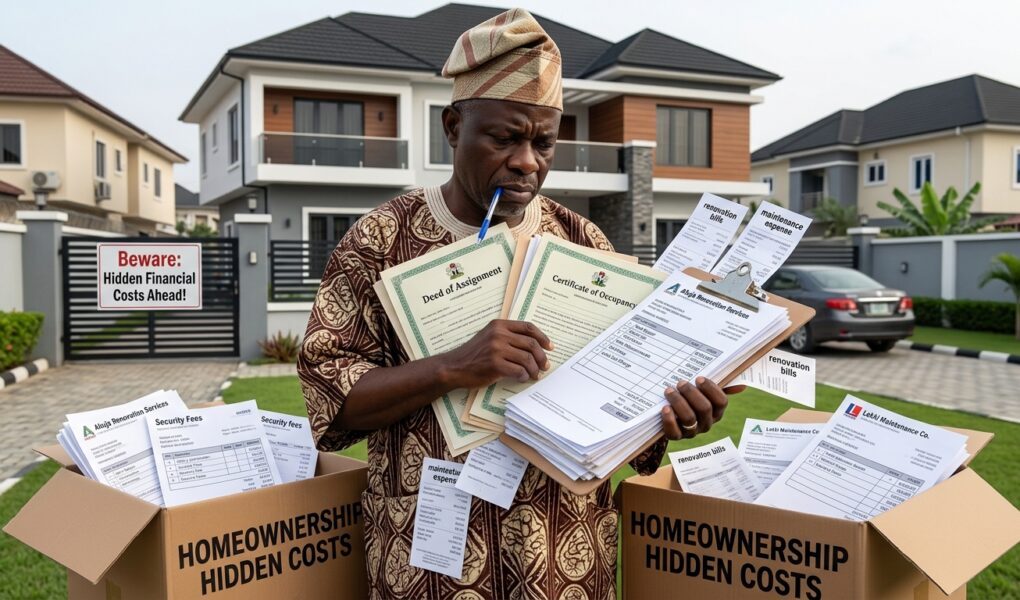
Buying a house in Nigeria is a major financial achievement. For many people, it represents years of hard work, careful savings, and the desire to provide a stable home for their families. However, one mistake many prospective homeowners make is focusing only on the purchase price while ignoring the other expenses that come with owning a property.
A house advertised for ₦30 million may appear affordable to someone who has saved enough for the purchase. Unfortunately, the financial commitment does not end when the seller receives payment and hands over the keys. From legal documentation and property taxes to repairs, security, water supply, and maintenance, several hidden costs can make homeownership more expensive than expected.
Before buying a house in Nigeria, it is essential to understand these expenses and include them in your budget. Doing so can help you avoid financial pressure after moving into your new property.
In this guide, we will explore the hidden costs of owning a house in Nigeria that buyers often overlook and explain how to prepare for them.
1. Legal Documentation and Property Registration Fees
One of the first expenses buyers may underestimate is the cost of legal documentation and registering property ownership.
Buying a house involves more than paying the seller. Depending on the property and its location, you may need to pay for legal services, title verification, consent fees, registration, and other documentation-related expenses.
Some of the documents and processes that may be relevant include:
- Certificate of Occupancy (C of O).
- Deed of Assignment.
- Governor’s Consent, where required.
- Land or property title searches.
- Survey and planning documentation.
- Registration of relevant property instruments.
The exact requirements depend on the property’s title, location, transaction structure, and applicable state laws.
For example, someone purchasing a property in Lagos may face different administrative charges from someone buying a house in Ogbomoso, Oyo State. It is therefore unwise to assume that documentation costs will be the same everywhere in Nigeria.
How to prepare: Before making payment, ask an independent property lawyer to review the title and provide an estimate of the legal and registration expenses. Confirm which fees are payable, which have already been paid, and which obligations will fall on you as the new owner.
2. Property Taxes and Government Charges
Some buyers assume that once they purchase a house, they will no longer have significant government-related expenses. This assumption can lead to unpleasant surprises.
Depending on the state, location, and nature of the property, homeowners may be responsible for applicable property-related taxes, levies, ground rent, or other statutory charges.
Properties held under certain land titles may also attract ground rent or other obligations under the applicable land administration framework.
The rules and charges vary. Not every house attracts the same fees, and not every charge applies to every owner.
Before buying a property, establish whether there are outstanding government charges associated with it and whether the seller has settled the relevant obligations.
How to prepare: Request evidence of payment for applicable charges and verify outstanding liabilities with the appropriate state or local authority. Do not rely solely on the seller’s verbal assurance that all payments are up to date.
3. Repairs and Renovation Expenses
A house can look attractive during an inspection and still require expensive repairs after purchase.
Fresh paint, polished floors, attractive ceilings, and beautiful furniture can make a property appear ready for occupation. However, these features do not necessarily reveal the condition of its roof, plumbing, electrical wiring, foundation, or drainage system.
Common repair expenses include:
- Replacing leaking or damaged roofing sheets.
- Repairing faulty plumbing and water pipes.
- Fixing electrical wiring and damaged sockets.
- Replacing broken doors, locks, and windows.
- Repairing cracked walls and damaged ceilings.
- Addressing dampness and water infiltration.
- Repainting deteriorating walls.
- Repairing faulty toilets and bathrooms.
The cost of these repairs depends on the property’s age, construction quality, materials, and the availability of skilled workers.
A house that requires only minor cosmetic improvements may be inexpensive to prepare for occupation. A property with structural problems, however, could require substantial spending.
How to prepare: Arrange an independent inspection before completing the purchase. Ask the inspector or qualified building professional to identify urgent repairs, potential structural defects, and components likely to require replacement soon.
Where major defects are discovered, obtain written quotations from qualified contractors before deciding whether to proceed.
4. Water Supply and Borehole Maintenance
Reliable water supply is a major consideration for many Nigerian homeowners.
Depending on the neighbourhood, a property may rely on a public water supply, a private borehole, a shared water system, or water purchased from vendors.
If the house has a borehole, owning it does not mean water will always be available without additional expense.
Possible costs include:
- Repairs to the borehole pump.
- Replacement of damaged pipes.
- Servicing water treatment equipment.
- Cleaning overhead and underground tanks.
- Electricity or fuel for pumping water.
- Water testing and filtration.
- Repairs to plumbing and distribution systems.
In some areas, groundwater quality may also require filtration or treatment before the water is suitable for particular household uses.
How to prepare: Test the water where appropriate, inspect the pumping system, and ask about its maintenance history. If the property depends on water vendors, estimate the monthly expense and confirm that deliveries are reliable.
5. Electricity Bills and Alternative Power Systems
Electricity is another expense that buyers may underestimate when evaluating a house.
A property may have a good location, spacious rooms, and attractive finishing, but the cost of powering it can still affect the household budget.
Depending on your electricity tariff, consumption, and supply reliability, expenses may include:
- Monthly electricity bills.
- Prepaid meter expenses and applicable service charges.
- Generator fuel.
- Generator servicing and repairs.
- Inverter batteries and replacements.
- Solar panel maintenance.
- Electrical protection equipment.
A house with air conditioners in several rooms, electric water heaters, pumps, and other high-consumption appliances may require more electricity than a smaller property.
Similarly, installing solar panels or an inverter system can reduce dependence on a generator or grid supply, but the initial installation and eventual battery replacement must be considered.
How to prepare: Ask the seller for recent electricity bills where available. Inspect any existing generator, inverter, or solar system, and calculate the cost of operating it based on your family’s expected consumption.
6. Security Expenses
Security is an important consideration when choosing where to live in Nigeria. However, the financial implications may not become clear until after a buyer moves into the property.
Depending on the neighbourhood, residents may contribute towards community security, employ private guards, install CCTV cameras, or maintain electric fencing and security lighting.
Potential expenses include:
- Security guard salaries or community contributions.
- CCTV installation and maintenance.
- Alarm systems and access-control equipment.
- Electric fence installation and repairs.
- Security lighting.
- Replacement of damaged locks and gates.
- Backup power for security equipment.
Some gated estates collect security or facility-management fees from residents. Others may rely on informal arrangements within the community.
These expenses vary considerably by location and the level of security provided.
How to prepare: Ask neighbouring residents about the actual monthly security contributions. If the property is in an estate, request a written breakdown of its recurring security and management charges before buying.
7. Estate Service Charges and Maintenance Levies
Buying a house within a managed estate may provide benefits such as organised security, maintained roads, street lighting, waste collection, and shared recreational facilities.
However, these services may come with recurring charges.
Depending on the estate, homeowners may be asked to contribute towards:
- Road maintenance.
- Waste collection.
- Cleaning of common areas.
- Security services.
- Water infrastructure.
- Street lighting.
- Drainage maintenance.
- Management and administrative costs.
- Repairs to shared facilities.
Some estates charge monthly or quarterly fees, while others collect annual levies or special contributions for major repairs.
A buyer who does not investigate these charges may discover that the property is more expensive to maintain than expected.
How to prepare: Ask the estate management for its current service-charge schedule, payment history, and details of any planned special levies. Speak with existing residents to determine whether charges are consistent and whether the services justify the expense.
8. Fencing, Gates, and Exterior Maintenance
A property may already have a fence and gate when you buy it, but that does not mean these structures will remain in good condition indefinitely.
Fences can develop cracks, gates can become difficult to operate, and exterior walls may deteriorate because of moisture, weather exposure, or poor workmanship.
Other exterior maintenance needs may include:
- Repainting perimeter walls.
- Repairing gates and hinges.
- Servicing automated gate systems.
- Replacing security lights.
- Repairing damaged interlocking stones.
- Maintaining the driveway.
- Controlling weeds and vegetation.
- Repairing external plumbing and drainage.
If the house has a large compound, landscaped garden, or extensive paved areas, maintenance may require additional labour and materials.
How to prepare: Inspect the compound, gate, fence, and driveway before purchasing. Estimate the cost of immediate improvements and set aside a separate amount for future exterior repairs.
9. Drainage Problems and Flood Prevention
Drainage is one of the most important issues to investigate when buying property in Nigeria, especially in areas that experience heavy rainfall or seasonal flooding.
A house may appear perfectly safe during the dry season but develop serious problems when rainfall increases.
Poor drainage can lead to water entering rooms, damage to walls and floors, erosion, persistent dampness, and deterioration of the property’s foundation or surrounding structures.
Potential expenses include:
- Clearing blocked drains.
- Constructing or improving drainage channels.
- Raising vulnerable sections of the compound.
- Repairing damaged soakaways or drainage pipes.
- Installing appropriate water-diversion systems.
- Repairing water-damaged walls and floors.
- Replacing damaged household items.
Flood-related damage can be expensive, and some problems cannot be solved by simple cleaning or minor repairs.
How to prepare: Inspect the property during or shortly after rainfall if possible. Ask neighbours whether the street or compound floods, check the surrounding drainage system, and seek professional advice where the land’s elevation or water flow raises concerns.
Do not assume that a beautiful building is protected from flooding simply because the interior looks well finished.
10. Waste Disposal and Environmental Maintenance
Waste management may appear to be a minor expense, but it becomes a recurring cost for homeowners.
Depending on the location, waste collection may be organised by a local authority, a licensed operator, an estate management company, or a private service provider.
Some households may also need to arrange periodic evacuation of accumulated waste or cleaning of drainage channels.
Other environmental expenses can include pest control, fumigation, clearing vegetation, and maintaining outdoor spaces.
For properties with septic tanks or soakaways, periodic inspection and eventual desludging may also be necessary.
How to prepare: Find out how waste collection works in the neighbourhood and confirm the current charges. Ask about the condition of the septic system, when it was last serviced, and whether there are any recurring environmental levies.
11. Plumbing, Septic Tanks, and Soakaway Maintenance
A house can have attractive bathrooms and a modern kitchen while hiding plumbing problems that may become expensive after occupation.
Leaking pipes, blocked drains, faulty toilet fittings, damaged septic systems, and poorly constructed soakaways can cause inconvenience and require urgent repairs.
The problem can be more serious when wastewater begins to overflow, produce persistent odours, or affect neighbouring properties.
Potential costs include repairing pipes, replacing faulty sanitary fittings, clearing blocked drains, servicing septic tanks, and rebuilding damaged soakaways.
How to prepare: Test the taps, toilets, showers, and drainage outlets during inspection. Ask a qualified plumber to check visible plumbing problems and assess the septic or wastewater system where relevant.
Do not assume that a system is in good condition simply because it appears to be working during a brief viewing.
12. Painting and Interior Upgrades
Many buyers underestimate how much they may spend personalising a newly purchased house.
Even when the building is structurally sound, you may want to change the paint colours, install wardrobes, improve the kitchen, replace light fittings, or upgrade the bathrooms.
Other expenses may include:
- Curtains and window blinds.
- Wardrobes and storage units.
- Kitchen cabinets and countertops.
- Ceiling fans and light fixtures.
- Bathroom accessories.
- Floor polishing or replacement.
- Interior doors and locks.
- Furniture and appliances.
These expenses are particularly significant for buyers purchasing a house that is unfinished or has been poorly maintained.
The danger is that cosmetic improvements can consume money that should have been reserved for essential repairs and emergencies.
How to prepare: Separate necessary repairs from optional upgrades. Move into a safe, functional house first if necessary, then complete cosmetic improvements gradually as your budget allows.
13. Property Insurance
Some homeowners overlook insurance because they assume that owning the building is sufficient protection against financial loss.
However, fire, certain forms of accidental damage, storms, and other covered events can cause substantial losses.
Depending on the policy, property insurance may provide protection for specified risks affecting the building or its contents. Coverage, exclusions, deductibles, and claim conditions vary between policies.
Homeowners should also understand that ordinary property insurance does not automatically cover every flood, structural defect, theft, or maintenance problem.
How to prepare: Compare policies from reputable insurers and carefully review the risks covered, exclusions, premiums, and claims requirements. Confirm whether the building and household contents require separate cover.
Choose protection that suits the property’s location, construction, value, and risk exposure.
14. Cost of Maintaining the Compound and Garden
A house with a spacious compound can be attractive, particularly for families who value privacy, outdoor activities, or room for future expansion.
However, a larger compound can also mean higher maintenance expenses.
Depending on the property’s design, you may need to pay for grass cutting, tree trimming, gardening, cleaning, repairs to outdoor features, and control of pests or unwanted vegetation.
Properties with extensive landscaping, decorative fountains, or outdoor recreational features may require additional water, electricity, labour, and equipment.
How to prepare: Estimate the cost of maintaining the compound based on its size and design. Choose low-maintenance landscaping where practical and avoid installing expensive outdoor features that you cannot comfortably maintain.
15. Transportation Costs and Distance from Essential Services
A house may be affordable because it is located far from the areas where you work, conduct business, or take your children to school.
However, a lower purchase price can be offset by higher transportation expenses over time.
If you regularly travel long distances to work, markets, hospitals, schools, or business districts, you may spend more on fuel, public transport, vehicle repairs, and commuting time.
For a household that depends on commercial motorcycles, tricycles, taxis, or ride-hailing services to reach major roads, these expenses can accumulate quickly.
A remote property may also be less convenient for family members who do not drive.
How to prepare: Calculate the likely weekly and monthly transportation costs before purchasing. Visit the area during peak traffic periods and confirm the availability of reliable transport, schools, healthcare facilities, and other essential services.
Do not judge a property’s affordability by its purchase price alone. Consider the cost of living there.
16. Repairs to Roads and Access Routes
Some properties are located in neighbourhoods where access roads are poorly maintained or become difficult to use during the rainy season.
In certain communities, residents may organise contributions to improve roads, fill potholes, clear drains, or maintain shared access routes.
These arrangements are not universal, but they can create additional expenses for homeowners.
Poor road conditions may also increase vehicle maintenance costs, especially for people who travel along the route daily.
How to prepare: Inspect the access road in both dry and wet conditions where possible. Ask residents whether road-maintenance contributions are common and whether major road improvements are planned.
Consider whether the route remains practical for your household throughout the year.
17. Cost of Professional Help After Purchase
Owning a property can create an ongoing need for skilled professionals.
You may need an electrician to fix wiring, a plumber to repair water pipes, a carpenter to repair doors, a roofer to address leaks, or a building professional to investigate cracks.
Emergency work can be especially expensive when you have little time to compare quotations.
Poor workmanship can also create further expenses if repairs are not completed properly.
How to prepare: Keep the contact details of reliable tradespeople and obtain estimates from more than one qualified provider for significant jobs. Agree on the scope of work, materials, timelines, and payment terms before work begins.
Avoid selecting contractors solely because they offer the lowest price.
18. Unexpected Emergencies
Even a carefully inspected house can develop unexpected problems.
A water pump may fail, a roof may begin leaking, an electrical component may become damaged, or a security gate may require urgent repairs.
Without an emergency reserve, homeowners may have to borrow money, delay essential repairs, or divert funds from other important expenses.
A house that leaves its owner without cash savings can quickly become a source of financial stress.
How to prepare: Create a dedicated home-maintenance fund. The amount should reflect the property’s age, condition, size, and known repair needs.
For a relatively new property, you may need a smaller immediate maintenance reserve than for an older building with ageing plumbing, roofing, and electrical systems. However, no property is completely free from unexpected expenses.
19. Renovations Needed to Meet Your Family’s Needs
A property may meet your current needs but become less suitable as your family grows or your circumstances change.
You may later decide to add a room, create a home office, improve accessibility, expand storage, or make other modifications.
These changes can involve design work, building materials, skilled labour, approvals where required, and temporary disruption to daily life.
Before carrying out major structural changes, you should also confirm that the proposed work complies with applicable planning and building regulations.
How to prepare: Consider your household’s likely needs over the next five to ten years before purchasing. If expansion is important, evaluate the available space, building design, structural suitability, and legal restrictions.
A slightly more suitable property today may be cheaper than purchasing a house that requires major alterations later.
20. The Opportunity Cost of Using Your Savings to Buy a House
One of the least obvious costs of buying a house is the money you can no longer use for other purposes.
Suppose you spend ₦40 million on a property using most of your available savings. Although you now own a valuable asset, you may have limited cash left to handle emergencies, run your business, pay school fees, or take advantage of other opportunities.
This does not mean buying a house is a bad decision. Homeownership can provide stability, reduce exposure to rent increases, and build long-term wealth.
However, a property can be difficult to convert into cash quickly without selling it or arranging financing.
How to prepare: Avoid using every available naira to complete a property purchase. Keep an appropriate emergency fund and account for your regular household expenses, outstanding debts, and business commitments.
The objective is not merely to own a house. It is to own one without putting your financial stability at risk.
Example: The Real Cost of Buying a ₦30 Million House in Nigeria
Consider a hypothetical buyer purchasing a house advertised for ₦30 million.
The following illustration shows how additional expenses could affect the buyer’s initial budget. These are examples for planning purposes, not official fees or quotations for a particular property.
| Expense | Illustrative amount |
|---|---|
| House purchase price | ₦30,000,000 |
| Legal and documentation expenses | ₦600,000 |
| Inspection and verification | ₦150,000 |
| Initial repairs | ₦1,200,000 |
| Water and electrical improvements | ₦500,000 |
| Security improvements | ₦350,000 |
| Essential furnishing and fittings | ₦800,000 |
| Initial maintenance reserve | ₦1,000,000 |
| Illustrative total | ₦34,600,000 |
In this example, the buyer would need approximately ₦34.6 million to cover the purchase and the listed initial expenses.
That is ₦4.6 million above the advertised price, representing roughly 15.3% of the purchase price.
The actual additional cost could be lower or considerably higher depending on the property, location, documentation, condition, and the buyer’s preferences. Some expenses may also be unnecessary for a well-maintained property.
The important lesson is that a buyer should estimate the complete cost of acquisition and occupation before committing to a purchase.
How to Budget Properly Before Buying a House in Nigeria
You can reduce the risk of unexpected expenses by following these practical steps.
1. Calculate the Complete Acquisition Cost
Include the purchase price, legal services, applicable government charges, title registration, inspection, and other transaction expenses.
Ask your lawyer to identify which charges apply to your particular transaction.
2. Inspect the Property Thoroughly
Do not rely entirely on photographs, the seller’s description, or a brief visit.
Inspect the roof, walls, plumbing, electrical installations, drainage, water supply, doors, windows, and access road. Engage qualified professionals when necessary.
3. Investigate the Neighbourhood
Speak with existing residents about security charges, water availability, flooding, electricity, road conditions, and recurring community levies.
Their experiences can reveal practical issues that may not be obvious during a property viewing.
4. Estimate Monthly Ownership Expenses
Prepare a realistic monthly budget covering electricity, water, waste collection, security, estate charges, transport, and routine maintenance.
Where charges are paid annually or quarterly, convert them into monthly equivalents to understand their effect on your finances.
5. Keep Money for Repairs
Do not spend all your savings on the purchase and leave no funds for maintenance.
The appropriate reserve depends on the condition and age of the property. Older buildings and properties with known defects generally require more careful planning.
6. Avoid Unnecessary Renovations Immediately
Focus first on safety, structural integrity, essential utilities, and security. Decorative upgrades can wait until your finances are stable.
7. Verify All Relevant Documents and Outstanding Charges
Use an independent property lawyer to investigate the title and identify the requirements for transferring ownership. Verify applicable charges with the relevant authorities rather than assuming the seller has settled everything.
8. Compare the Total Cost of Different Properties
Do not compare two houses only by their asking prices.
A ₦30 million house in good condition with reliable access roads may be more economical than a ₦27 million house that needs extensive repairs and has high recurring charges.
The best choice is the property that fits your needs and remains affordable after all relevant expenses are considered.
Is Buying a House in Nigeria Still Worth It?
Yes, buying a house can be a worthwhile long-term decision, particularly for people who want a stable home, greater control over their living environment, and an asset that may appreciate over time.
However, property ownership is not automatically profitable or financially comfortable.
The location, purchase price, construction quality, legal status, maintenance requirements, and availability of essential services all influence the value and cost of a property.
A poorly located or badly maintained house can absorb money that the owner could otherwise use for savings, investment, or other family needs.
Likewise, a well-selected property purchased at a reasonable price can provide years of comfort while reducing the uncertainty associated with renting.
The key is to evaluate the house as both a place to live and a long-term financial commitment.
Final Thoughts
The hidden costs of owning a house in Nigeria can turn an apparently affordable property into a financial burden when buyers fail to plan ahead.
Legal documentation, repairs, water supply, electricity, security, drainage, estate charges, transportation, and emergency maintenance are all important considerations.
Before buying a house, look beyond the asking price and calculate how much it will cost to acquire, occupy, and maintain the property over time.
Most importantly, avoid exhausting your savings simply to become a homeowner. A house should improve your family’s stability, not leave you struggling to meet everyday expenses.
The smartest property purchase is not necessarily the cheapest house or the most beautiful building. It is the property you can legally acquire, comfortably afford, and maintain without sacrificing your long-term financial security.