Buying property in Nigeria is one of the biggest financial decisions many people make. Whether you want to buy land in Lagos, purchase a house in Abuja, invest in Ibadan, or acquire property in a developing town, paying more than a property is worth can tie up your money for years.
One major mistake property buyers make is allowing emotions, pressure from sellers, or promises of future appreciation to influence their decisions. A property may look attractive, but that does not automatically mean its asking price is fair.
The good news is that you can reduce the risk of overpaying by researching the market, verifying the property’s legal status, negotiating wisely, and calculating the full cost of ownership before making a payment.
In this guide, we will explain practical ways to avoid paying too much for property in Nigeria and make a more informed real estate investment.
1. Research Property Prices in the Area
For example, if someone offers you a plot of land for ₦15 million, do not assume it is a good deal simply because the seller says the price will increase soon. Investigate other plots with similar characteristics.
Compare properties based on:
-
Location and accessibility.
-
Plot size and shape.
-
Road access and the quality of surrounding infrastructure.
-
Availability of electricity, water, and drainage.
-
Title documents and planning restrictions.
-
Flood risk, security, and the area’s development potential.
Speak with several independent agents, local residents, property owners, and people who have recently purchased comparable properties.
Remember that asking prices are not necessarily actual selling prices. A property advertised for ₦30 million may eventually sell for less after negotiation. Use available evidence from comparable transactions wherever possible.
2. Never Rely on Only One Estate Agent
An estate agent can help you find properties and negotiate with sellers, but you should not depend on one agent’s opinion to determine a property’s value.
Some agents may have limited knowledge of the local market, while others may have an incentive to encourage you to accept a higher price.
Contact at least two or three independent agents who understand the area. Ask each one about the typical selling price of similar properties and whether the seller’s asking price is reasonable.
You can also consult a qualified estate surveyor and valuer registered with the appropriate professional body for an independent valuation, particularly when purchasing an expensive property.
The goal is to obtain information from people with different interests so that you can make a decision based on evidence rather than persuasion.
3. Understand the Difference Between Asking Price and Market Value
A seller is free to ask for any price, but that does not mean the property is worth that amount.
For instance, imagine a seller offers a house for ₦80 million. After investigating similar properties, you discover that comparable houses in the same area are generally selling for around ₦65 million to ₦70 million.
The asking price may therefore be too high, depending on differences in condition, title, land size, and other features.
Use this simple illustration:
Illustrative property price comparison
Asking price
₦80,000,000
Estimated fair price
₦68,000,000
Potential overpayment
₦12,000,000
The figures are hypothetical and do not represent current market prices for a specific Nigerian location.
A fair price should reflect what comparable properties are worth, adjusted for their individual advantages and disadvantages. Avoid accepting a price merely because the seller insists that the property is worth it.
4. Do Not Allow Urgency to Control Your Decision
Although genuine property deals can move quickly, you should never allow artificial urgency to replace proper investigation.
Before committing your money:
-
Visit the property in person.
-
Compare the price with similar properties.
-
Verify the seller’s identity and authority to sell.
-
Investigate the property’s title and ownership history.
-
Review the purchase agreement with a property lawyer.
-
Confirm that you can afford the full purchase and associated expenses.
If the seller refuses reasonable checks or insists that you pay before verifying essential details, be prepared to walk away.
There will always be other properties. Losing one questionable deal is better than losing millions of naira because you rushed into a purchase.
5. Verify the Property Documents Before Paying
A property may appear cheap compared with others in the area because it has legal or ownership problems. Buying it without proper checks can turn an apparent bargain into a costly mistake.
Depending on the property, the documents and issues to investigate may include:
-
Certificate of Occupancy (C of O), where applicable.
-
Registered deed of assignment or other relevant title documents.
-
Survey plan and confirmation of the property’s boundaries.
-
Land registry records and the seller’s ownership history.
-
Government acquisition, excision, or other land-status records where relevant.
-
Planning approvals and building approvals for an existing house, where applicable.
-
Outstanding mortgages, disputes, litigation, or other encumbrances.
The documents required and the applicable procedures differ by state and by the nature of the property. For example, land in Lagos may require different registry checks from land in Oyo State.
Engage an independent property lawyer to conduct the appropriate searches with the relevant state land registry and authorities. Do not rely solely on photocopies, verbal assurances, or documents supplied by the seller.
Important: A low price does not make a property a good investment if the seller cannot establish a valid right to sell it.
6. Calculate All the Additional Costs
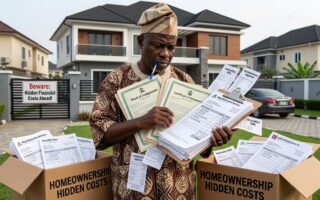
One common reason buyers spend too much on property in Nigeria is that they consider only the advertised purchase price.
A house listed for ₦50 million may cost significantly more after legal fees, agency commissions, documentation, registration, renovation, and other applicable expenses are included.
Before making an offer, prepare a complete budget.
|
Expense |
What to consider |
|---|---|
|
Purchase price |
The agreed amount payable to the seller |
|
Agency fee |
The agreed commission and payment terms |
|
Legal fees |
Due diligence, contract preparation, and legal advice |
|
Survey and valuation |
Survey verification and independent property valuation |
|
Documentation and registration |
Applicable consent, stamp duties, registration, and other charges |
|
Renovation |
Repairs, plumbing, electrical work, roofing, and finishing |
|
Development costs |
Access roads, drainage, fencing, or other necessary improvements |
Not every expense applies to every transaction, and fees vary by state and agreement. Ask for a written breakdown before committing.
For example, if you have a total budget of ₦50 million, spending the entire amount on a property advertised at ₦50 million could leave you unable to complete the transaction or address urgent repairs.
A wiser approach is to determine your maximum all-in budget first and work backward to establish an affordable purchase price.
7. Consider the Location Carefully
However, a popular neighbourhood is not automatically the best investment. You need to determine whether its price is justified by accessibility, infrastructure, demand, and the property’s intended use.
Before buying, consider the following:
-
Accessibility: Can you reach the property conveniently throughout the year?
-
Infrastructure: Are roads, electricity, water, and drainage available?
-
Flooding: Does the area experience seasonal flooding or waterlogging?
-
Employment and commerce: Is the location reasonably close to workplaces, schools, markets, and other facilities relevant to future occupants?
-
Rental demand: If you intend to rent out the property, are tenants actively seeking accommodation in the area?
-
Future development: Are proposed developments credible and independently verifiable?
For example, a plot on the outskirts of Lagos may be advertised at a premium because of a proposed expressway or commercial development. Before paying extra, investigate whether the project is approved, funded, and likely to benefit the specific location.
Do not pay today’s premium for tomorrow’s uncertain promise.
8. Negotiate Based on Evidence, Not Emotion
Negotiation is an important part of buying property. However, your goal should not simply be to obtain the biggest discount. It should be to secure a property at a price justified by its characteristics and the available market evidence.
Suppose a seller asks for ₦40 million for a house, but comparable houses and an independent valuation suggest a reasonable price of approximately ₦35 million.
Instead of offering a random amount, explain your offer using the evidence you have gathered.
You could say:
“I am interested in the property, but after comparing similar houses in the area and considering the condition of this building, I believe ₦35 million is a reasonable offer. If the title checks are satisfactory and we agree on the terms, I am ready to proceed.”
This approach communicates seriousness without allowing the seller to dictate your budget.
Other useful negotiation strategies include:
-
Establish your maximum price before meeting the seller.
-
Make a reasonable opening offer supported by market comparisons.
-
Ask whether the price is negotiable.
-
Identify genuine repair costs or other property-specific disadvantages.
-
Negotiate the payment schedule and other contractual terms where appropriate.
-
Be willing to leave if the price exceeds your limit.
Never disclose your entire budget unnecessarily. If you can afford ₦50 million, that does not mean you should tell the seller you have ₦50 million available.
9. Do Not Confuse Cheap Property With Good Value
Some buyers focus so much on finding cheap land or houses that they overlook the reasons behind the low price.
A property priced significantly below comparable properties may have problems such as:
-
Unclear ownership or disputed title.
-
Poor road access.
-
Flooding or drainage problems.
-
Government acquisition or planning restrictions.
-
Structural defects.
-
Limited rental demand or resale prospects.
-
Unpaid obligations or restrictions affecting the property.
These issues do not automatically mean the property is a bad purchase, but they require investigation and may justify a lower price—or walking away entirely.
A property that costs ₦20 million and requires another ₦15 million in essential repairs may be less attractive than a comparable property that costs ₦30 million and needs minimal work.
Always compare the total cost of acquiring and making the property usable, not just the initial asking price.
10. Avoid Buying Property Because Everyone Says Prices Will Rise
You may hear claims that land prices in a particular area will double within a year or that a neighbourhood is the next major investment destination.
Such predictions are not guarantees.
Property appreciation depends on several factors, including infrastructure, population growth, employment opportunities, purchasing power, security, government policies, and the supply of competing properties.
Before paying a premium for expected appreciation, ask yourself:
-
What evidence supports the expected increase?
-
Have property prices actually risen in the area?
-
Can buyers afford the current prices?
-
Is there genuine demand from people who want to live or operate businesses there?
-
How long might it take to sell the property if you need your money?
-
Would the investment still make sense if prices remained unchanged for several years?
If you are buying land for long-term investment, calculate the potential returns conservatively. Include holding costs, security, taxes or other applicable charges, and the possibility that resale may take longer than expected.
A property should not depend entirely on optimistic predictions to justify its price.
11. Inspect the Property at Different Times
A single inspection may not reveal all the problems associated with a property.
If possible, visit the location at different times of day and during different weather conditions. Speak with neighbours and residents about issues that may not be obvious during a brief visit.
For an existing house, arrange a professional inspection to assess the roof, walls, foundation, plumbing, electrical installations, and other major components.
For vacant land, confirm the boundaries, access routes, terrain, drainage, and any relevant restrictions.
An inspection may reveal repair costs or practical disadvantages that give you a sound basis for renegotiation. It may also reveal problems serious enough to justify abandoning the deal.
12. Never Spend Your Entire Savings on the Purchase
Even when a property is fairly priced, buying it may be financially unwise if it leaves you without enough money for essential expenses.
Before purchasing, consider your emergency savings, regular income, family responsibilities, existing debts, and any upcoming financial commitments.
Avoid borrowing more than you can comfortably repay simply to acquire a property before someone else buys it.
You should also consider how quickly you could access your money again. Real estate is generally less liquid than cash, so selling a property quickly may require accepting a lower price.
A good property purchase should strengthen your financial position rather than leave you struggling to meet everyday needs.
A Practical Checklist Before Buying Property in Nigeria
Property buyer’s checklist
- Research prices of at least three comparable properties
- Consult independent agents or a qualified valuer
- Verify the seller’s identity and legal authority to sell
- Ask a property lawyer to conduct appropriate title searches
- Inspect the property and assess repairs or development costs
- Investigate access, drainage, flooding, and planning restrictions
- Calculate all fees and the total cost of ownership
- Set a maximum price and negotiate using evidence
- Review the purchase agreement before signing or paying
- Keep sufficient money for emergencies after the purchase
Conclusion: Buy With Facts, Not Pressure
Avoiding overpayment when buying property in Nigeria requires patience, research, independent advice, and disciplined negotiation.
Do not assume that a property is worth its asking price simply because the seller insists on it. Compare similar properties, verify the legal documents, investigate the location, calculate all additional expenses, and determine your maximum affordable price before making an offer.
Most importantly, do not allow the fear of missing out to push you into a transaction you have not properly investigated.
The best property deal is not necessarily the cheapest one. It is the property you can legally acquire, afford comfortably, use as intended, and resell or rent at a price justified by the market.