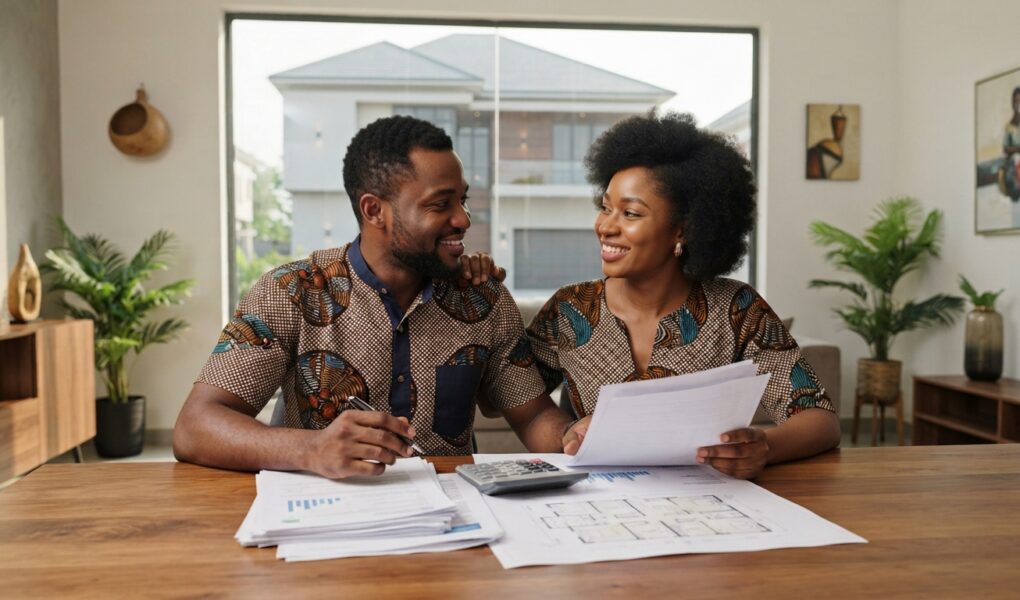
Buying a house is one of the biggest financial decisions many couples make during their relationship. For couples who want to own a home but cannot comfortably afford the purchase independently, applying for a joint mortgage may provide an opportunity to achieve their homeownership goals sooner.
A joint mortgage allows two or more people to apply for a mortgage together and share responsibility for repaying the loan. For married couples and long-term partners, this arrangement can make it easier to combine incomes, qualify for a larger loan, and purchase a property that might otherwise be financially difficult to afford.
However, buying a house with a joint mortgage is not automatically the best decision for every couple. Although combining financial resources offers several advantages, it also introduces shared financial obligations, legal responsibilities, and potential complications if the relationship changes.
Before applying for a joint mortgage, couples should understand how the arrangement works, its benefits, possible risks, and the important issues to discuss before signing any agreement.
1. Combining Income Can Increase Borrowing Capacity
One of the biggest advantages of a joint mortgage is the ability to combine incomes when applying for financing.
A couple applying independently may qualify for a smaller mortgage because the lender assesses only one person’s income and financial circumstances.
However, when both partners apply together, the lender may consider their combined earnings, depending on its lending criteria.
This can increase the amount they may be eligible to borrow and provide access to properties that would otherwise be outside their individual budgets.
For example, a couple whose individual salaries are insufficient to qualify for their preferred mortgage may become eligible when their incomes are assessed together.
However, lenders also consider existing debts, employment stability, credit history, and other financial commitments. A higher combined income does not automatically guarantee mortgage approval.
2. Sharing the Financial Responsibility
A mortgage can place considerable pressure on an individual’s finances, particularly when property prices and interest rates are high.
With a joint mortgage, couples can share the responsibility of making regular repayments.
Depending on their agreement, one partner may contribute 50% while the other contributes the remaining 50%. Alternatively, they may agree on contributions based on their respective incomes.
For instance, a partner earning significantly more may contribute a larger percentage of the monthly repayment.
This flexibility can make homeownership more manageable, provided both individuals agree on the arrangement.
Couples should establish their repayment responsibilities before taking the mortgage rather than waiting until financial disagreements arise.
3. Access to a Better Property
Combining financial resources may allow couples to purchase a larger or better-located property.
Instead of purchasing a smaller house based on one person’s borrowing capacity, they may be able to consider properties with additional bedrooms, better facilities, or more convenient locations.
This can be particularly beneficial for couples planning to have children or accommodate other family members in the future.
However, buying a more expensive house simply because a lender is willing to provide a larger mortgage can be risky.
The property should remain affordable after accounting for household expenses, insurance, maintenance, utilities, and other financial commitments.
4. Building Property Ownership Together
Buying a house through a joint mortgage can be an opportunity for couples to build an asset together.
As mortgage repayments reduce the outstanding loan balance, the owners may gradually build equity in the property.
Property equity represents the portion of the property’s value that belongs to the owners after accounting for the outstanding mortgage.
If the property’s market value increases over time, the couple may also benefit from potential capital appreciation.
However, property prices can decline, and appreciation is never guaranteed.
Couples should approach joint homeownership as a long-term financial commitment rather than assuming that the property will automatically generate a profit.
5. Both Partners May Be Responsible for the Debt
One important issue couples must understand is that a joint mortgage creates shared borrowing responsibilities.
Depending on the mortgage agreement and applicable law, both borrowers may be jointly and severally liable for the outstanding debt.
This means the lender may be entitled to pursue either borrower for the full outstanding amount if the other partner stops making payments.
For example, if one partner loses their job and cannot contribute towards the mortgage, the other may still be expected to ensure that the full repayment is made.
This can become financially difficult, especially if the remaining partner cannot comfortably afford the monthly instalments alone.
Before signing the agreement, couples should understand exactly how liability works under their lender’s terms.
6. What Happens If the Relationship Ends?
One of the biggest risks of purchasing a property with a joint mortgage is the possibility of separation or divorce.
Although couples may enter the agreement expecting to remain together, relationships can change.
If the relationship ends, both individuals may still have legal and financial responsibilities towards the mortgage.
Several possible arrangements may be considered:
- One partner may buy out the other’s interest in the property, subject to valuation and lender approval.
- Both partners may agree to sell the property and use the proceeds to settle the outstanding mortgage.
- One partner may continue living in the house while both parties agree on how ownership and mortgage obligations will be handled.
- The property may be transferred or refinanced into one person’s name if the lender approves and the legal requirements are satisfied.
These arrangements should not be assumed to happen automatically.
Couples should seek independent legal advice before purchasing the property so they understand their rights and available options.
7. Consider How Ownership Will Be Registered
Taking out a joint mortgage and establishing legal ownership of a property are related but separate matters.
Couples should understand whose names will appear on the title documents and how ownership interests will be recorded.
Depending on the jurisdiction, property may be held under different forms of joint ownership.
Some arrangements provide equal ownership, while others allow individuals to hold specified shares.
For couples purchasing property in Nigeria, it is particularly important to ensure that the ownership documentation, land title, mortgage agreement, and relevant registration arrangements are properly reviewed.
Do not assume that contributing more money automatically gives one partner a greater legal ownership interest.
The intended ownership arrangement should be clearly documented with assistance from a qualified property lawyer.
8. Review Both Partners’ Credit Histories
A joint mortgage application may involve an assessment of both applicants’ credit histories and existing financial obligations.
If one partner has a poor repayment history, significant outstanding debts, or other financial problems, this may affect the mortgage application.
Similarly, a partner with an excellent credit history should not assume that their financial record alone will determine the outcome.
Before applying, couples should review their credit information, identify outstanding debts, and resolve any inaccuracies where possible.
Understanding each other’s financial position can prevent unpleasant surprises during the application process.
9. Discuss What Happens If One Partner Loses Their Income
Employment and business income can change unexpectedly.
One partner may lose a job, experience a reduction in salary, become unable to work, or face temporary financial difficulties.
If the couple depends on both incomes to repay the mortgage, losing one income source can create considerable pressure.
Before buying a house, discuss how repayments will be managed if one person temporarily cannot contribute.
Consider maintaining an emergency fund that can cover several months of essential household expenses and mortgage payments.
Couples should also investigate whether suitable life insurance, mortgage protection, or other financial protection arrangements are available.
10. Consider the Additional Costs of Homeownership
A mortgage repayment is not the only expense associated with owning a house.
Couples should prepare for other property-related expenses, including:
- Property insurance, where applicable.
- Building maintenance and repairs.
- Electricity, water, and other utilities.
- Property taxes and applicable statutory charges.
- Service charges and estate management fees.
- Security and waste management expenses.
- Legal, valuation, and mortgage processing fees.
These expenses can increase the total cost of homeownership.
A property that appears affordable based on the monthly mortgage repayment alone may become financially difficult when additional expenses are included.
11. Establish Clear Financial Agreements Before Buying
Financial disagreements can damage relationships, particularly when both partners are committed to a large financial obligation.
Before purchasing a house with a joint mortgage, couples should discuss their respective contributions, ownership interests, monthly repayment arrangements, and responsibilities for maintenance.
It is also useful to agree on how major property decisions will be made.
For example, neither partner should independently sell, rent out, renovate substantially, or refinance the property without considering the other’s rights and the lender’s requirements.
Where appropriate, a written co-ownership agreement or other legal arrangement can help clarify expectations and reduce future disputes.
12. Consider Whether a Joint Mortgage Is Better Than Buying Separately
A joint mortgage is not the only route to homeownership.
Depending on their financial circumstances, couples may consider purchasing a property using one person’s mortgage application while documenting the other person’s financial contribution separately.
They may also decide to purchase a less expensive property, save for a larger deposit, or wait until their individual financial positions improve.
Each option has different legal and financial consequences.
The best arrangement depends on the couple’s income, financial stability, relationship circumstances, ownership intentions, and the mortgage options available in their location.
When Is a Joint Mortgage a Good Decision for Couples?
A joint mortgage may be a good decision when both partners have relatively stable incomes, understand their financial responsibilities, and share similar long-term homeownership goals.
It may also be suitable when combining incomes provides access to affordable financing that neither partner could obtain independently.
However, couples should be cautious when one partner has substantial undisclosed debts, unstable income, poor financial habits, or a different understanding of property ownership.
The decision should be based on affordability and mutual understanding rather than pressure to own a house as quickly as possible.
Conclusion
Buying a house with a joint mortgage can be a practical way for couples to achieve homeownership by combining their financial resources and sharing the responsibility of mortgage repayments.
It can provide access to better properties, increase borrowing capacity, and help couples build property equity together.
However, the arrangement also creates shared financial obligations that may continue even if one partner loses their income or the relationship ends.
Before committing to a joint mortgage, couples should carefully review their finances, understand the mortgage agreement, establish clear ownership arrangements, and seek appropriate legal and financial advice.
Ultimately, a successful joint property purchase requires more than two people agreeing to buy the same house. It requires financial transparency, clear responsibilities, realistic budgeting, and a shared understanding of what homeownership means for both partners.