When buying a property, many people focus on the purchase price, building design, land size, neighbourhood reputation, and potential for future appreciation. However, some of the factors that can significantly influence a property’s value are often overlooked: noise, traffic congestion, and environmental pollution.
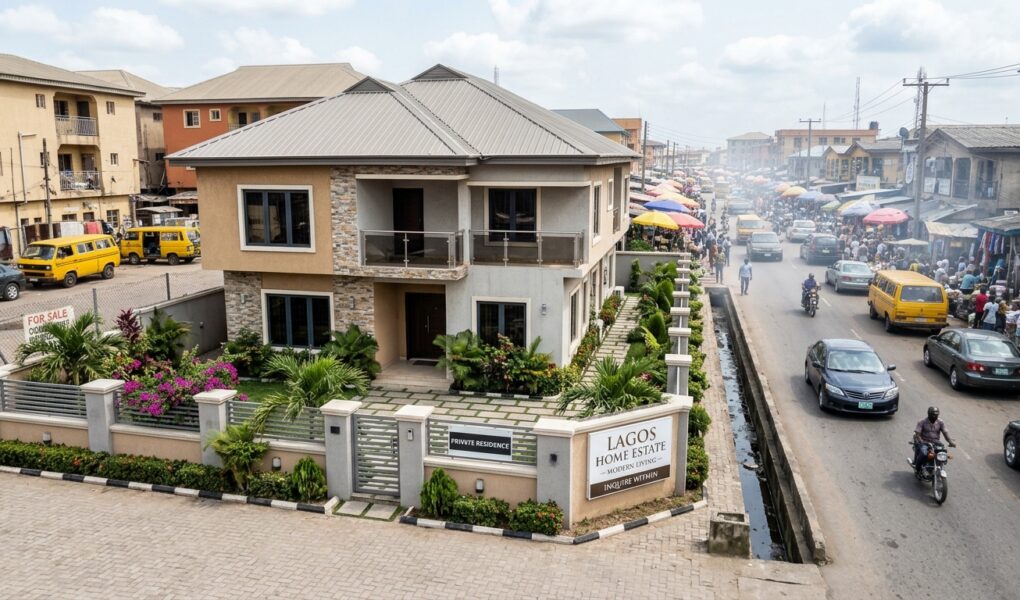
A house may look beautiful, have excellent finishing, and sit in a promising location, yet struggle to attract buyers or tenants because of the conditions surrounding it. A property located beside a busy road, a noisy commercial market, a factory, or a polluted drainage channel may offer convenience or investment potential, but it can also come with disadvantages that affect its long-term value.
In Nigeria, where residential neighbourhoods can develop rapidly into commercial areas and traffic congestion is common in many cities, understanding these factors is particularly important before investing in land, buying a house, or purchasing a property for rental income.
So, how exactly do noise, traffic, and pollution affect property value? More importantly, how can buyers identify these risks before committing their money?
Let’s examine each factor and what it means for property owners and investors.
1. How Noise Pollution Affects Property Value
Noise pollution occurs when unwanted or excessive sound interferes with people’s comfort, sleep, concentration, or everyday activities.
Common sources of noise in Nigerian neighbourhoods include busy highways, motor parks, markets, churches, event centres, factories, workshops, bars, and commercial establishments operating late into the night.
Although some buyers may tolerate these conditions, others consider them serious disadvantages when choosing where to live.
Why Buyers May Avoid Noisy Properties
Most people want their homes to provide a reasonable level of peace and privacy. Excessive noise can make it difficult to sleep, work from home, study, relax, or enjoy time with family.
For example, imagine two houses with similar designs and building quality in the same neighbourhood. One is located on a quiet residential street, while the other sits directly beside a busy motor park where drivers frequently sound their horns and vehicles operate from early morning until late at night.
Even if both houses have similar features, many buyers may prefer the quieter property.
When buyers have several alternatives, a noisy location can reduce the number of people willing to consider a property. This may affect how quickly the owner can sell and how much a buyer is prepared to offer.
How Noise Can Affect Rental Income
Noise can also influence a property’s rental potential.
Tenants who work remotely, have young children, study at home, or value peaceful surroundings may be unwilling to rent a house near a persistent source of noise.
Landlords may consequently experience longer vacancy periods or need to offer more competitive rental terms to attract suitable tenants.
However, the effect depends on the type of property and its intended occupants. A shop or restaurant may benefit from a busy commercial environment, while a residential apartment in the same location may be less attractive.
What buyers should do: Visit a property at different times of the day. Noise levels can change significantly between morning, afternoon, evening, and late night. Do not rely exclusively on an inspection conducted during a quiet period.
2. How Traffic Congestion Influences Property Value
Traffic is another important consideration when evaluating real estate.
A property may be located close to offices, schools, markets, hospitals, and shopping centres, yet access to those facilities may be frustrating if the surrounding roads experience severe congestion.
In cities such as Lagos, where commuting conditions can influence daily routines, accessibility can make a considerable difference to the attractiveness of a residential or commercial property.
However, traffic does not always reduce property value. The outcome depends on whether a location offers convenient access to useful destinations or exposes occupants to persistent congestion and its associated problems.
The Difference Between Accessibility and Traffic Problems
A property near a major road may be valuable because residents can reach important destinations conveniently.
For example, an apartment located near a reliable transport corridor may appeal to workers who need to commute regularly. Businesses may also benefit from being close to roads that provide easy access for customers and suppliers.
The situation changes when the road becomes heavily congested, access to the property is difficult, or residents regularly lose significant time travelling relatively short distances.
Potential buyers may become concerned about:
- Long commuting times during peak periods.
- Difficulty entering or leaving the neighbourhood.
- Limited parking space.
- Increased vehicle noise and exhaust fumes.
- Frequent road blockages caused by loading, unloading, or roadside trading.
- Poor road conditions that worsen during the rainy season.
- Inadequate alternative routes when the main road is blocked.
These challenges can affect the everyday experience of living or operating a business in the area.
Can Traffic Reduce a Property’s Resale Value?
Yes, it can, particularly when congestion creates persistent inconvenience and buyers have more accessible alternatives.
Suppose two residential estates offer similar houses at comparable prices. One has several usable access roads, while the other depends on a single narrow road that becomes severely congested during rush hour.
The estate with better access may attract more interest because residents can move around more conveniently.
Over time, accessibility may influence buyer demand, rental performance, and resale prospects.
Nevertheless, a busy location can still command strong prices when it offers excellent connectivity, proximity to employment centres, and access to essential services.
The important question is not simply whether a property is near a major road. It is whether the road network improves convenience or creates persistent problems for its occupants.
What buyers should do: Test the journey to and from the property during peak traffic hours. Ask current residents about typical commuting times and check whether alternative access routes are available.
3. How Environmental Pollution Can Affect Property Value
Environmental pollution is another factor buyers should assess before purchasing land or a building.
Pollution may involve contaminated water, unpleasant odours, industrial emissions, excessive dust, smoke, poor waste disposal, or polluted drainage channels.
Some problems are immediately visible, while others may require further investigation to identify.
In Nigeria, potential concerns include properties close to poorly managed waste dumps, industrial facilities, heavily polluted waterways, mechanic workshops, or drainage channels that carry wastewater and accumulate refuse.
Air Pollution and Unpleasant Odours
Properties near factories, waste-processing facilities, open burning sites, or other sources of emissions may expose occupants to unpleasant smells, smoke, or airborne pollutants.
Even when the building itself is well maintained, environmental conditions can affect how attractive it appears to potential buyers and tenants.
A prospective tenant might reject an apartment because of persistent smoke entering through the windows. A family considering a permanent home may also prefer another neighbourhood if unpleasant odours are common.
Where environmental problems are persistent, buyers may demand a lower price or decide not to proceed with the transaction.
Poor Drainage and Water Pollution
A property near a polluted stream, stagnant water, or a poorly maintained drainage channel may face additional concerns.
These can include unpleasant smells, insects, blocked drainage, localised flooding, and questions about environmental quality.
Not every property near a drainage channel is undesirable. Properly designed drainage systems are essential to urban development, and a well-maintained channel may not create the same problems as an obstructed or polluted one.
The key issue is the actual condition of the environment and whether it creates a material risk or recurring inconvenience.
Waste Disposal and Neighbourhood Cleanliness
Poor waste management can affect the overall appearance and desirability of a neighbourhood.
Refuse accumulating near residential buildings, roads, or vacant plots may discourage potential buyers. It can also create concerns about sanitation, pests, odours, and the effectiveness of local waste collection.
By contrast, neighbourhoods with reliable waste collection, clean streets, and well-maintained public spaces may be more appealing to people seeking a comfortable living environment.
What buyers should do: Inspect the surrounding environment, not just the building. Look for evidence of open burning, industrial emissions, stagnant wastewater, accumulated refuse, and recurring drainage problems. If contamination is suspected, seek appropriate environmental testing or professional advice.
4. Why These Problems Can Reduce Property Demand
Property value is influenced by several factors, including location, building condition, accessibility, local demand, available infrastructure, and the number of buyers willing to pay a particular price.
Noise, traffic, and pollution can affect value by reducing a property’s appeal relative to comparable alternatives.
When a location has persistent environmental or accessibility problems, some buyers may exclude it from their search entirely.
Others may remain interested but offer less money to compensate for the inconvenience or perceived risk.
This can create several consequences for the owner.
Fewer Interested Buyers
A property with significant disadvantages may appeal to a narrower group of buyers.
For example, a person seeking a peaceful family home may reject a house beside a noisy event centre, even if the price is attractive.
A business owner, however, might consider the same location suitable if the premises benefit from customer traffic.
Longer Selling Periods
When fewer buyers are interested, the owner may need more time to complete a sale.
If the property remains on the market for an extended period, the owner may eventually need to reconsider the asking price or improve features that can reasonably be changed.
Pressure on Asking Prices
Buyers compare available properties before making decisions.
If a nearby house offers similar features in a quieter, cleaner, and more accessible environment, the property with disadvantages may struggle to justify an equivalent price.
However, the price difference is not automatic. Strong demand, scarcity, commercial usefulness, and future infrastructure improvements can offset some disadvantages.
Reduced Rental Appeal
For landlords, the consequences may include difficulty finding tenants, longer vacancies, or the need to adjust rent to match local demand.
The effect will depend on the type of tenant, the property’s features, the severity of the problem, and the availability of competing accommodation.
5. Can a Property Near a Busy Road or Market Still Be a Good Investment?
Yes. A property near a busy road, commercial market, or transport hub can still be a sound investment if its advantages outweigh its disadvantages.
The mistake is assuming that every busy location is bad or that every quiet location is valuable.
Different properties serve different purposes.
Residential Properties
For a family home or residential apartment, buyers may prioritise peace, safety, access to schools, reliable utilities, drainage, and manageable commuting times.
Persistent noise, traffic bottlenecks, or pollution may make a property less attractive to this market.
Commercial Properties
A shop, restaurant, pharmacy, or other customer-facing business may benefit from a location with strong pedestrian movement and convenient access.
In such cases, proximity to a market or busy road may be an advantage, provided the premises have suitable access, visibility, parking where needed, and an environment that supports the business.
Rental Investment Properties
Investors buying to rent should identify their target tenants before making a decision.
Young professionals may prioritise convenient transport links and a comfortable living environment. Traders may value proximity to markets and commercial districts. Families may place greater emphasis on safety, schools, drainage, and a peaceful atmosphere.
The right investment decision depends on the needs of the people expected to occupy the property.
The lesson: Evaluate a property’s location according to its intended use rather than judging it by one factor alone.
6. How to Identify Noise, Traffic and Pollution Risks Before Buying Property
A property inspection should extend beyond the building’s walls and the land’s boundaries.
Before making a commitment, use the following practical checklist.
Visit at Different Times
Inspect the property in the morning, afternoon, evening, and, where appropriate, at night.
A street that appears peaceful at noon may become noisy when businesses open or entertainment venues begin operating.
Traffic may also be significantly worse during commuting hours.
Speak With Current Residents
People who live or work nearby can provide useful information about recurring problems.
Ask questions such as:
- Does the area experience severe traffic congestion?
- Are there noisy activities at night?
- Does the neighbourhood flood during heavy rainfall?
- Are unpleasant smells or smoke common?
- Is waste collected regularly?
- Are roads frequently blocked by commercial activities?
- Have environmental conditions improved or deteriorated recently?
Whenever possible, confirm important claims with more than one independent source.
Examine the Surrounding Land Uses
Look beyond the immediate property.
Identify nearby factories, markets, event centres, transport terminals, waste facilities, mechanic workshops, and other establishments that could affect future use.
Also consider whether vacant plots are likely to become commercial premises or industrial developments.
A location that is quiet today may change as the neighbourhood grows.
Check the Road Network
Assess the quality of access roads, the number of available routes, drainage, parking, and the distance to essential services.
Do not assume that a property is conveniently located simply because a major road appears nearby.
The actual route, traffic conditions, and ease of entering or leaving the property matter.
Compare Similar Properties
Compare the property with similar homes or plots in the same area.
Look at differences in access, environmental conditions, noise exposure, building quality, and asking prices.
Where reliable information is available, investigate completed transactions and actual rental performance rather than relying exclusively on advertised prices.
Consider Professional Advice
For significant environmental concerns, seek appropriate professional assessment before purchasing.
Depending on the situation, this may involve an environmental consultant, building professional, surveyor, or other qualified specialist.
If contamination is suspected, do not assume that the absence of visible pollution proves the land is safe.
7. How Property Owners Can Reduce the Effects of Noise, Traffic and Pollution
Not every external problem can be eliminated by a property owner. However, some practical measures can improve comfort and market appeal.
Reduce Noise Inside the Building
Depending on the source of the noise and the building’s design, improvements may include better-sealed windows and doors, suitable acoustic glazing, insulation, and strategically positioned bedrooms.
Trees and landscaping may improve the appearance of a property and provide some screening, but they should not be treated as a complete solution to severe traffic or industrial noise.
Improve Drainage and Waste Management
Keep the property’s drainage systems clear and dispose of refuse properly.
Where permitted and practical, coordinate with neighbours or property managers to address shared environmental problems.
However, private improvements cannot always solve larger issues involving public drainage, industrial pollution, or inadequate municipal waste collection.
Improve Access and Parking Where Possible
For properties under the owner’s control, suitable parking arrangements and clearly defined entrances may improve convenience.
Estate managers may also be able to work with residents and relevant authorities to address access problems or obstructive activities, although major road congestion usually requires broader solutions.
Be Honest When Marketing the Property
Property owners and agents should accurately describe the property’s surroundings.
Do not promise a quiet environment if the building is beside a busy road or a commercial facility that regularly operates at night.
Clear information helps attract buyers and tenants whose expectations match the actual conditions.
It can also reduce disputes and build trust during negotiations.
8. Will Future Development Increase or Reduce the Property’s Value?
Neighbourhood development can improve a property’s value, but the outcome depends on the type of development and how it affects the surrounding environment.
A new road, improved public transport service, shopping centre, or commercial district may make an area more accessible and attractive.
However, development may also introduce heavier traffic, additional noise, increased dust, or pressure on drainage and waste systems.
For example, a quiet residential street may become busier after a major commercial project opens nearby.
The increased activity might benefit shops and offices while making some homes less appealing to people seeking peace and privacy.
Similarly, a new transport route may improve commuting options while increasing noise for houses located immediately beside it.
Before investing in an emerging neighbourhood, consider both the likely benefits and the possible disadvantages of planned development.
Where possible, verify proposed projects through reliable sources rather than relying solely on statements made by property marketers.
9. Do Noise, Traffic and Pollution Always Cause Property Prices to Fall?
No. Their effects vary by location, severity, property type, and market conditions.
A busy commercial area may have strong demand despite noise and traffic because businesses value customer access.
A residential property close to a transport corridor may remain desirable if occupants can reach employment centres conveniently and the building is adequately protected from noise.
Likewise, a property in a quiet neighbourhood may still perform poorly as an investment if it has inadequate infrastructure, weak demand, poor access, or significant flooding problems.
Property value is rarely determined by a single factor.
The important question is whether the property’s advantages are strong enough to attract its intended buyers or tenants at a price that makes financial sense.
Investors should consider the full picture, including purchase cost, likely rental income, maintenance expenses, environmental risks, resale prospects, and the possibility of future changes in the neighbourhood.
10. Final Checklist Before Buying Land or a House
Before paying for a property, ask yourself the following questions:
- Is the property exposed to persistent noise from roads, markets, factories, or entertainment venues?
- How long does it take to reach the property during peak traffic periods?
- Are the access roads reliable, and are alternative routes available?
- Is there evidence of smoke, unpleasant odours, poor waste disposal, or polluted drainage?
- Does the neighbourhood experience flooding or recurring sanitation problems?
- What do current residents say about living or working in the area?
- Could future development make the location noisier, more congested, or more polluted?
- Do comparable properties offer better environmental conditions at a similar price?
- Will the property’s location suit the needs of the people expected to occupy it?
- Can the expected rental income or resale value justify the purchase price and associated risks?
If several answers raise concerns, take time to investigate before committing your money.
A lower asking price does not automatically make a property a bargain. Sometimes, the discount reflects disadvantages that may continue to affect the property’s appeal for years.
Conclusion
Noise, traffic, and pollution are important considerations when buying land, purchasing a house, or investing in rental property in Nigeria.
They can influence buyer demand, rental performance, the time required to sell a property, and the price prospective buyers are willing to pay. However, their effects depend on the property’s location, intended use, severity of the problems, and the benefits offered by the surrounding neighbourhood.
A busy road may be an advantage for a commercial property but a disadvantage for a family home. A location near a market may offer strong rental opportunities while exposing residents to noise, congestion, and waste-management challenges.
The smartest approach is to evaluate the entire environment before making a decision.
Visit the property at different times, speak with residents, assess access roads, investigate environmental concerns, and compare similar properties before agreeing on a price.
At Qadeva.com, we encourage property buyers and investors to look beyond attractive buildings and promotional promises. A property’s true value depends not only on what you buy, but also on the environment in which it stands.
Making informed decisions today can help you avoid costly mistakes and choose properties that better meet your financial goals over the long term.