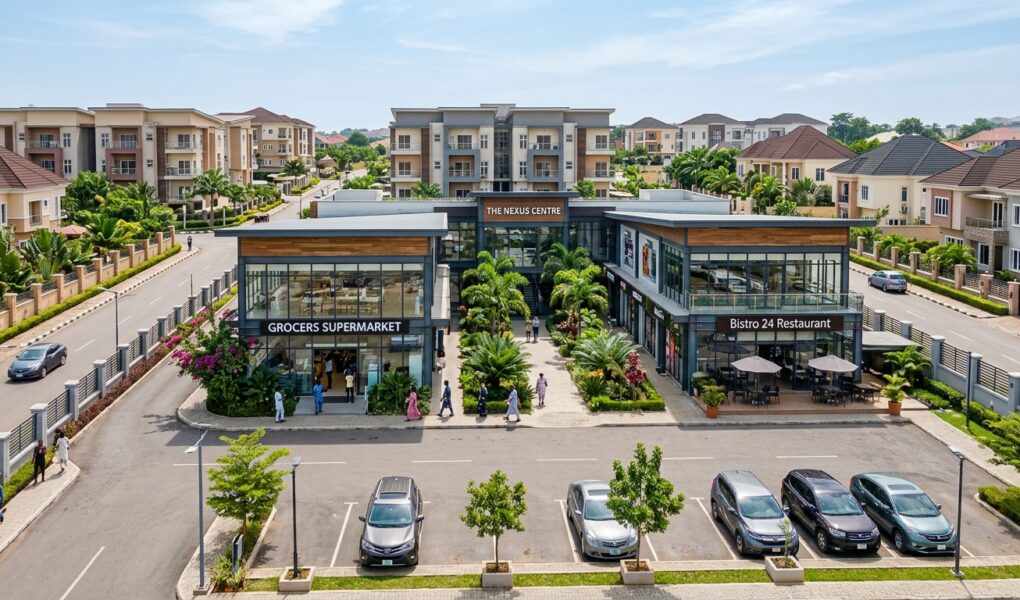
When a new shopping centre opens in a neighbourhood, the impact often goes beyond providing residents with another place to shop. It can influence property demand, rental prices, business opportunities, traffic patterns, security perceptions, and the overall attractiveness of the area.
In Nigeria, where urban development continues to reshape residential communities, shopping centres are becoming important features of neighbourhood growth. From supermarkets and shopping plazas to large retail complexes, these developments can change how people perceive and interact with their surroundings.
For property investors, homeowners, landlords, and prospective buyers, understanding the relationship between commercial developments and residential appeal is essential. A neighbourhood that previously attracted little attention may become more desirable when convenient shopping facilities become available.
However, the impact is not always positive. While some shopping centres improve convenience and stimulate economic activities, poorly planned commercial developments can introduce traffic congestion, noise, waste management problems, and other inconveniences.
So, how exactly can new shopping centres change the residential appeal of a neighbourhood?
1. They Make Everyday Living More Convenient
Convenience is one of the biggest factors people consider when choosing where to live.
Residents generally prefer neighbourhoods where they can easily access essential goods and services without travelling long distances.
A new shopping centre can make daily life easier by providing access to supermarkets, pharmacies, restaurants, clothing stores, household supplies, and other essential services.
For example, imagine a residential neighbourhood in Lagos where residents previously travelled several kilometres to purchase groceries or household necessities.
The opening of a modern shopping plaza within the neighbourhood could significantly reduce the time and transportation costs associated with everyday shopping.
This convenience may make the area more attractive to working professionals, families, and individuals who value accessibility.
Over time, improved convenience can contribute to increased residential interest.
2. They Can Increase Property Demand
Commercial developments can influence how prospective residents evaluate a neighbourhood.
When a shopping centre introduces useful services and improves accessibility, more people may begin considering the surrounding area as a suitable place to live.
This can create additional demand for residential properties, particularly when the development is accompanied by improvements in roads, transportation, security, and other infrastructure.
For example, a previously overlooked neighbourhood may attract more attention from tenants and homebuyers after a reputable shopping centre opens nearby.
However, increased property demand is not automatic. The shopping centre must offer services that residents actually need, and the surrounding neighbourhood must remain suitable for residential living.
Property investors should therefore evaluate the overall development pattern rather than assuming that every new shopping plaza will increase demand.
3. They May Influence Rental Prices
One possible consequence of increased residential demand is rising rental prices.
Landlords may begin adjusting their rental expectations when they notice that more prospective tenants are interested in properties within the neighbourhood.
A shopping centre that offers supermarkets, restaurants, pharmacies, and other convenient services can become an additional selling point when marketing nearby rental properties.
For instance, a landlord advertising an apartment may highlight its proximity to a shopping centre as an advantage for prospective tenants.
However, rental increases depend on several factors, including housing supply, tenant income, property quality, accessibility, and competition from nearby neighbourhoods.
A shopping centre alone does not guarantee higher rental income.
Investors should study actual rental transactions and tenant demand before using commercial developments as a basis for increasing property valuations.
4. They Create Employment and Business Opportunities
New shopping centres often create employment opportunities for people living within the surrounding communities.
Retail stores, restaurants, supermarkets, pharmacies, cleaning companies, security services, logistics businesses, and maintenance providers may all require additional workers.
These developments can also create opportunities for small business owners who want to serve shoppers and nearby residents.
For example, a new shopping complex may attract food vendors, laundry services, delivery businesses, salons, and other service providers.
Employment opportunities can make a neighbourhood more economically active and potentially attract additional residents seeking shorter commuting distances.
When commercial activity is properly managed, it can contribute to the long-term economic development of the surrounding area.
5. They Can Improve the Perception of a Neighbourhood
The presence of a modern and well-maintained shopping centre can influence how people perceive a residential community.
A neighbourhood with organised commercial facilities, attractive buildings, proper parking arrangements, and maintained surroundings may appear more developed and convenient.
This can change the way prospective residents, property investors, and business owners view the area.
In Nigeria, where buyers sometimes associate certain locations with prestige and convenience, a reputable shopping destination can contribute to a neighbourhood’s overall image.
However, appearance alone is not enough. Residents will also consider road conditions, drainage, electricity, security, sanitation, and the quality of surrounding buildings.
A beautiful shopping centre cannot compensate for serious infrastructure problems throughout the neighbourhood.
6. They Can Encourage Better Infrastructure Development
Large shopping centre projects sometimes encourage improvements in surrounding infrastructure.
Depending on the development agreement and the responsibilities of the relevant authorities, developers may invest in access roads, drainage systems, parking facilities, street lighting, and other supporting infrastructure.
Local authorities may also pay greater attention to roads and public facilities around commercially important locations.
For example, a shopping centre expected to attract substantial daily traffic may require better road access and improved traffic management.
When these improvements benefit the wider community, residential properties may become more attractive.
Nevertheless, homeowners should distinguish between infrastructure promised by developers and improvements that have actually been completed.
Do not purchase property based solely on expectations that a new shopping centre will automatically bring better roads or public facilities.
7. They Can Improve Access to Essential Services
Not every shopping centre is simply a collection of clothing stores and supermarkets.
Some modern retail complexes incorporate facilities such as pharmacies, banks, restaurants, healthcare outlets, fitness centres, and other useful services.
Having these facilities nearby can improve the everyday experience of residents.
Families may appreciate easier access to groceries and pharmacies, while working professionals may value restaurants, financial services, and other facilities that help them manage busy schedules.
For older residents, convenient access to essential services can also reduce the need for frequent long-distance journeys.
The more useful the facilities within a shopping centre are, the greater their potential contribution to residential convenience.
8. They Can Attract More Property Investors
Property investors frequently pay attention to neighbourhoods experiencing commercial and infrastructural development.
A new shopping centre may signal growing commercial interest in an area, particularly when other businesses and residential developments are also emerging.
Investors may begin exploring opportunities to purchase land, construct rental apartments, develop serviced accommodation, or acquire existing properties.
This can increase competition for suitable properties and contribute to changes in land prices.
However, investors should avoid confusing commercial activity with guaranteed property appreciation.
Before investing, consider whether the shopping centre is financially sustainable, whether it attracts regular customers, and whether the surrounding residential market has sufficient demand.
A shopping centre that struggles to attract tenants and shoppers may have a much smaller impact than initially expected.
9. They Can Increase Traffic Congestion
Despite their advantages, shopping centres can introduce problems that negatively affect residential living.
Traffic congestion is one of the most common concerns, particularly in densely populated Nigerian cities.
A shopping centre that attracts hundreds or thousands of visitors daily can place additional pressure on existing roads.
The situation may become worse when the development has inadequate parking facilities, poorly designed entrances, or insufficient traffic management.
Residents may experience:
- Longer commuting times.
- Increased roadside parking.
- Difficulty entering and leaving their streets.
- Traffic noise.
- Greater pressure on local road networks.
For people who value quiet residential environments, these problems can reduce the appeal of nearby properties.
Before buying a house close to a proposed shopping centre, investigate how traffic is likely to affect your daily movement.
10. They May Introduce Noise and Environmental Disturbances
Shopping centres can remain active beyond normal working hours, depending on their businesses and operating arrangements.
Restaurants, entertainment outlets, loading activities, generators, delivery vehicles, and large crowds can generate noise.
This may become particularly uncomfortable for residents whose homes are located directly beside the commercial property.
Waste management is another important consideration.
A poorly managed shopping centre may produce substantial quantities of plastic packaging, food waste, and other refuse.
If waste collection is inadequate, the surrounding environment may become unpleasant.
For residential buyers, the quality of commercial property management is just as important as the shopping centre’s appearance.
11. They Can Influence Neighbourhood Security
The relationship between shopping centres and residential security is not straightforward.
On one hand, increased commercial activity can encourage better street lighting, more organised surroundings, and greater public presence.
Some shopping centres also employ security personnel and install surveillance systems within their premises.
These measures may improve the perception of safety around the development.
On the other hand, increased human movement can introduce additional security challenges if visitor access, parking, and surrounding streets are poorly managed.
The presence of more people does not automatically mean a neighbourhood is safer.
Residents should evaluate actual security arrangements, street lighting, police responsiveness, and the general safety record of the area.
12. They Can Change the Character of a Residential Neighbourhood
A shopping centre can gradually influence the identity of the surrounding community.
An area that was previously known mainly for residential accommodation may develop into a mixed-use neighbourhood with commercial activities, restaurants, offices, and entertainment facilities.
This transformation can attract people who prefer living close to commercial conveniences.
However, it may also discourage individuals who prefer quiet, low-traffic residential environments.
For example, a family looking for a peaceful estate may not appreciate living beside a busy shopping complex with late-night activities.
This is why the location of a shopping centre matters.
Commercial facilities positioned along major roads or within designated commercial zones may provide benefits without significantly disrupting residential streets.
13. They Can Create Opportunities for Short-Term Rental Businesses
Shopping centres may also generate demand for temporary accommodation.
Visitors travelling for shopping, business meetings, entertainment, or other activities may require short-term accommodation close to their destinations.
This can create opportunities for serviced apartments, short-let properties, and furnished accommodation providers.
For Nigerian property investors, this may be worth exploring in locations where shopping centres attract significant numbers of visitors.
However, short-term rental demand depends on more than proximity to a shopping centre.
Investors should evaluate tourism, business activity, transport connections, local regulations, competition, security, and operating expenses.
A shopping centre should be considered one possible demand driver rather than a guarantee of profitable short-let operations.
14. They Can Influence Future Neighbourhood Development
The opening of a major shopping centre can sometimes encourage other developers and businesses to establish operations nearby.
For example, a successful retail complex may attract restaurants, petrol stations, banks, healthcare facilities, entertainment businesses, and additional residential developments.
As these facilities emerge, the neighbourhood may gradually become a more established urban destination.
This type of development can improve residential appeal when growth is properly planned.
However, uncontrolled commercial expansion can create problems such as overcrowding, inadequate drainage, pressure on public utilities, and the gradual loss of residential character.
Sustainable neighbourhood development requires proper planning and coordination between developers and relevant authorities.
15. Consider the Shopping Centre’s Quality Before Buying Nearby Property
Not all shopping centres have the same potential to improve a neighbourhood.
A well-planned retail complex with reputable tenants, adequate parking, proper waste disposal, good security, and professional management may contribute positively to surrounding residential properties.
A poorly constructed or badly managed shopping plaza may introduce more problems than benefits.
Before investing in a property close to a new shopping centre, consider:
- The reputation of the developer.
- The quality of the building and facilities.
- The businesses expected to operate there.
- Parking capacity.
- Traffic management arrangements.
- Security provisions.
- Waste disposal systems.
- Operating hours.
- Access roads and drainage.
- Whether the development has the necessary approvals.
These considerations can help you determine whether the shopping centre is likely to improve or reduce the appeal of nearby residential properties.
What Should Homebuyers and Property Investors Do Before Making a Decision?
If you are considering buying a house or investing in land close to a proposed shopping centre, avoid making decisions based entirely on marketing promises.
Visit the neighbourhood at different times of the day, especially during busy periods.
Observe traffic conditions, noise levels, drainage, road accessibility, and the general behaviour of commercial activities.
Speak with existing residents and property owners to understand how the area is changing.
You should also investigate the shopping centre’s construction status. A proposed project, an ongoing development, and an operational shopping centre represent three different levels of investment certainty.
If possible, compare property prices and rental rates before and after similar commercial developments in the area.
Most importantly, evaluate whether the neighbourhood will remain suitable for your intended residential or investment purpose.
Final Thoughts
New shopping centres can significantly influence the residential appeal of a neighbourhood.
They can improve convenience, attract businesses, create employment, encourage infrastructure development, and potentially increase demand for nearby residential properties.
However, these advantages must be balanced against possible disadvantages such as traffic congestion, noise, waste management challenges, and increased pressure on existing infrastructure.
For Nigerian homeowners and property investors, the most important consideration is not simply whether a shopping centre is opening nearby, but whether its development will create a better living environment.
A successful commercial development should complement its surrounding residential community rather than make everyday living more difficult.
Ultimately, the best neighbourhoods are not necessarily those with the biggest shopping centres, but those where commercial convenience and residential comfort can coexist.