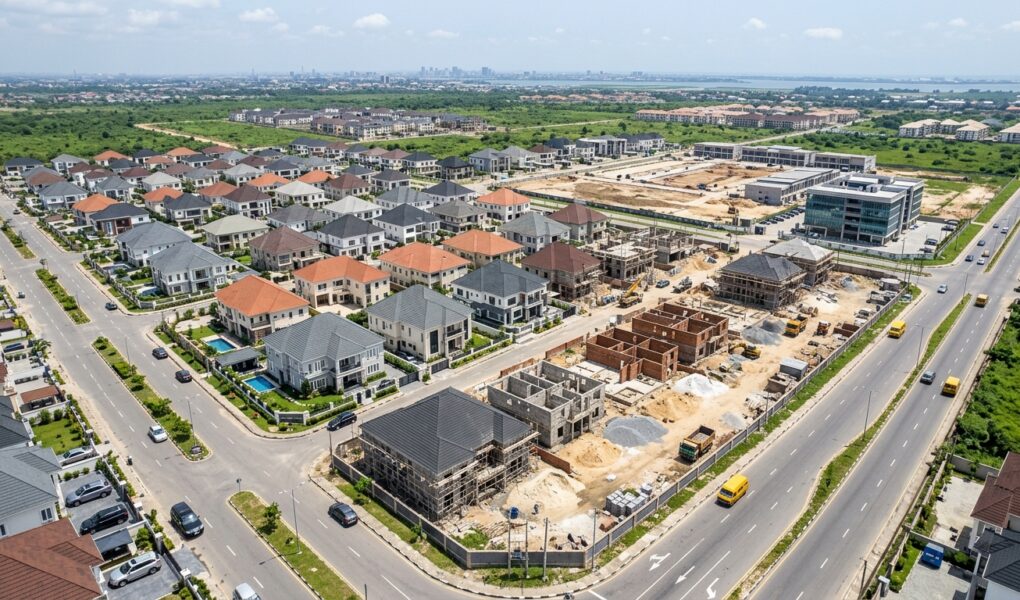
If you are thinking about buying land, a house, or an apartment in Nigeria, you have probably heard people say:
“Property always appreciates.”
But is that really true?
The Nigerian real estate market has experienced significant price increases in many locations over the years. However, not every property appreciates at the same rate, and some properties can even lose value or become difficult to sell.
Property appreciation depends on several factors, including location, infrastructure, demand, land availability, economic conditions, property quality and how long you are willing to hold the investment.
So, if you are considering buying property in Nigeria, what should you realistically expect?
What Does Property Appreciation Mean?
Property appreciation simply means an increase in the value of a property over time.
For example, imagine you buy a plot of land for ₦10 million.
Several years later, similar plots in the same area are selling for ₦15 million.
Your property has appreciated by ₦5 million, representing a 50% increase in its nominal market value.
However, there is an important distinction.
A property becoming more expensive does not necessarily mean you have made a real profit.
You also need to consider inflation, taxes, legal fees, maintenance, transaction costs and other expenses.
This is particularly important in Nigeria because general price levels can rise significantly over time.
Why Do Property Prices Increase in Nigeria?
There is no single reason why Nigerian property prices rise.
Several factors can work together.
1. Population Growth
Nigeria has a large and growing population, and millions of people need somewhere to live, work and conduct business.
Where demand for housing grows faster than the supply of suitable properties, prices and rents can rise.
This is particularly noticeable in major urban centres such as Lagos, Abuja, Port Harcourt and other rapidly developing cities.
2. Urbanisation
People continue to move toward cities and urban centres in search of employment, education, business opportunities and better infrastructure.
As communities expand, previously less-developed areas can become more attractive.
New roads, commercial developments, schools, shopping centres and other infrastructure can gradually change the economic importance of a neighbourhood.
3. Limited Land in Prime Locations
Land is not unlimited.
In established and highly desirable areas, there is only so much land available for new development.
As demand increases while available land remains limited, prices can rise.
This is one reason established neighbourhoods can command significantly higher prices than emerging areas.
4. Infrastructure Development
Infrastructure can have a major effect on property values.
A new road, bridge, transport connection, shopping centre, hospital or commercial development can make an area more accessible and attractive.
For example, an area that was previously difficult to reach may become considerably more desirable after major road improvements.
However, don’t buy land solely because someone tells you:
“A new road is coming here.”
Verify proposed projects before putting your money into the property.
5. Inflation and Construction Costs
Property prices can also rise because the cost of building new properties increases.
If cement, steel, labour, transportation, roofing materials, plumbing materials and other construction inputs become more expensive, replacing an existing building can cost significantly more.
This can push up the asking prices of existing properties.
But rising construction costs do not automatically mean every existing property will appreciate equally.
Does Every Property in Nigeria Appreciate?
No.
This is one of the most important things to understand before investing in real estate.
A property can remain stagnant in value for years.
Another property may appreciate significantly.
And another may become difficult to sell.
The difference often comes down to location and demand.
A house in a poorly accessible area with weak infrastructure may not experience the same appreciation as a similar property in a desirable neighbourhood.
Similarly, land with documentation problems can become difficult to sell regardless of what is happening in the surrounding market.
Location Is One of the Biggest Drivers of Appreciation
If you remember only one thing from this article, remember this:
You are not just buying a building. You are buying a location.
A property in an area with strong economic activity, good infrastructure, accessibility and growing demand may have better appreciation potential than one in an isolated location.
When evaluating a location, consider:
- Road accessibility
- Transportation
- Security
- Drainage
- Flood risk
- Electricity
- Water supply
- Schools
- Hospitals
- Shopping facilities
- Employment opportunities
- Population growth
- New infrastructure
- Rental demand
The building matters, but the surrounding environment matters too.
Land Can Appreciate Differently From Buildings
Land and buildings should not always be viewed in the same way.
A building naturally ages.
Roofs deteriorate. Plumbing requires maintenance. Paint fades. Electrical systems may need upgrading. The design may eventually become outdated.
Land itself does not experience physical depreciation in the same way.
This is why some investors prefer buying land in locations they believe will experience long-term development.
However, land is not automatically a better investment.
A piece of land can remain undeveloped and difficult to sell for many years if the surrounding area fails to attract sufficient demand.
The location still matters.
What About Houses?
Houses can appreciate, but the rate of appreciation can vary considerably.
A well-maintained house in a desirable location may become more valuable as demand increases.
But an old property that requires substantial renovation may not command the same premium as a modern, well-maintained property.
In some cases, the land beneath an old building may represent a significant portion of its value.
This is why property investors should consider both:
The value of the building
and
The value and potential of the land.
What Should You Expect as a Property Investor?
Don’t go into Nigerian real estate expecting your property to double in value within a few years.
That can happen in certain circumstances, but it should not be treated as a guaranteed outcome.
Instead, think in terms of long-term potential.
Your expectations should depend on:
- Where the property is located
- What type of property you are buying
- Current demand
- Future development
- Infrastructure
- Purchase price
- Property condition
- Economic conditions
- Your investment timeframe
A property bought at a reasonable price in a growing location may have attractive long-term potential.
But buying an overpriced property simply because someone promises rapid appreciation is risky.
Don’t Confuse Asking Price With Property Value
This is another common mistake.
Suppose someone advertises a house for ₦100 million.
That does not necessarily mean the property is worth ₦100 million.
The seller may simply be asking for ₦100 million.
You need to investigate what comparable properties are actually selling for.
Look at:
- Recent transactions
- Similar properties nearby
- Property size
- Land size
- Building condition
- Location
- Accessibility
- Documentation
- Rental income potential
A property can appear to have appreciated dramatically on paper simply because sellers have increased their asking prices.
That is different from having a buyer willing to pay the new price.
Rental Income Matters Too
Property appreciation is only one part of real estate investment.
A property can also generate income through rent.
For example, imagine you purchase an apartment for ₦50 million.
If the property generates ₦3 million in annual rent, you are receiving income while potentially benefiting from long-term changes in the property’s market value.
This can make a property more attractive than an asset that simply sits unused.
However, rental income comes with expenses such as:
- Maintenance
- Repairs
- Property management
- Vacancy periods
- Service charges
- Taxes and levies
- Insurance where applicable
Always calculate your net rental income, not just the advertised rent.
Inflation Can Make Appreciation Look Bigger Than It Really Is
Imagine you bought a property for ₦20 million several years ago and it is now worth ₦40 million.
At first glance, it looks like you doubled your money.
But you should ask:
What has happened to the purchasing power of the naira during that period?
If prices across the economy have also increased substantially, the property’s nominal price increase may not represent an equally large increase in real purchasing power.
This is why investors should distinguish between:
Nominal appreciation — the property costs more naira.
and
Real appreciation — the property has increased in value after accounting for broader changes in purchasing power.
How Long Should You Expect to Hold Property?
Real estate is generally better suited to investors who can think long term.
If you buy land today and expect to sell it at a large profit within a few months, you are taking a very different risk from someone who intends to hold it for 5, 10 or 15 years.
There is no universal holding period that guarantees appreciation.
However, a longer investment horizon can give an investor more time to benefit from:
- Population growth
- Infrastructure development
- Urban expansion
- Increasing demand
- Rental income
- Economic development
But remember: time alone does not fix a bad location.
Holding a poor investment for 15 years does not automatically turn it into a good one.
Emerging Areas Can Offer Opportunities — and Risks
Some investors look for land in areas that are still developing because prices may be lower than in established neighbourhoods.
This strategy can work.
But it carries additional risk.
An emerging area may develop rapidly, or development may happen much more slowly than expected.
Before buying, investigate:
- Existing development
- Road projects
- Population growth
- Nearby communities
- Government plans
- Commercial activity
- Electricity
- Water
- Drainage
- Security
- Actual demand
Don’t buy simply because an agent says:
“This place will soon become the next Lekki.”
Look for evidence.
Be Careful With Property Appreciation Predictions
Real estate agents and property marketers may sometimes advertise statements such as:
“Buy now and double your money in two years.”
Treat such claims carefully.
Nobody can guarantee that a particular property will appreciate by a specific percentage.
Property values can be affected by:
- Inflation
- Interest rates
- Government policies
- Economic growth
- Infrastructure
- Security
- Supply and demand
- Construction costs
- Consumer purchasing power
The better approach is to evaluate the factors that could support future demand rather than relying on a promised return.
How Can You Estimate Future Appreciation?
You cannot predict the future with certainty, but you can make a more informed assessment.
Start by studying the property’s history.
Ask:
- What did similar properties cost five years ago?
- What are comparable properties selling for today?
- How quickly are properties selling?
- Are new buyers entering the area?
- Is infrastructure improving?
- Is population increasing?
- Are businesses moving into the area?
- Is rental demand growing?
- Are there major development projects nearby?
- Are there environmental or legal risks?
The answers can help you determine whether the location has genuine growth potential.
Don’t Forget Property Documentation
A property with poor documentation can be difficult to sell even when the surrounding area is appreciating.
Before buying land or a building, carry out proper due diligence.
Verify:
- Ownership
- Title
- Survey
- Land status
- Existing encumbrances
- Government acquisition issues
- Planning restrictions
- Building approvals where applicable
Use qualified professionals such as a property lawyer and surveyor where appropriate.
A cheap property with serious legal problems can become much more expensive than a properly documented property.
So, Is Property in Nigeria Appreciating?
In many parts of Nigeria, property values have increased significantly over time. But appreciation is not automatic, universal or guaranteed.
Some locations perform extremely well because of strong demand, infrastructure, economic activity and limited supply.
Other locations may experience slower growth.
Some properties may barely appreciate.
And some may become difficult to sell.
Therefore, instead of asking:
“Will property in Nigeria appreciate?”
A better question is:
“Why should this particular property appreciate?”
That question forces you to look beyond hype and examine the fundamentals.
Final Thoughts
Real estate can be a powerful long-term wealth-building asset in Nigeria, but buying property should not be based solely on the belief that “land always goes up.”
A good investment starts with a good location, reasonable purchase price, strong demand, proper documentation and realistic expectations.
If you are buying property today, don’t just think about what it is worth now.
Think about:
Who will want this property in five or ten years?
What will make them want it?
What infrastructure will support the area?
Will people want to live or do business there?
Can I generate rental income while I wait?
Those questions can help you make a more informed real estate decision.
Property appreciation is possible. But the smartest investors don’t simply hope their property will appreciate — they investigate why it should.