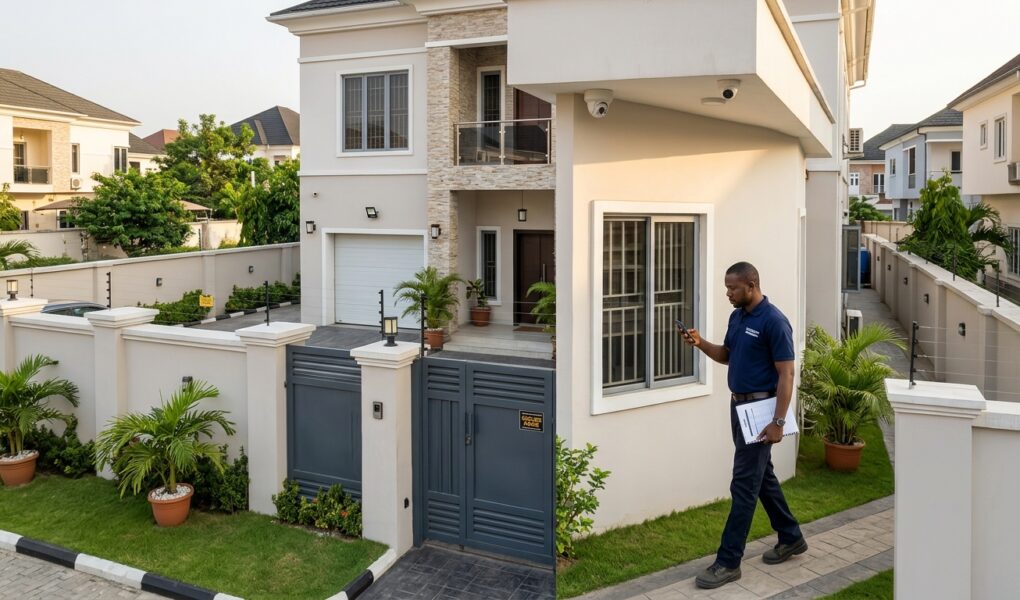
Leaving a house empty for several months can expose a property owner to problems that may be expensive to resolve. Unauthorised occupants may gain access, valuable fittings may disappear, the building may deteriorate, and minor maintenance issues can develop into major repairs.
For Nigerians who relocate abroad, move to another state, or own a property they do not currently need, protecting an unoccupied house requires more than locking the front door.
A vacant house still needs attention, security, maintenance, and regular inspections. Without a proper plan, a property that took years to build or purchase can become a financial burden.
Fortunately, there are practical steps you can take to reduce the risk of trespassing, illegal occupation, vandalism, and neglect.
Here is how to protect an empty house in Nigeria and keep it in good condition until you are ready to occupy, rent, or sell it.
1. Secure Every Door, Window, and Entrance
The first step in protecting an empty house is to make unauthorised entry as difficult as reasonably possible.
Inspect every entrance before leaving the property unattended. Check the main door, back door, kitchen entrance, windows, balcony doors, garage, and any other access points.
Replace damaged locks, repair loose door frames, and ensure that windows close properly. If previous tenants, contractors, or other people may still have copies of your keys, consider changing the locks.
Pay particular attention to doors and windows that are hidden from public view. These areas may be easier for intruders to approach without being noticed.
If your property has a perimeter gate, make sure it closes securely and that its locking mechanism works properly.
Do not leave spare keys in obvious hiding places around the building. Give access only to people who genuinely need it, and keep a record of who holds keys.
Remember: A strong entrance is useful only when the property owner also has a plan for monitoring the building.
2. Install a Fence and Secure the Perimeter
A properly constructed perimeter fence can help discourage trespassers and make unauthorised access more difficult.
If your house does not have a fence, assess whether installing one is practical and financially worthwhile. The decision should consider the property’s location, security needs, local planning requirements, and the cost of construction and maintenance.
If a fence already exists, inspect it for cracks, damaged sections, loose gates, and openings that could provide easy access.
Do not overlook the area around the gate. A damaged gate lock or broken hinge can undermine an otherwise secure perimeter.
Where necessary, install suitable outdoor lighting near entrances and other vulnerable areas. Motion-activated lighting may help improve visibility without requiring every external light to remain switched on throughout the night.
Before building or modifying a fence, confirm the property’s boundaries to avoid disputes with neighbours.
A fence does not guarantee that trespassing will never occur, but it can form an important part of a wider property protection strategy.
3. Arrange Regular Physical Inspections
One of the biggest mistakes property owners make is assuming that a locked house will remain safe indefinitely.
Unfortunately, problems can develop even when nobody lives in the building.
A leaking roof may damage ceilings. Blocked drainage can contribute to water entering the property. A broken window may remain unnoticed for weeks, while damaged plumbing can create moisture and mould problems.
Arrange for someone reliable to inspect the property regularly.
Depending on the location, condition, and security risks, this could mean weekly, fortnightly, or monthly visits. Higher-risk properties may require more frequent monitoring.
Ask the person conducting inspections to check:
- Doors, windows, locks, and perimeter fencing.
- Signs of forced entry or unauthorised occupation.
- Roof leaks, ceiling stains, and wall cracks.
- Plumbing fixtures and visible water damage.
- Electrical installations and exposed wiring.
- Drainage channels and the surrounding compound.
- Signs of termites, rodents, or other pests.
- Missing fittings, damaged equipment, or unusual changes.
Request dated photographs and a short written report after each inspection.
If you live abroad, use video calls occasionally to discuss the property’s condition. For additional reassurance, arrange an independent inspection from time to time rather than relying exclusively on one caretaker.
Regular inspections help you discover problems early, when they may be easier and cheaper to resolve.
4. Appoint a Trustworthy Caretaker or Property Manager
If you cannot visit your house regularly, appointing a caretaker or professional property manager may be a sensible decision.
However, choosing someone simply because they are a relative, friend, or neighbour can be risky if their responsibilities are unclear.
Look for someone who is dependable, communicates effectively, and understands the importance of maintaining accurate records.
Before handing over responsibility, agree on the following:
- How frequently the property should be inspected.
- Which maintenance tasks the person must perform.
- Whether the caretaker will receive a salary or management fee.
- Which expenses require your approval.
- How security incidents should be reported.
- Who is permitted to enter the house.
- How often photographs and inspection reports should be submitted.
Put the arrangement in writing, even if you have known the person for many years.
Avoid giving a caretaker unlimited authority to rent out, sell, renovate, or otherwise deal with the property without your consent.
You should also retain control over important documents and keep your own records of maintenance expenses.
A good caretaker helps protect your investment. An unaccountable caretaker can become another source of risk.
5. Do Not Allow the House to Look Abandoned
A building surrounded by weeds, rubbish, overgrown vegetation, and visible signs of disrepair may give the impression that nobody is monitoring it.
This can make the property more vulnerable to unwanted attention.
Arrange for the compound to be cleaned regularly. Grass should be trimmed, weeds removed, drains cleared, and rubbish disposed of properly.
Keep pathways accessible and remove vegetation that could conceal damaged fencing or provide hiding places near windows and entrances.
If the building has a front garden, maintain it at a manageable level rather than allowing it to become overgrown.
Ensure that the exterior remains reasonably tidy, even when the interior is not in use.
The objective is not to pretend that someone lives in the house. It is to demonstrate that the property is actively maintained and that problems are likely to be noticed.
A well-maintained appearance also helps preserve the property’s value and attractiveness to future buyers or tenants.
6. Consider Installing CCTV Cameras or an Alarm System
Technology can make it easier to monitor a vacant property, particularly when the owner lives far away.
Depending on your budget and the property’s location, consider installing CCTV cameras, motion sensors, an intruder alarm, or a remotely monitored security system.
Before choosing equipment, establish whether the property has reliable electricity, internet access, and sufficient mobile network coverage.
Some systems may require backup power to remain operational during electricity interruptions. Others may rely on local recording, cloud storage, or mobile connectivity.
Choose equipment suited to the conditions at the property rather than purchasing a system that will be difficult to maintain.
If you install cameras, position them to monitor entrances, the gate, and other relevant areas while respecting neighbours’ privacy.
Test the system before leaving the property unattended. Confirm that you can access the footage or receive alerts when necessary.
Remember that CCTV is not a replacement for physical inspections. A camera may record a problem without anyone responding to it.
For the system to be useful, establish who will investigate alerts and contact the appropriate security personnel or authorities when necessary.
7. Protect the Building From Rain, Dampness, and Structural Damage
Trespassing is not the only danger facing an empty house. Neglect can gradually reduce its value, even when nobody enters the building unlawfully.
In Nigeria, heavy rainfall, humidity, poor drainage, and inadequate ventilation can contribute to deterioration.
Before leaving the house unoccupied, inspect the roof, gutters, drainage channels, ceilings, walls, and external finishes.
Repair leaking roofs and damaged plumbing promptly. Ensure that water can drain away from the building rather than collecting around the foundation.
Check bathrooms, kitchens, and other areas where hidden leaks may develop.
Where appropriate, provide safe ventilation to reduce excessive moisture. However, do not leave windows or openings unsecured simply to improve airflow.
If the house will remain empty for an extended period, arrange periodic inspections during the rainy season. Pay particular attention to water stains, damp walls, mould, and erosion around the compound.
These problems are often less expensive to address when discovered early.
8. Deal With Electrical and Plumbing Systems Properly
An unoccupied property still requires careful management of its electrical and plumbing installations.
Before leaving, arrange for a qualified professional to inspect any known electrical faults, damaged cables, leaking pipes, or defective fittings.
Where appropriate, switch off non-essential electrical circuits and unplug appliances that do not need to remain operational.
However, do not disconnect equipment that is essential to security, drainage, or other necessary functions without understanding the consequences.
If you intend to shut off the main water supply, consider whether the building has water storage systems, pumps, or other equipment that require specific handling.
Ask a qualified plumber or electrician for advice where necessary.
Keep a record of what was switched off and what must remain operational.
The goal is to reduce avoidable risks without creating new problems through improper shutdown procedures.
9. Be Careful About Allowing Someone to Occupy the House Temporarily
Some property owners believe that allowing a friend, relative, or distant acquaintance to stay in an empty house is the easiest way to prevent trespassing.
This arrangement may work in some circumstances, but it can also create complications.
The occupant may begin to treat the property as their permanent residence, refuse to leave when requested, allow other people to move in, or fail to maintain the building properly.
Disagreements can become especially difficult when the original arrangement was entirely verbal.
If you decide to let someone occupy the house, establish the terms in writing.
Clarify whether the arrangement is a tenancy, a temporary licence, or another form of occupation, as the legal consequences may differ.
Specify the duration, permitted use, responsibility for utility bills, maintenance obligations, and the process for ending the arrangement.
Obtain legal advice if you are uncertain about the appropriate agreement.
Do not assume that a person who occupies the property without paying rent has no legal protections, or that you can remove them simply by changing the locks.
The safest approach is to establish clear expectations before allowing anyone to move in.
10. Keep Your Ownership Documents and Property Records Safe
Property disputes can become more complicated when the owner is unable to produce important documents or reliable evidence about the building.
Keep your property documents organised and accessible.
Depending on your circumstances, these may include the deed of assignment, Certificate of Occupancy, registered survey plan, purchase receipts, building approvals, and relevant agreements.
Maintain secure digital copies and store original documents in a safe location.
You should also retain photographs showing the property’s condition before it becomes vacant.
Record the state of the doors, windows, roof, fittings, compound, and other important features.
Update these photographs periodically so that you can identify changes over time.
Keep records of inspections, repairs, payments, and communications with your caretaker or property manager.
If someone later claims to have authority over the property, these records may help you explain the history of ownership and management to your lawyer.
Digital records are useful, but they do not replace original documents or other legally required evidence.
11. Inform Trusted Neighbours About the Property
Neighbours can provide an additional layer of protection because they may notice unusual activity before you or your property manager becomes aware of it.
If you have a good relationship with nearby residents, let a trusted neighbour know that the house will remain unoccupied.
Provide a contact number they can use to report an emergency or suspicious activity.
Ask them to alert you if they notice signs of forced entry, unfamiliar people repeatedly entering the building, damaged fencing, or other unusual changes.
However, avoid sharing unnecessary personal information about your finances, travel plans, or security arrangements.
Neighbours should act as an additional source of information, not as a substitute for a reliable caretaker or professional property manager.
If they report suspicious activity, investigate promptly through appropriate channels.
Do not expect neighbours to confront suspected trespassers or place themselves at risk on your behalf.
12. Remove Valuable Items and Secure Building Materials
If your house contains expensive appliances, electronics, furniture, tools, or other valuable items that will not be needed, consider removing them before leaving.
Where removal is impractical, store valuable items securely and keep an inventory.
Photograph important items and retain receipts or other proof of ownership where available.
If the property is still under construction, pay particular attention to building materials and equipment.
Cement, electrical fittings, plumbing materials, metal components, tools, and other supplies may be vulnerable to theft if left unsecured.
Arrange appropriate storage and control access to the site.
Keep records of materials delivered, used, and remaining.
This can help you identify unexplained losses and prevent disputes with contractors or workers.
13. Prepare an Emergency Plan Before Leaving
Even a well-maintained property can experience an emergency.
A roof may be damaged during a storm, a pipe may burst, a fire may occur, or an intruder may force entry.
Before leaving, prepare a simple emergency plan.
Give your property manager or trusted representative clear instructions about whom to contact and what steps to take.
Agree on a reasonable spending limit for urgent repairs, where appropriate, and specify which expenses require your approval.
Provide emergency contact details for relevant professionals, such as a plumber, electrician, property manager, and security provider.
Ensure that the person responsible can reach you through a reliable communication channel.
For serious incidents, establish when the matter should be reported to the appropriate emergency services or law enforcement agency.
Ask for photographs, incident reports, receipts, and other supporting records after the immediate problem has been addressed.
A clear emergency plan can prevent delays and reduce the risk of a manageable problem becoming a major financial loss.
14. Inspect the Property Before and After the Rainy Season
Seasonal inspections are particularly useful for houses that remain vacant for long periods.
Before the rainy season, inspect the roof, gutters, drainage channels, external walls, and surrounding ground.
Clear blocked drains and repair visible defects that could allow water to enter the building.
After periods of heavy rainfall, check for flooding, erosion, water penetration, dampness, and damage to the perimeter fence.
Also inspect the condition of access roads and the surrounding compound if these could affect the property’s safety.
Where the house is in an area prone to flooding, consider obtaining professional advice about drainage improvements or other appropriate preventive measures.
Seasonal inspections help you address environmental risks before they cause substantial damage.
15. Review Your Property Insurance
Depending on the property, its location, and the coverage available, insurance may provide financial protection against certain unexpected losses.
However, do not assume that an ordinary home insurance policy automatically covers every risk associated with a vacant property.
Some policies may impose conditions relating to how long the house can remain unoccupied, the frequency of inspections, security arrangements, or notification requirements.
Before leaving the property vacant, contact your insurer or a qualified insurance professional.
Explain that the house will be unoccupied and ask whether your existing policy remains appropriate.
Confirm the risks covered, applicable exclusions, excesses, and any steps you must take to maintain coverage.
Keep a copy of the policy and relevant correspondence.
Insurance cannot prevent trespassing or neglect, but suitable coverage may reduce the financial impact of certain insured events.
16. Review the Cost of Keeping the House Empty
An empty house can consume money without generating income.
You may still need to pay for security, cleaning, inspections, repairs, insurance, and other recurring expenses.
Estimate these costs before deciding how long to leave the property vacant.
If the house will remain unused for several years, consider whether renting it out would be more practical.
Alternatively, you may decide to keep it vacant because you plan to return, expect a family member to use it, or want to sell it later.
The right decision depends on your financial circumstances, the property’s location, expected rental demand, and long-term plans.
Do not rent out the property simply to generate income if you cannot find suitable tenants or establish an effective management arrangement.
Compare the likely rental income against maintenance expenses, management fees, vacancy risks, and other costs.
A clear financial plan will help you decide whether to maintain, rent, renovate, or sell the property.
17. Act Quickly if You Discover Trespassers
If you discover that someone has entered or occupied your house without your permission, avoid reacting in anger.
Start by documenting the situation, provided you can do so safely.
Record the date, visible damage, condition of the entrances, and any other relevant evidence. Preserve available CCTV footage and statements from witnesses.
Contact your property manager or representative and consult a qualified Nigerian property lawyer about the appropriate next steps.
Depending on the circumstances, you may need to report suspected criminal activity to the police or pursue legal proceedings to recover possession.
Do not assume that you can lawfully remove an occupant by force, destroy their belongings, disconnect essential services, or change the locks while they are inside.
The correct procedure depends on the facts, the nature of the occupation, and applicable law.
Prompt legal advice can help you protect your rights without creating additional legal problems.
Common Mistakes to Avoid When Leaving a House Empty
Property owners can reduce many risks by avoiding these common mistakes:
- Locking the house and assuming no further attention is required.
- Leaving damaged windows, doors, or fences unrepaired.
- Allowing the compound to become overgrown.
- Giving a caretaker responsibility without clear instructions.
- Failing to inspect the building during the rainy season.
- Leaving valuable appliances and building materials unsecured.
- Allowing someone to occupy the house without a clear agreement.
- Ignoring unexplained expenses or missing items.
- Failing to maintain ownership and inspection records.
- Assuming that cameras alone can protect the property.
- Waiting too long to address signs of trespassing or deterioration.
- Failing to check whether insurance covers an extended vacancy.
Avoiding these mistakes can help protect both the physical condition and long-term value of your property.
Final Thoughts
An empty house is not necessarily a problem, but an unmanaged house can become one.
Whether you live abroad, own several properties, or simply have a building you are not currently using, you should have a clear plan for protecting it.
Secure all entrances, maintain the perimeter, arrange regular inspections, and appoint someone who can respond quickly when problems arise. Keep your documents organised, monitor maintenance expenses, and address signs of damage or unauthorised occupation promptly.
If the house will remain vacant for a long time, periodically review whether keeping it empty is still the best option.
The goal is not merely to prevent trespassers. It is to preserve your investment, reduce avoidable expenses, and ensure that the property remains in good condition for future use.
A house does not have to be occupied to be protected, but it should never be left without a management plan.
Frequently Asked Questions
1. How can I protect an empty house in Nigeria?
Secure all doors and windows, maintain the perimeter fence, arrange regular inspections, keep the compound clean, and appoint a reliable caretaker or property manager. CCTV and alarm systems may provide additional protection.
2. How often should an empty house be inspected?
The frequency depends on the property’s location, condition, and security risks. Weekly, fortnightly, or monthly inspections may be appropriate in different circumstances. Properties with known security or maintenance problems may require more frequent checks.
3. Should I allow someone to stay in my empty house to prevent trespassing?
You can consider it, but establish clear written terms before allowing anyone to occupy the property. Understand the legal nature of the arrangement and obtain legal advice if necessary.
4. What should I do if someone occupies my house without permission?
Document the situation, preserve available evidence, and consult a qualified Nigerian property lawyer. Report suspected criminal activity to the appropriate authorities and follow the lawful process for recovering possession.
5. Is CCTV enough to protect a vacant house?
No. CCTV can help detect and document suspicious activity, but it does not replace secure entrances, physical inspections, maintenance, and a reliable response plan.
6. Is it better to rent out an empty house or leave it vacant?
It depends on your circumstances. Renting may generate income, but it also introduces tenant management responsibilities and potential maintenance costs. Keeping the property vacant may be appropriate if you intend to return soon or need it available for personal use.
7. Can an empty house deteriorate even when nobody enters it?
Yes. Roof leaks, dampness, blocked drainage, pests, and other maintenance problems can damage a building even when it remains locked. Regular inspections help identify these issues early.