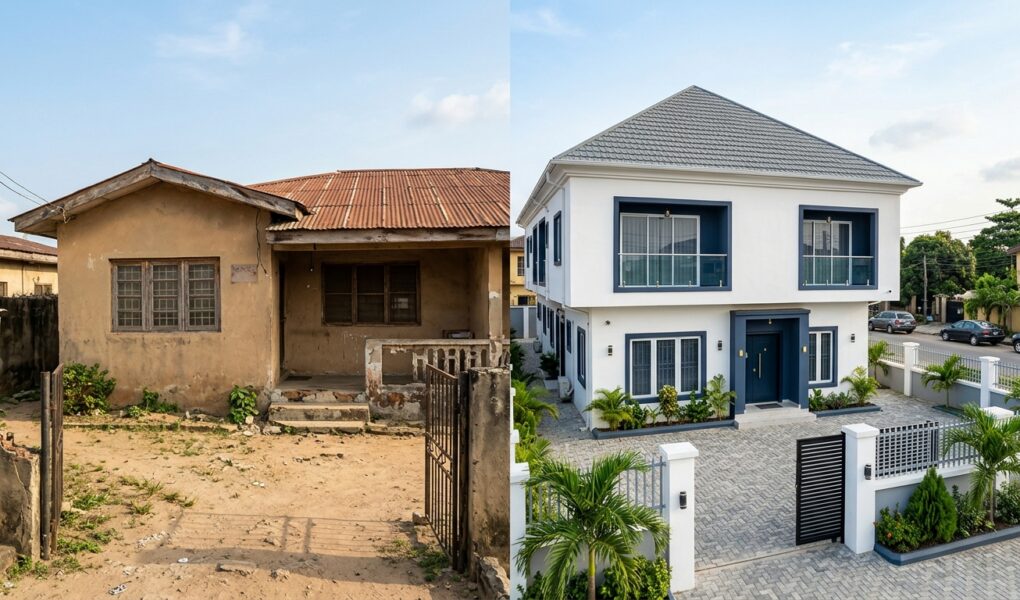
An old family house can be more than a building filled with childhood memories. With the right planning, renovation strategy and property management approach, it can become a reliable source of rental income for the family.
Across Nigeria, many families own inherited houses or older residential buildings that are no longer occupied by their original owners. Some remain locked up for years, while others are occupied by relatives who contribute little or nothing towards their maintenance.
Meanwhile, the property continues to deteriorate. Roofs develop leaks, walls become weak, plumbing systems fail, and the building gradually loses its market appeal.
Instead of allowing an old family property to remain unused, families can explore ways to convert it into a rental investment.
However, turning an old family house into an income-generating property requires more than repainting the walls and putting up a FOR RENT sign. You must consider ownership rights, family agreements, renovation costs, rental demand, building safety and the potential return on investment.
This guide explains how Nigerian families can transform old residential properties into profitable rental assets without spending more money than necessary.
1. Establish Who Legally Owns the Family Property
Before spending money on renovation, establish who has the legal authority to make decisions about the property.
This is particularly important when the building was inherited from parents or grandparents.
In many Nigerian families, an old house may belong to several siblings or extended family members. Some may want to sell it, others may prefer to preserve it, while some may want to generate rental income.
Starting renovation without resolving these differences can create serious problems later.
Before proceeding:
- Identify the rightful owners or beneficiaries.
- Establish whether the property was inherited, jointly purchased or transferred through another arrangement.
- Check the available title documents.
- Confirm whether probate, letters of administration or other succession documents are required.
- Obtain written consent from the relevant family members.
- Agree on who will manage the property and receive rental income.
Where ownership is disputed, seek legal advice before making substantial investments.
Important: Do not assume that being the eldest child or the person maintaining the building automatically gives you the right to rent out or renovate an inherited family property.
A properly documented family agreement can prevent future disagreements.
2. Assess the Current Condition of the Building
Not every old house needs a complete renovation.
Some buildings may only require painting, plumbing repairs, electrical improvements and replacement of damaged doors and windows.
Others may have serious structural problems that make them unsafe for occupation.
Before deciding what to do, arrange a professional inspection.
Pay particular attention to:
Roof and ceiling: Check for leaking roofs, damaged roofing sheets, rotten timber, water stains and weakened ceilings.
Foundation and walls: Look for significant cracks, dampness, settlement and signs of structural deterioration.
Electrical installations: Old wiring, damaged sockets and outdated electrical systems may create safety risks.
Plumbing: Inspect water pipes, toilets, bathrooms, drainage and septic systems.
Windows and doors: Check whether they are secure, functional and suitable for the intended tenants.
Floors and finishing: Identify damaged tiles, uneven floors and deteriorating surfaces.
A qualified building professional should assess structural concerns before renovation begins.
The goal is to understand how much money is required to make the property safe, functional and attractive to potential tenants.
3. Research Rental Demand in the Neighbourhood
One of the biggest mistakes property owners make is renovating an old building according to their personal preferences without considering what prospective tenants actually want.
A beautiful renovation does not automatically guarantee rental income.
For example, an old family house in a neighbourhood dominated by students may have better rental prospects as affordable self-contained apartments than as an expensive four-bedroom family residence.
Similarly, a property located near commercial activities may attract demand for small offices or suitable business premises, subject to planning and permitted use.
Before choosing a renovation strategy, investigate:
- The types of properties people rent in the area.
- Average rental prices for comparable buildings.
- The availability of electricity and water.
- Road accessibility.
- Security conditions.
- Proximity to schools, markets and workplaces.
- The number of vacant properties competing for tenants.
- The preferences of potential tenants.
Speak with local estate agents and property managers. Visit nearby rental properties and compare their facilities, condition and advertised prices.
For instance, an old building in Ibadan may attract different tenants depending on whether it is located around Bodija, Sango, Akobo, Challenge or a less commercially developed neighbourhood.
Your renovation decision should reflect the actual rental market rather than assumptions.
4. Decide Whether to Renovate the Existing Building or Redesign It
After assessing the building and researching the rental market, decide how the property should be converted.
There are several possibilities.
Option A: Renovate It as a Single-Family Rental House
This option may be suitable when the building already has a good layout and is located in an area where families prefer renting entire houses.
Potential improvements include:
- Modern bathrooms and toilets.
- Improved kitchen facilities.
- Repainting and floor finishing.
- Functional plumbing and electrical systems.
- Secure doors and windows.
- Improved compound drainage.
The advantage is that you may avoid major structural alterations.
Option B: Convert It Into Self-Contained Apartments
If the existing building has enough space, converting sections into separate rental units may generate more income.
For example, a large old house might be redesigned into two or three self-contained apartments.
Each unit could have:
- A private bedroom or living space.
- A kitchenette.
- A bathroom and toilet.
- Independent access where practical.
- Appropriate ventilation and natural lighting.
However, confirm that the proposed layout is structurally feasible and complies with applicable planning and building requirements.
Option C: Convert It Into Mini-Flats or Separate Residential Units
A large family house may be suitable for conversion into mini-flats, particularly in neighbourhoods where small households, young professionals and couples are looking for affordable accommodation.
The key is to create functional living spaces without overcrowding the building.
Option D: Convert It Into Commercial Rental Space
Depending on its location, an old family property may have greater income potential as:
- Small offices.
- Retail shops.
- Consulting rooms, where permitted.
- Suitable professional workspaces.
- Other neighbourhood commercial premises.
However, commercial conversion may require additional approvals, parking arrangements, accessibility improvements and changes to permitted land use.
Do not assume that a residential property can automatically be converted into commercial premises.
5. Prepare a Realistic Renovation Budget
Once you have selected the preferred rental model, prepare a detailed renovation budget.
Avoid beginning construction based on an estimated amount without inspecting the building and obtaining quotations.
Consider the following hypothetical renovation budget for an old family house in Nigeria:
| Renovation activity | Estimated cost |
|---|---|
| Roof repairs | ₦1,200,000 |
| Electrical improvements | ₦500,000 |
| Plumbing repairs | ₦450,000 |
| Bathroom and toilet renovation | ₦800,000 |
| Painting and wall finishing | ₦600,000 |
| Doors and windows | ₦700,000 |
| Flooring and other finishing | ₦750,000 |
| Security and compound improvements | ₦500,000 |
| Subtotal | ₦5,500,000 |
| Contingency allowance (15%) | ₦825,000 |
| Estimated total | ₦6,325,000 |
These are illustrative figures, not current contractor quotations. Actual renovation costs depend on location, building condition, material quality and labour prices.
Obtain multiple quotations and insist on a written breakdown of labour and materials.
Most importantly, prioritise structural safety, roofing, plumbing, electrical systems and security before spending heavily on decorative features.
6. Prioritise Improvements That Increase Rental Value
Not every renovation expense increases the amount tenants are willing to pay.
Some improvements are essential for safety, while others improve the property’s attractiveness and rental competitiveness.
Focus on improvements that make the building comfortable, functional and easy to maintain.
Examples include:
Reliable water supply: A functional borehole, storage tank or dependable water connection can make a property more attractive.
Good drainage: Proper drainage helps reduce flooding and water-related damage, particularly during the rainy season.
Secure surroundings: Strong doors, secure windows, perimeter fencing and appropriate lighting can improve tenant confidence.
Functional bathrooms: Clean, modern and properly ventilated bathrooms can improve the property’s appeal.
Good ventilation: Properly positioned windows and airflow make rooms more comfortable.
Reliable electricity installations: Safe wiring, adequate sockets and appropriate lighting are essential.
Durable finishing materials: Tiles, fittings and paint that can withstand regular use may reduce future maintenance costs.
The objective is not to create the most expensive property in the neighbourhood. It is to create a property that tenants consider worth the rent being requested.
7. Compare Renovation Costs With Expected Rental Income
This is where many families discover whether converting an old house into a rental property makes financial sense.
Suppose a family spends ₦6.325 million renovating an old property.
After renovation, the building is expected to generate ₦2.4 million in annual rent.
The additional investment can be evaluated using a simple renovation payback calculation.
Renovation Payback Period = Renovation Cost ÷ Annual Additional Rental Income
If the property previously generated no rental income:
₦6,325,000 ÷ ₦2,400,000 = 2.64 years.
This means the gross rental income would equal the renovation expenditure in approximately 2.64 years, assuming the property remains fully occupied and the rent is collected.
However, this is not the same as actual profit because maintenance, vacancies, management expenses and taxes still need to be considered.
Consider a more realistic example:
| Description | Annual amount |
|---|---|
| Expected annual rent | ₦2,400,000 |
| Vacancy allowance | ₦200,000 |
| Maintenance | ₦200,000 |
| Management expenses | ₦120,000 |
| Other operating expenses | ₦80,000 |
| Net operating income | ₦1,800,000 |
Your renovation payback period becomes:
₦6,325,000 ÷ ₦1,800,000 = 3.51 years.
This is a more useful estimate of how long it could take for the property’s net operating income to recover the renovation investment.
Remember that the original property also has an economic value, even if the family inherited it and did not pay for it.
For a complete investment assessment, consider the current market value of the property as well as the renovation expenditure.
8. Consider Whether the Property Should Be Managed by the Family or a Professional
Once the building is ready, someone must handle tenant-related responsibilities.
These include:
- Advertising vacant apartments.
- Screening prospective tenants.
- Collecting rent.
- Documenting rental payments.
- Handling complaints.
- Organising repairs.
- Monitoring the property’s condition.
- Managing tenancy agreements and renewals.
Some families prefer to manage their properties themselves, particularly when a responsible family member lives nearby.
Others prefer to appoint a professional property manager.
Professional management may be particularly useful when several family members own the property or when the owners live outside the state or country.
Before appointing a manager, agree on the management fees, responsibilities, reporting requirements and authority to approve repairs.
All rental payments should be properly documented, with transparent financial records available to the relevant owners.
9. Establish a Clear Family Rental Income-Sharing Arrangement
This is one of the most important considerations when converting an inherited family house into a rental property.
A building may generate substantial income, but disagreements over who should receive the money can destroy the arrangement.
Before tenants move in, the family should agree on how rental income will be handled.
For example, the family may agree that:
- Rental income will be paid into an agreed account.
- Approved management and maintenance expenses will be deducted.
- A percentage of the remaining income will be reserved for future repairs.
- The balance will be distributed according to the legally established ownership interests or agreed arrangement.
- All payments and expenses will be recorded.
Avoid allowing one person to collect rent without providing proper financial records to other owners.
A written agreement can help prevent misunderstandings and protect the property’s long-term value.
10. Understand the Legal and Regulatory Requirements
Renovating an old family property may involve legal and regulatory considerations, particularly when you intend to change the building’s layout or use.
Depending on the property and the proposed work, you may need to investigate:
- Ownership and title documentation.
- Family inheritance and succession rights.
- Building renovation approvals.
- Planning permission for structural alterations.
- Approval for changes in land use.
- Applicable building and safety requirements.
- Tenancy agreements and relevant state tenancy laws.
For properties in Lagos, Ibadan, Abuja or other Nigerian cities, confirm the requirements with the relevant state or local planning authority.
Do not assume that because a building already exists, every proposed renovation or conversion is automatically permitted.
Engage qualified professionals where necessary, particularly for structural modifications, additional floors and changes involving multiple rental units.
11. Advertise the Property to the Right Tenants
After renovation, your next responsibility is attracting reliable tenants.
Avoid advertising the property without first identifying the type of tenant most likely to be interested.
For example:
- A renovated two-bedroom apartment may appeal to young families.
- A self-contained apartment may attract students or single professionals.
- A mini-flat may appeal to couples and young workers.
- Commercial space may attract small business owners.
Use clear photographs showing the actual condition of the property.
Advertise through reputable estate agents, property listing platforms, social media and local property networks.
Provide accurate information about:
- Location.
- Number of bedrooms.
- Bathroom facilities.
- Rental price.
- Security arrangements.
- Water supply.
- Electricity.
- Parking availability.
- Other relevant facilities.
Be transparent about the condition of the building and the terms of the tenancy.
A properly marketed property can attract better-quality enquiries and reduce the time it remains vacant.
12. Maintain the Property to Protect Its Long-Term Income
Renovating an old house is only the beginning.
Without regular maintenance, the property may gradually return to its previous condition.
Develop a maintenance schedule covering:
- Periodic roof inspections.
- Plumbing and drainage checks.
- Electrical safety inspections.
- Painting and wall repairs.
- Septic tank maintenance.
- Security equipment.
- Common-area cleaning.
- Pest control.
- Water storage facilities.
Set aside part of the rental income for future repairs instead of distributing every naira collected among family members.
Preventive maintenance is generally preferable to waiting until a minor problem becomes an expensive repair.
A well-maintained property is more likely to retain tenants, attract new occupants and preserve its market value.
Conclusion: An Old Family House Can Become a Valuable Family Asset
An old family house does not have to remain locked up, deteriorate or become a source of disagreement among relatives.
With proper planning, it can be transformed into a rental property that generates regular income and helps preserve family wealth for future generations.
However, success depends on making the right decisions before renovation begins.
Establish ownership rights, obtain family agreement, inspect the building, understand local rental demand and prepare a realistic renovation budget.
Most importantly, ensure that the expected rental income justifies the money spent on renovation and ongoing management.
For Nigerian families with inherited or underutilised residential properties, the opportunity may already exist within their existing assets.
Sometimes, the next profitable real estate investment is not buying another property. It is unlocking the income potential of a house your family already owns.