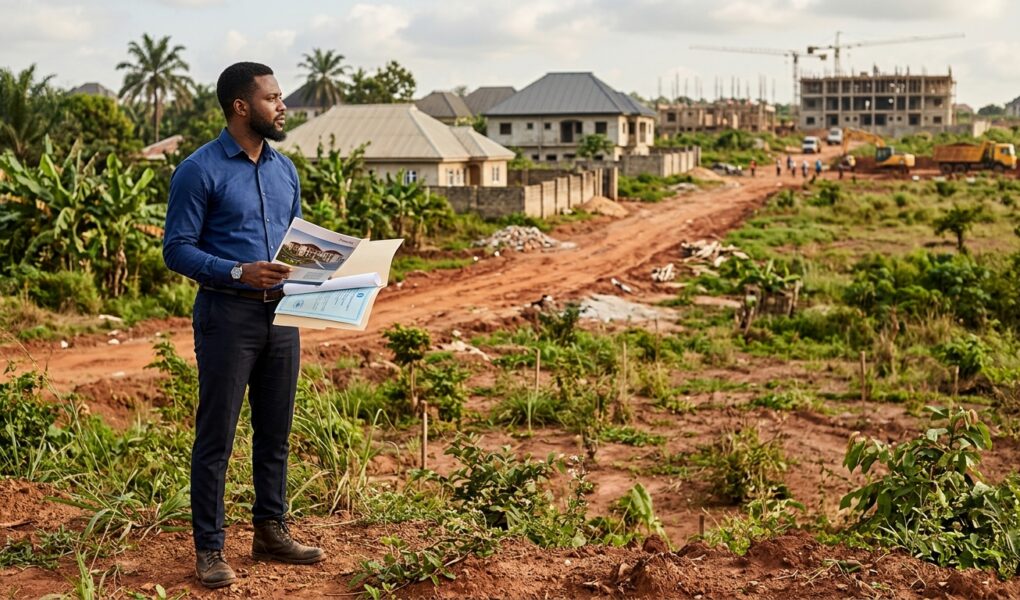
Property investment is often marketed around the promise of a better future. A developer may tell you that a new road will transform a neighbourhood, that a shopping mall will attract businesses, or that a proposed government project will cause land prices to rise dramatically. Another seller may promise that an undeveloped area will soon become the next major residential destination in Nigeria.
These promises can sound convincing, particularly when the property is offered at a relatively low price compared with properties in established neighbourhoods.
However, there is an important difference between investing in a property with genuine growth potential and buying a property whose value depends almost entirely on events that may never happen.
A proposed road may be delayed. A planned shopping centre may never be built. A new estate may take years to attract residents. An area expected to become commercially active may remain undeveloped for much longer than investors anticipated.
When these events fail to happen, investors may discover that their money is tied up in property that is difficult to sell, produces no income, or has appreciated far less than expected.
A good property investment should have a reasonable investment case today, even if its future growth prospects do not materialise as quickly as expected.
In this guide, we will explain how to recognise property investments that depend too heavily on future promises, what questions to ask before committing your money, and how to assess real estate opportunities more carefully in Nigeria.
1. The Investment Sounds Attractive Only Because of What Might Happen Later
One of the first warning signs is that the seller has very little to say about the property’s present value.
Instead, the entire sales pitch focuses on what the neighbourhood may look like in five or ten years.
You may hear statements such as:
- This area will soon become the next major commercial centre.
- Property prices will double once the new road is completed.
- Thousands of people will move here when the proposed development begins.
- This land will be worth several times its current price in a few years.
- You are buying before everyone discovers this location.
These statements are not necessarily false. Some areas genuinely experience substantial growth as infrastructure improves and economic activity expands.
The problem arises when the seller presents possibilities as though they are guaranteed outcomes.
Before investing, ask yourself what makes the property valuable today.
Does it have reliable access? Is there existing demand for land or housing in the area? Are people already living or working nearby? Can the property legally be developed for your intended purpose? Is there evidence of completed transactions involving comparable properties?
If the only convincing reason to buy is that something significant may happen in the future, you need to investigate much more carefully.
2. The Seller Relies on a Proposed Road or Government Project
Infrastructure can influence property values. Better roads, transportation links, drainage systems, electricity infrastructure, and other public improvements may make a location more attractive.
However, a proposed project is not the same as a completed project.
A property marketer may show you a road alignment, a government announcement, a planning document, or a map indicating a future infrastructure project.
You may then be told that buying land immediately will allow you to benefit before prices increase.
Before accepting this argument, establish the project’s actual status.
Ask questions such as:
- Has the project been formally approved?
- Is there an identifiable government agency or responsible organisation?
- Is funding available?
- Has construction actually started?
- Is there an official implementation schedule?
- Does the proposed route pass near the property?
- Could the project be changed, delayed, or cancelled?
- Are there restrictions affecting the land because of the proposed development?
Where possible, verify the information through the relevant government agency or another reliable primary source.
Be particularly cautious when a seller cannot provide anything more than an informal map, an online rumour, or a verbal promise.
Even when a project is genuine, its effect on property prices may be different from what the seller predicts.
For example, a new road might improve access to a neighbourhood, but it could also create noise, increase traffic, or affect individual plots through road expansion or planning restrictions.
Do not buy land simply because someone claims that a government project will make you wealthy.
3. The Investment Depends on a Development That Has Not Been Confirmed
Another warning sign is a property whose projected value depends on a private development that has not yet been delivered.
The seller may refer to a proposed shopping mall, industrial park, university, hospital, residential estate, or commercial centre.
You may be told that once the project is completed, demand for nearby properties will increase significantly.
But several questions remain unanswered.
Who is developing the project? Has the developer secured the necessary approvals? Is financing in place? Has construction started? Is the project progressing as planned? Is there reliable evidence that the proposed facility will attract the expected number of residents, workers, businesses, or visitors?
A project announcement alone cannot answer these questions.
Even a development that has genuinely commenced may experience delays, changes in scope, financial difficulties, or weaker-than-expected demand.
Before purchasing nearby land, investigate the project’s status independently and assess whether the property would still make sense if the development were delayed or never completed.
The more your investment depends on an external project, the more carefully you should evaluate the possibility that the project may not deliver the expected benefits.
4. The Developer Promises Guaranteed Property Appreciation
Be cautious when a developer or property marketer promises that a property will increase in value by a specific percentage within a particular period.
For example, you may be told that a plot purchased for ₦10 million today will be worth ₦20 million in three years.
Such a prediction may sound attractive, but the seller should be able to explain the assumptions behind it.
What evidence supports the projected increase? Are comparable properties actually selling at the expected prices? Has demand increased in the area? Are infrastructure improvements already occurring? What factors could prevent the forecast from becoming reality?
Property prices do not rise automatically every year.
They may stagnate or decline because of weak demand, oversupply, economic conditions, financing costs, infrastructure problems, legal restrictions, or changes in the attractiveness of a neighbourhood.
Even when the asking prices of nearby properties rise, that does not necessarily mean buyers are completing transactions at those prices.
Ask for evidence of actual comparable sales where available, rather than relying exclusively on advertised prices or projections provided by the person selling the property.
A seller can explain why they believe a property has growth potential, but that explanation should not be treated as a guarantee.
5. The Area Has Very Little Evidence of Real Demand
An undeveloped area is not automatically a bad place to invest. Some locations grow gradually as population, infrastructure, and economic activity expand.
However, an area with little existing demand requires more careful analysis.
Imagine visiting a proposed estate and discovering that most surrounding plots are empty. There are few occupied houses, limited commercial activity, poor access roads, and very little evidence of people seeking accommodation in the area.
The developer explains that the neighbourhood will become popular once everyone realises its potential.
That may happen, but you need to understand what will drive the change.
Consider these questions:
- Are people already buying and building in the area?
- Are completed houses being occupied?
- Is there demand for rental accommodation?
- Are nearby businesses operating successfully?
- Is the area accessible from major employment or commercial centres?
- Are essential services available or realistically expected?
- Are there recent completed property transactions that support the asking price?
A location with existing residents, functioning businesses, and demonstrable demand may provide a stronger foundation for investment than one relying entirely on an uncertain future transformation.
This does not mean every undeveloped area should be rejected. It means that you should recognise the difference between an emerging market supported by evidence and a speculative location supported mainly by marketing claims.
6. The Seller Cannot Explain How the Property Will Generate a Return
Property investors generally seek returns through one or more routes.
These may include rental income, resale at a higher price, development and sale, or the future use of the property for business or personal purposes.
If a seller cannot explain how your particular property might produce a return, you should examine the investment more carefully.
For a rental property, investigate whether tenants are likely to pay enough to justify the purchase price, maintenance expenses, taxes, insurance where applicable, management costs, and periods without tenants.
For land purchased for resale, investigate the depth of the resale market and the likely costs of holding the property until a suitable buyer appears.
For a development project, assess the likely construction costs, approvals, infrastructure requirements, and demand for the completed property.
For example, purchasing a plot because it may become valuable in ten years is a different investment strategy from buying a house that already generates rental income.
Neither strategy is automatically superior, but they involve different risks and time horizons.
If the expected return depends on an uncertain future event, you should understand exactly what needs to happen for the investment to succeed.
7. The Investment Has No Clear Exit Strategy
A property may look attractive when you are buying it, but have you considered how you will eventually sell it?
An exit strategy is your plan for converting the investment into cash or achieving your intended financial objective.
For example, you may intend to sell the land after five years, develop it into rental accommodation, or sell a completed building to another investor.
Each strategy requires a different assessment.
If you plan to resell the land, investigate whether buyers are actively purchasing similar properties in the area.
If you intend to develop rental accommodation, assess the likely tenant market and achievable rents.
If you intend to sell a completed house, examine the affordability of the target market and the supply of competing properties.
Be careful when a seller says that you will easily find a buyer in the future without providing a credible explanation.
An investment can increase in its estimated value while remaining difficult to sell at that price.
For example, you might purchase land for ₦8 million and later discover that sellers in the area are advertising comparable plots for ₦12 million. If very few buyers are willing to pay those prices, your ability to realise the expected gain may be limited.
The asking price is not the same as the amount you can actually receive from a completed sale.
Before investing, consider who might buy the property from you, why they would want it, and whether they could afford your expected selling price.
8. The Developer Uses Urgency Instead of Evidence
Some property marketers create pressure by telling prospective buyers that an opportunity will disappear within hours or that prices will increase immediately.
You may hear that only two plots remain, that a government announcement is imminent, or that the next phase will cost substantially more.
Limited availability and changing prices can be genuine. However, pressure should not prevent you from conducting the checks required for a major financial decision.
Be cautious if a seller discourages you from:
- Visiting the property.
- Conducting an independent survey.
- Verifying the title.
- Checking the status of a proposed development.
- Comparing prices with similar properties.
- Reviewing the purchase agreement with a lawyer.
- Asking about additional costs.
A legitimate investment opportunity should withstand reasonable questions.
If a seller insists that you must pay immediately because prices are about to rise, ask for the evidence supporting that claim.
Do not confuse the fear of missing an opportunity with proof that the opportunity is worthwhile.
A missed investment is usually easier to recover from than a poorly investigated property purchase that ties up your savings for years.
9. The Projected Profit Ignores Additional Costs
Some property investments appear profitable because the seller compares the purchase price with an optimistic future selling price while ignoring the expenses required to achieve that return.
For example, you may buy undeveloped land for ₦10 million because the developer predicts that it will sell for ₦15 million in three years.
At first glance, the expected price difference is ₦5 million.
However, you may also incur legal fees, survey costs, applicable taxes and charges, maintenance or security expenses, and eventual selling costs.
If you borrow money to finance the purchase, interest and other financing expenses may further reduce the return.
Inflation also affects what your eventual profit can buy.
The following example illustrates why the total cost matters.
Suppose you purchase land for ₦10 million and sell it three years later for ₦15 million.
Your gross price increase is ₦5 million.
However, imagine that your total acquisition and holding expenses amount to ₦1 million, while your eventual selling expenses amount to ₦500,000.
Your approximate profit before any other applicable taxes or financing costs would be:
₦15 million − ₦10 million − ₦1 million − ₦500,000 = ₦3.5 million.
This is still a positive nominal return, but it is smaller than the original ₦5 million price difference. The calculation also does not account for inflation or the opportunity cost of tying up the money for three years.
These figures are illustrative, not a forecast of property performance.
Before investing, calculate the total expected costs and assess whether the potential return adequately compensates you for the risks.
10. The Seller Cannot Provide Reliable Evidence for Their Claims
A property marketer may make several statements about the future of an area.
They may claim that major companies are moving into the neighbourhood, that a new transport route will pass nearby, or that a proposed institution will bring thousands of people into the area.
These claims should be checked independently.
Ask the seller to identify the source of the information.
Depending on the claim, useful evidence may include official government announcements, planning documents, published project updates, records from the responsible organisation, or evidence of actual construction.
Be cautious with screenshots, edited promotional videos, anonymous social media posts, and maps that cannot be traced to a reliable source.
A document can look official without proving that the project has been approved, funded, or scheduled for implementation.
Also verify whether the proposed development is actually close enough to influence your property.
A seller may advertise land as being near a major project when the actual distance, access route, or travel time makes the connection much less significant.
Do not rely exclusively on the seller’s description of the location.
Visit the property, assess the surroundings, and verify important claims through independent sources.
11. The Property Is Being Sold Mainly to Other Investors
Another warning sign is a development where most buyers appear to be investors hoping to resell their plots to other investors.
There is nothing inherently wrong with selling land to investors. However, a market can become vulnerable when its participants are mainly purchasing because they expect someone else to pay more later.
Ask who will ultimately use the properties.
Will people build homes there? Are businesses likely to operate in the area? Is there a realistic market for rental accommodation? Are there households that want to live in the neighbourhood?
If the investment case depends mainly on continually attracting new buyers at higher prices, demand may weaken when market conditions change.
A sustainable property market usually benefits from some combination of genuine users, businesses, residents, and investors whose expectations are supported by real economic activity.
This does not guarantee appreciation, but it can help provide a more grounded basis for assessing demand.
Before purchasing, investigate whether the property’s future value depends on actual housing or commercial needs, or primarily on the expectation that another investor will eventually pay more.
12. The Development Has Repeatedly Missed Its Promised Completion Dates
Some developers announce ambitious projects but repeatedly postpone delivery.
A residential estate may initially be advertised with promises of completed roads, drainage, electricity infrastructure, recreational facilities, and other amenities.
Years later, buyers may discover that only a small portion of the promised work has been completed.
Delays can occur for legitimate reasons, including financing problems, regulatory issues, changes in project scope, or unexpected construction challenges.
However, repeated delays should prompt you to investigate the developer’s ability to deliver.
Ask:
- What has actually been completed?
- What remains outstanding?
- How long has the project been delayed?
- Has the developer explained the reasons?
- Is there credible evidence that construction is progressing?
- Are the remaining works funded?
- What contractual commitments has the developer made?
- What remedies are available if the promises are not fulfilled?
Where possible, inspect completed projects previously delivered by the same developer.
Speak with existing buyers and investigate whether their experiences support the developer’s claims.
Do not treat a proposed completion date as evidence that the project will be completed on time.
If you are buying land within a development scheme, also establish which infrastructure the developer is contractually obligated to provide and which features are merely future aspirations.
13. The Property’s Current Price Already Assumes Future Growth
Sometimes a seller promotes a property as an early investment opportunity even though the asking price already reflects much of the expected development.
For example, a plot may be marketed as being in an emerging neighbourhood, but its price is already close to that of plots in more established locations.
In such a situation, the potential future gain may be smaller than the marketing suggests.
Compare the property with genuinely comparable plots, taking account of location, title quality, access, infrastructure, size, and development restrictions.
Investigate actual completed sales where reliable information is available.
Then consider how much additional value could realistically arise from the proposed development.
If the property is already expensive relative to similar plots, you may be paying today for benefits that have not yet materialised.
This does not automatically mean the property is overpriced. Its location, title, infrastructure, or development potential may justify a premium.
However, the price should be supported by evidence rather than by an optimistic description of the neighbourhood’s future.
14. You Are Being Asked to Invest Without a Clear Time Horizon
Property investment can require patience, especially when the strategy involves purchasing undeveloped land in an emerging area.
The problem arises when you do not know how long you may need to wait before achieving your objective.
A seller may tell you that the area will develop soon, but what does “soon” mean?
Will the proposed infrastructure be delivered within two years, five years, or ten years? What happens if development takes longer? Can you afford to leave the money invested for that period?
Before committing funds, decide how long you can reasonably hold the property.
Consider whether you may need the money for school fees, medical expenses, business opportunities, housing, or other financial obligations.
If you might need to sell the property quickly, an investment that depends on long-term speculative appreciation may be unsuitable.
Even if the property eventually increases in value, you may not be able to sell it quickly at an acceptable price when you need cash.
The investment should fit your financial circumstances and time horizon rather than forcing you to depend on an uncertain future event.
15. You Have Not Considered What Happens if the Promises Fail
One of the most useful ways to assess a speculative property investment is to consider an alternative scenario.
Instead of asking only, “What happens if everything goes according to plan?” ask, “What happens if the most important promise never materialises?”
For example:
- What if the new road is delayed by five years?
- What if the proposed shopping centre is never built?
- What if the area attracts fewer residents than expected?
- What if land prices remain unchanged?
- What if development costs increase?
- What if you cannot find a buyer when you want to sell?
- What if the promised infrastructure is never delivered?
These questions help you understand how dependent your investment is on external events.
If the property would still serve a useful purpose, has a credible market, and is affordable to hold, the investment may be more resilient.
If the investment becomes unattractive under almost every scenario except the most optimistic one, you may be taking more risk than you realise.
This approach does not eliminate uncertainty, but it helps you make a decision based on more than the best-case forecast.
16. How to Evaluate a Property Investment Before Buying
Before committing money to a property whose value depends on future development, use the following process.
Step 1: Establish the property’s current value
Investigate comparable properties and assess the land’s existing advantages and limitations.
Do not rely solely on the developer’s price list or projected future values.
Step 2: Verify ownership and title
Engage an independent property lawyer to investigate the title and determine whether the seller can legally transfer the property.
A promising location cannot compensate for an unacceptable ownership risk.
Step 3: Inspect the location
Visit the property and assess road access, surrounding development, drainage, available services, and nearby economic activity.
If possible, inspect the area at different times and during the rainy season when drainage or flooding may be more apparent.
Step 4: Verify the future development claims
Identify the responsible organisations and check the actual status of proposed roads, commercial centres, or other developments.
Distinguish between completed infrastructure, projects under construction, formally approved proposals, and informal speculation.
Step 5: Investigate demand
Assess whether people are actually buying, building, living, working, or renting in the area.
Look for evidence of genuine demand rather than relying exclusively on statements about future popularity.
Step 6: Calculate the total investment cost
Include the purchase price, professional fees, applicable charges, infrastructure contributions, maintenance, financing, and eventual selling costs.
Step 7: Assess the exit strategy
Determine how you expect to recover your money or generate a return.
Consider whether there is a credible market for the property if your original plan changes.
Step 8: Test a less optimistic scenario
Estimate what would happen if the anticipated development were delayed or failed to deliver the expected benefits.
If the investment becomes financially unmanageable under a plausible alternative scenario, reconsider the amount you are committing.
Step 9: Review the agreement
Have an independent property lawyer review the transaction documents, the seller’s obligations, the completion arrangements, and any contractual promises about infrastructure or development.
Do not assume that an informal marketing promise will be enforceable simply because it was made during negotiations.
Step 10: Make a decision without pressure
Compare the opportunity with other available investments and consider whether the potential return justifies the risks.
If essential information remains unavailable, delay the decision rather than investing on assumptions.
17. Should You Avoid Every Property That Depends on Future Development?
No.
Some of the most attractive property opportunities arise before an area becomes fully developed.
Investors who purchase in suitable locations before infrastructure improves or demand expands may benefit from subsequent growth.
However, the objective should be to understand and price the uncertainty rather than ignore it.
A property with strong current fundamentals and credible future growth prospects may be worth considering.
For example, a plot may already have satisfactory title, reliable access, nearby occupied homes, and evidence of increasing demand. A proposed road improvement could provide an additional reason to expect stronger future demand.
That is different from purchasing land in an isolated location solely because a salesperson says a major development will arrive one day.
The first investment has several factors supporting its potential. The second may depend almost entirely on an event outside your control.
A useful principle is to distinguish between growth as an additional benefit and growth as the only reason to buy.
Future development can strengthen an investment case, but it should not automatically replace evidence about the property’s current value, legal status, and marketability.
Conclusion: Look Beyond the Promises Before Investing
Property investment in Nigeria can offer opportunities for long-term wealth creation, but not every development announcement or attractive sales presentation represents a sound investment.
A property becomes risky when its expected value depends heavily on roads that have not been built, projects that have not been confirmed, demand that has not materialised, or appreciation that the seller cannot substantiate.
Before purchasing, establish the property’s current value, verify ownership, investigate the location, confirm important development claims, assess real demand, and calculate the total cost of holding the investment.
Most importantly, consider what would happen if the future promises were delayed or never fulfilled.
If the property still makes financial sense under reasonable alternative scenarios, you may have a stronger basis for considering the opportunity. If the investment only works when every prediction comes true, proceed with extreme caution.
The smartest property investors do not simply ask what a piece of land might become. They investigate what it is worth today, what could realistically improve its value, and what risks could prevent those improvements from happening.