If you own a piece of land but have not built a house on it, you may have wondered:
“Is this land really an asset?”
Some people believe a property only becomes valuable after a house has been built on it. Others argue that owning land is already an investment because land can appreciate in value over time.
The truth is that land can be an asset even when there is no building on it.
@qadevaofficial Replying to @atlantic_interiors ♬ original sound – Authentic Omo-onile
In fact, vacant land can sometimes become more valuable over time as the surrounding area develops. However, simply owning land does not automatically mean you have made a good investment.
The location, title, accessibility, demand, development potential, acquisition cost and future use of the land all matter.
So, if you have been holding a plot of land without building on it, should you consider yourself an asset owner?
Let’s take a closer look.
What Is an Asset?
An asset is generally something you own that has economic value and can potentially provide a financial benefit in the future.
Examples include:
- Cash
- Shares
- Businesses
- Vehicles
- Houses
- Commercial properties
- Land
- Other investments
Land fits this definition because it has value and can potentially:
- Appreciate in price
- Generate income
- Be developed
- Be sold
- Be leased
- Be used as collateral, subject to applicable requirements
Therefore, a piece of land does not need to have a house sitting on it before it can be considered an asset.
The more important question is whether the land is a valuable and usable asset.
Yes, Land Without a House Can Be an Asset
Imagine that you bought a plot of land for ₦5 million several years ago.
You haven’t built anything on it.
Today, similar plots in the same area are selling for ₦15 million.
You have not built a house, yet the land has increased in market value.
The building did not create that increase.
Factors such as:
- Population growth
- New roads
- Infrastructure
- Commercial development
- Increased demand
- New residential estates
- Expansion of the city
may have increased the value of the land.
This is one of the major reasons investors buy land and hold it for several years.
Land and Buildings Are Two Different Assets
One important concept many property owners overlook is that the land and the building are not the same thing.
A house sits on land, but the value of the entire property comes from both components.
For example, imagine two properties:
Property A
Land value: ₦20 million
Building value: ₦30 million
Total property value: approximately ₦50 million
Property B
Land value: ₦20 million
No building
Total property value: approximately ₦20 million
Both owners have assets.
The first owner has land plus a building.
The second owner has land only.
Therefore, not having a building does not mean you have no asset.
Why Vacant Land Can Become More Valuable
Land is particularly interesting because its supply in desirable locations can be limited.
As an area develops, more people may want to live, work or operate businesses there.
That can increase demand for land.
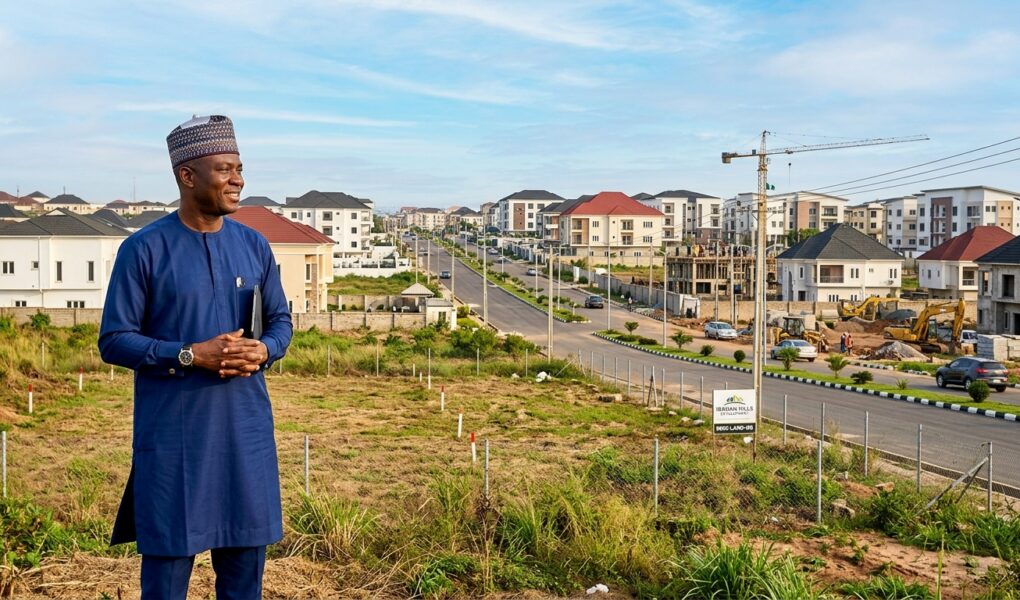
For example, suppose you purchased land on the outskirts of a city when the area was relatively undeveloped.
At the time, there might have been:
- Few houses
- Poor roads
- Limited businesses
- Little commercial activity
Ten years later, the same area could have:
- New roads
- Schools
- Shopping centres
- Hospitals
- Estates
- Businesses
- Better transportation
- More residents
The land you purchased years earlier may now be considerably more attractive to buyers.
This is why location and timing can be important components of land investment.
But Don’t Assume Every Piece of Land Will Appreciate
This is where new property investors often make a mistake.
They hear:
“Land always increases in value.”
That is too simplistic.
Land can appreciate, but there is no universal guarantee that every plot will increase in value.
A piece of land may remain stagnant for years if:
- The area has little demand
- Infrastructure does not improve
- Access remains poor
- The location is undesirable
- Flooding affects the area
- Development is restricted
- The property’s title is problematic
- The surrounding area declines
- There are disputes over ownership
A plot of land is therefore not automatically a good investment simply because it is land.
The quality of the asset matters.
The Location of Your Land Matters More Than the Fact That You Own Land
Consider two people who each own one plot.
Person A owns land close to:
- A major road
- A growing residential area
- Schools
- Commercial centres
- Public transportation
- New infrastructure
Person B owns land in an isolated area with:
- Poor road access
- Little development
- Weak demand
- Flooding problems
- Few nearby services
Both people own land.
But their assets are not equally valuable.
This is why property investors often say:
“Location matters.”
It affects both the present value and the future potential of the property.
Is Land an Investment or Just an Asset?
There is a subtle difference.
An asset is something you own that has value.
An investment is an asset acquired with the expectation of generating a financial benefit.
Land can be both.
If you bought land simply because you needed somewhere to build your future home, it is still an asset.
If you deliberately purchased land in an emerging area with the intention of selling it at a higher price later, you are treating the land as an investment.
The same piece of land can therefore be:
An asset to one person and an investment to another.
Land Can Generate Wealth Without a House
You don’t necessarily have to build immediately to benefit from land ownership.
Depending on the property and local rules, vacant land may provide value through:
Appreciation
The land becomes more valuable as demand increases.
Sale
You can sell it later if a buyer is willing to pay your asking price.
Development
You can eventually build a residential or commercial property.
Leasing
Certain types of land may be leased or used for permitted purposes.
Strategic Holding
You can retain the property while waiting for a particular development or market condition.
However, these possibilities depend heavily on the location, title, permitted use and market demand.
Does Not Building a House Make the Land a Bad Asset?
Not necessarily.
There are many legitimate reasons for owning land without immediately building.
You might have bought it for:
- Retirement
- Your children’s future
- A future family home
- Long-term investment
- Business expansion
- Future development
- Land banking
The problem is not necessarily owning undeveloped land.
The problem is owning land without understanding what you intend to do with it.
The Hidden Cost of Holding Land
One mistake investors make is assuming that vacant land costs nothing to hold.
It can.
Depending on the property and location, you may have costs associated with:
- Property documentation
- Surveying
- Fencing
- Security
- Clearing
- Ground rent or applicable charges
- Taxes or levies
- Maintenance
- Legal protection
- Monitoring the property
There can also be a less obvious cost:
Opportunity cost.
Suppose you have ₦20 million tied up in vacant land.
That ₦20 million cannot simultaneously be used for another investment unless you sell or otherwise leverage the land.
Therefore, when deciding whether to hold land for many years, consider what the money could have earned elsewhere.
Your Land Can Be an Asset but Still Be a Poor Investment
This distinction is extremely important.
Imagine you bought a plot for ₦10 million.
Ten years later, you can only sell it for ₦11 million.
Technically, you still own an asset.
But when you consider:
- Inflation
- Transaction costs
- Maintenance
- Security
- Taxes or charges
- The opportunity cost of your money
your actual investment performance may be disappointing.
Therefore, don’t ask only:
“How much is my land worth today?”
Also ask:
“How well has this asset performed compared with other reasonable alternatives?”
Documentation Can Affect the Value of Your Land
A plot of land without proper documentation can create serious problems.
Two plots may look exactly the same physically but have very different investment values because one has properly verified title while the other has unresolved ownership issues.
Before considering land a valuable long-term asset, you should know:
- Who legally owns it?
- What title does it have?
- Has the title been verified?
- Is there government acquisition?
- Is there any dispute?
- Are the boundaries clear?
- Is there an approved survey?
- Are there restrictions on development?
Proper documentation is not merely paperwork.
It is part of protecting the value of the asset.
What If You Bought Land Many Years Ago and Have Never Checked It?
Don’t assume that because you bought the land years ago, everything is automatically fine.
If you have not visited the property recently, consider checking it.
Confirm:
- The land is still identifiable
- Boundaries remain clear
- No one has encroached on it
- The surrounding area has not changed significantly
- There are no new disputes
- Your documents are safely preserved
- Relevant obligations have been handled
If you bought the land through an agent or another person, make sure you have your own copies of the important documentation.
Should You Build a House on the Land to Increase Its Value?
Sometimes.
But building is not automatically the best way to increase your return.
Suppose you own land worth ₦20 million.
You spend ₦50 million building a house.
Your total investment is now around ₦70 million, excluding other expenses.
If similar properties in the area sell for only ₦60 million, building the house may not have created the financial outcome you expected.
On the other hand, if the finished property could realistically sell for ₦100 million or generate strong rental income, development may make financial sense.
This is why you should calculate before building.
Don’t build simply because you have land. Build when the numbers and your personal objective make sense.
When Building on Your Land Makes Sense
Building may make sense when:
- There is strong demand for housing
- Rental demand is strong
- The location is sufficiently developed
- You have enough capital
- The expected rental income justifies the development cost
- The completed property should have good resale value
- You need the property for personal use
- You have a clear development plan
When Holding the Land May Make Sense
Continuing to hold the land may make sense when:
- The area is developing
- Infrastructure is improving
- Demand is increasing
- You are waiting for the right development opportunity
- You don’t currently have enough capital to build
- Your long-term strategy is land appreciation
- Building immediately would put you under financial pressure
There is nothing inherently wrong with waiting.
But waiting should be intentional, not accidental.
Don’t Build a House You Cannot Maintain
One of the biggest mistakes property owners make is assuming that constructing a bigger house automatically creates more wealth.
It doesn’t.
A large house can come with:
- Higher construction costs
- Higher electricity costs
- Higher maintenance costs
- Higher security expenses
- More repairs
- Larger property taxes or charges where applicable
- More difficult resale in some locations
If your financial capacity cannot comfortably support the property, the building could become a burden rather than an asset.
Sometimes, a smaller, well-planned property is financially wiser than an expensive house that is difficult to maintain.
How to Know Whether Your Land Is a Good Asset
Ask yourself these questions:
1. Is the title secure?
Can you prove your ownership?
2. Is the location desirable?
Would people want to live, work or invest there?
3. Is the area developing?
Are infrastructure and economic activities increasing?
4. Is there demand?
Who would buy or use the property?
5. Is the land accessible?
Can people easily reach it?
6. Is development permitted?
Can you legally build the type of property you want?
7. What is the current market value?
Don’t rely only on what an agent tells you.
8. What is your future plan?
Are you holding, building, leasing or selling?
If you can answer these questions confidently, you have a much better understanding of the asset you own.
Land Banking: Why Some Investors Buy and Wait
Land banking involves acquiring land and holding it with the expectation that its value may increase as the surrounding area develops.
For example, an investor might buy land in an emerging area where infrastructure and population are expected to increase.
The investor may not build immediately.
Instead, they wait for:
- Population growth
- Road development
- New businesses
- Residential expansion
- Infrastructure
- Increased demand
If these developments occur, the land may become more valuable.
However, land banking involves risk.
Never confuse an expectation of future development with a guarantee that development will happen.
The Bottom Line
So, is having land without building a house the same as having an asset?
Yes.
Land can be a valuable asset even when there is no building on it.
However, owning land does not automatically mean you have made a profitable investment.
The real value of the land depends on factors such as:
Location + Title + Demand + Accessibility + Development Potential + Market Value
A properly documented plot in a growing location can potentially become significantly more valuable over time.
But a poorly located or disputed piece of land can tie up your money without producing the results you expected.
So don’t feel pressured to build simply because someone tells you:
“A piece of land is useless until you build on it.”
That is not necessarily true.
Instead, understand what you own, protect the title, monitor the location, know the market value and have a clear plan for the future.
A house is not the only thing that creates value in real estate. Sometimes, the land underneath it is the asset you should be paying the most attention to.