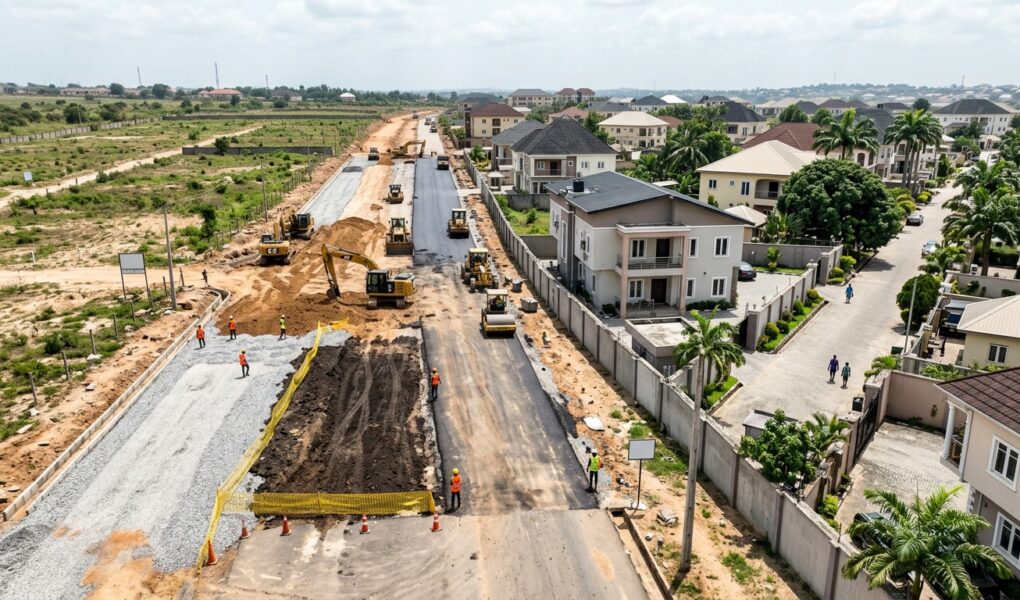
Imagine buying a plot of land in a quiet part of Nigeria because you believe the area will become more valuable in the future. A few years later, the government announces plans to construct a major road nearby.
At first, the news sounds like good fortune. You imagine improved access, new businesses, rising property values, and more buyers looking for land in the area.
But there is another side to the story.
The proposed road could pass directly through your land, reduce the size of your plot, increase noise around your home, affect your access, or expose you to a compulsory land acquisition process. In some locations, construction may also create drainage problems or change the character of the neighbourhood.
This is why future road construction deserves serious attention before buying land or investing in property in Nigeria.
A future road can increase your property’s value, reduce its usefulness, or put part of your ownership at risk, depending on the route, design, location, and applicable planning rules.
In this article, we explain how planned road construction can affect property owners, what buyers should investigate before purchasing land, and how to protect a real estate investment when a new road is proposed.
1. Future Road Construction Can Increase Property Value
One of the biggest potential benefits of road construction is improved accessibility.
An area that previously required a long journey along a rough road may become easier to reach after a new highway, expressway, bridge, or connecting road is completed.
Better access can attract residents, businesses, developers, and investors. Properties that were previously difficult to market may become more attractive when people can travel to and from the area more conveniently.
For example, undeveloped land on the outskirts of a growing Nigerian city may attract more interest if a new road provides a reliable connection to established residential or commercial districts.
A completed road may also encourage businesses such as shops, filling stations, warehouses, hotels, and logistics facilities to consider locations along the corridor, subject to applicable planning and land-use requirements.
However, the increase in value is not automatic. The road must provide a genuine benefit to the specific property, and the market must be willing to pay for that benefit.
What property buyers should do: Investigate the proposed road’s route, purpose, access points, and expected connections. Do not buy land based solely on an agent’s claim that a new road will make the area expensive.
2. The Road Could Pass Through Your Land
This is one of the most serious risks property owners should consider.
A proposed road may require land currently occupied by houses, shops, farms, or undeveloped plots. Depending on the approved alignment and the land required for the project, some properties may be wholly or partly affected.
A buyer who purchases land without investigating the proposed route may later discover that the plot falls within an acquisition or road right-of-way corridor.
For example, you may buy a plot intending to build a house, only to learn that a portion of the land is required for road construction or associated infrastructure.
The effect can be particularly severe if the affected portion includes the building site, entrance, frontage, or another essential part of the property.
Nigeria has experienced such issues in connection with major infrastructure projects. In 2026, reports concerning road projects in Oyo State described compensation processes for property owners affected by road expansion and the Ibadan Circular Road project. These cases illustrate why checking official project information before purchasing land is important. Source: Voice of Nigeria and PropertyAccess.
What property buyers should do: Check whether the property falls within an officially identified road corridor, proposed right of way, acquisition area, or planning restriction. Obtain the relevant survey and planning information rather than relying on verbal assurances.
3. You May Face Compulsory Land Acquisition
When land is required for a public infrastructure project, the relevant government authority may pursue compulsory acquisition or other legally authorised land measures, subject to the applicable law and procedures.
This can affect landowners whose properties fall within the approved project area.
The implications depend on the nature of the land interest, the acquisition process, applicable legislation, and the specific circumstances. Compensation may be relevant, but the amount, eligibility, timing, and procedure should not be assumed in advance.
Property owners should also understand that compensation is not necessarily the same as receiving the full price they expect the property could fetch on the open market. The applicable legal framework and the nature of the interest being acquired can affect how compensation is assessed.
For this reason, it is risky to purchase land in a proposed road corridor simply because someone promises that the government will compensate you later.
What property buyers should do: Investigate the property’s legal status before paying. If an acquisition notice or road alignment affects the property, consult a qualified Nigerian property lawyer and, where appropriate, an estate surveyor and valuer.
If your property is already affected, preserve your title records, survey plans, payment receipts, notices, and other evidence of your interest. Follow the official verification and compensation process relevant to the project.
4. A New Road Can Improve Access to Previously Remote Land
Some properties remain unattractive because reaching them is difficult.
A new road may connect a developing neighbourhood to a major highway, town centre, industrial area, school, market, or transport hub. This can make the location more practical for people who want to live, work, or operate a business there.
Improved access may also reduce travel time and make deliveries, construction activities, and property maintenance easier.
For land investors, the change can be significant if the new road connects the area to genuine economic activity rather than simply passing through undeveloped land.
However, a road’s presence alone does not guarantee that the surrounding community will experience rapid growth. Access to water, electricity, drainage, security, and employment opportunities may still be limited.
What property buyers should do: Consider the complete infrastructure picture. Investigate how the road connects to existing communities and services, whether access will be available to your particular property, and whether the area has evidence of sustainable demand.
5. Properties Close to Major Roads May Experience More Noise
Improved access can come with disadvantages.
A house located near a busy highway may experience traffic noise, vehicle emissions, dust, vibration, and reduced privacy. These effects can be particularly noticeable where heavy vehicles use the road throughout the day or night.
Some buyers prefer properties close to major roads because of convenience. Others prefer quieter residential streets.
As a result, road construction may increase demand for certain commercial properties while making some residential properties less attractive to buyers who value peace and privacy.
The actual effect depends on the road’s design, traffic volume, distance from the property, landscaping, noise-control measures, and the intended use of the building.
What property buyers should do: Visit the property at different times of day and consider how the completed road might operate. Check the proposed distance between the property and the carriageway, including any planned service roads, barriers, or buffer zones.
Do not assume that every property close to a highway will appreciate more quickly than properties farther away.
6. The Road Could Affect Your Property’s Entrance or Frontage
A new road can change how vehicles and pedestrians reach a property.
In some cases, an existing entrance may be altered, relocated, restricted, or made unsuitable by road widening, a median, a drainage channel, a service lane, or a redesigned junction.
A property that previously had convenient direct access may eventually require an alternative entrance or a longer route to reach the main road.
This can be particularly important for shops, filling stations, warehouses, hotels, and other businesses that depend on convenient vehicle access.
A property may be close to a new highway but still lack direct access to it. Major roads often have controlled entry points, and the ability to connect a property to the road may depend on planning and highway-access rules.
What property buyers should do: Confirm the proposed access arrangements before purchasing. Do not assume that being beside a highway gives you an unrestricted right to build a driveway or commercial entrance.
If access is essential to the property’s intended use, obtain written clarification from the relevant planning or road authority.
7. Road Construction Can Affect Drainage and Flooding
Roads change the way water moves across land.
Road embankments, paved surfaces, drainage channels, culverts, and changes in ground levels can redirect water. If the drainage system is poorly designed, obstructed, or inadequate for local conditions, nearby properties may experience waterlogging or flooding.
In some situations, road construction improves drainage by providing properly designed channels. In others, neighbouring landowners may experience problems if existing water routes are blocked or the surrounding terrain is altered.
A property that appeared dry before construction may therefore require closer examination when a major road project is planned nearby.
What property buyers should do: Study the property’s elevation, existing drainage, and history of flooding. Speak with nearby residents and inspect the area during or after rainfall when possible.
For land near a proposed embankment, culvert, or major drainage channel, consider obtaining professional advice on levels and water flow before committing to construction.
8. A New Road Can Change the Character of a Neighbourhood
Major road projects can encourage changes in land use and development.
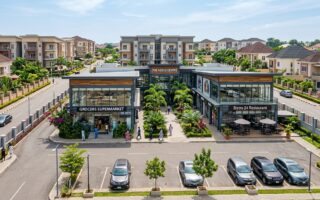
An area that was previously quiet and largely residential may attract more shops, offices, transport services, warehouses, or commercial facilities after access improves.
This can create opportunities for some property owners while reducing the appeal of the area to others.
For example, a property located near a busy junction may become more suitable for a commercial use than for a family seeking a quiet residential environment. Whether a change of use is permitted will depend on the applicable planning rules.
In addition, the arrival of businesses and new residents may increase demand for rental accommodation and other services. But this outcome depends on the area’s economic activity and the nature of the road project.
What property buyers should do: Consider the long-term direction of the neighbourhood. Ask whether the area is intended to remain residential, become mixed-use, or support commercial or industrial development.
Review the applicable development plan instead of assuming that the neighbourhood will retain its current character forever.
9. Land Prices May Rise Before the Road Is Completed
News of a planned road can influence land prices long before construction begins.
Some landowners may increase their asking prices after a government announcement, while agents may promote nearby plots as future investment opportunities.
This can create excitement among buyers who fear missing out on an opportunity.
However, a proposed road may take years to complete. Its route, design, funding, timing, or scope may change. In some cases, a proposal may be delayed or never proceed as originally announced.
Buying land at a premium based entirely on an expected road project can therefore expose an investor to significant risk.
For example, if a plot’s price rises sharply after a road announcement, the potential increase in value after completion may already be reflected in the asking price.
What property buyers should do: Separate confirmed project information from speculation. Investigate the property’s current value and compare it with similar land in the area.
Consider whether the investment would still make sense if the road were delayed or did not deliver the expected benefits.
10. Construction Can Temporarily Reduce Property Demand
Even when a road project is beneficial in the long term, the construction period can be inconvenient.
Construction work may lead to traffic diversions, dust, noise, blocked entrances, temporary drainage problems, and difficulty reaching nearby shops or homes.
Businesses may experience fewer customers if access becomes difficult, while landlords may find it harder to attract tenants who want a quiet and convenient location.
The duration and severity of these effects depend on the project, construction schedule, temporary access arrangements, and the distance between the property and the work site.
What property buyers should do: Find out the current project stage and expected construction arrangements. If you are buying a rental property or commercial building, consider whether temporary disruption could affect rental income or business activity.
Avoid assuming that the property will immediately become more profitable once construction starts.
11. Properties May Be Affected by Road Setbacks and Planning Restrictions
Road authorities and planning agencies may apply rules governing building lines, setbacks, access, drainage, and other development requirements.
These rules can restrict where and how a property owner may build, even when the property is not entirely acquired for the road itself.
A plot may appear large enough for a planned house, but the usable building area could be reduced by the applicable setback or other restrictions.
This can affect the property’s development potential, design, parking arrangements, and commercial use.
The specific requirements vary according to the location, road classification, planning framework, approved project design, and applicable regulations.
What property buyers should do: Verify the official road alignment and relevant setback requirements before building or purchasing land. Ask the relevant planning authority to clarify the permitted development area.
Do not rely on a seller’s claim that a plot is suitable for a particular building unless the relevant measurements and planning requirements have been checked.
12. The Value of Your Property May Decrease if the Road Divides the Area
Some road projects improve connectivity, while others can create barriers between neighbourhoods.
A major highway, fenced carriageway, or controlled-access road may make it harder for residents to move between communities on opposite sides. If convenient crossing points are limited, people may need to travel farther to reach schools, markets, workplaces, or public transport.
This can influence the desirability of some properties, particularly those that previously relied on direct pedestrian or vehicle connections.
The impact depends on the road design, crossing points, service roads, and local travel patterns.
What property buyers should do: Study the planned junctions, pedestrian crossings, bridges, interchanges, and access routes. Consider how residents and customers will reach the property after the road is completed.
A nearby road is most useful when it improves practical access to the places people need to reach.
13. A Road Project Can Create New Business Opportunities
Road construction can also create opportunities for property owners and investors.
Depending on the location and approved land use, improved accessibility may support demand for:
- Shops and retail spaces.
- Warehouses and logistics facilities.
- Hotels and short-stay accommodation.
- Offices and service businesses.
- Petrol stations and vehicle-related services.
- Rental housing for workers and residents.
- Commercial plots at suitable junctions.
However, not every property near a road is suitable for commercial development. Planning restrictions, access permissions, traffic patterns, utilities, and local demand must be considered.
A roadside plot may be valuable for one purpose but unsuitable for another.
What property buyers should do: Identify the likely users of the property and investigate whether the intended development is permitted. Base your decision on current demand and credible planning information rather than the assumption that all roadside land will become commercially valuable.
14. Future Road Construction May Affect Your Compensation Rights
If the government acquires land or revokes a relevant right for a public project, the affected person’s rights and any compensation entitlement will depend on the applicable legal framework and the specific interest involved.
Property owners should not assume that every person who occupies land will receive the same amount or that compensation will automatically cover every loss they anticipate.
The process may require verification of ownership or other recognised interests, assessment of the affected property, and submission of supporting documentation.
Recent reporting on road projects in Oyo State illustrates the importance of documentation and verification. In May 2026, Voice of Nigeria reported on compensation for property owners affected by the expansion and reconstruction of the Ojoo/Akinyele Road. Read the report.
If you believe your property is affected, do not rely solely on rumours or unofficial lists.
What property owners should do:
- Obtain official information about the project and the affected corridor.
- Preserve your title documents, survey plan, receipts, and relevant notices.
- Ask the responsible authority how affected interests are being verified.
- Seek professional legal advice about your rights and the applicable process.
- Keep copies of every application, submission, and official communication.
Do not pay unofficial intermediaries who promise to secure compensation or guarantee inclusion on an approved list.
How to Check Whether a Future Road Will Affect Your Property
Before buying land or developing a property near a proposed road, conduct a proper investigation.
Step 1: Identify the Exact Road Project
Find out the official name of the project, the responsible authority, and the proposed route.
Distinguish between a road that has been officially approved and funded, one that appears in a planning document, and one that an agent merely claims is coming.
Step 2: Obtain Reliable Route Information
Ask the relevant government or planning authority for available maps, alignment details, acquisition notices, or other official records.
Do not rely entirely on a hand-drawn sketch or a screenshot shared on social media.
Step 3: Compare the Route With Your Survey Plan
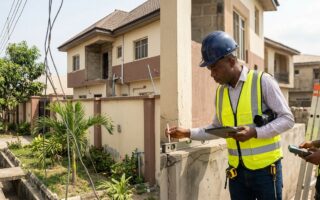
Have a qualified surveyor assess the property’s location against the available road alignment information.
This can help identify whether the plot may fall within a proposed corridor or be affected by setbacks, access changes, or other restrictions.
Step 4: Verify the Property’s Title
Ask a qualified property lawyer to review the ownership records and relevant title information. A valid-looking document does not necessarily establish that the property is free from all acquisition or planning issues.
Step 5: Visit the Property
Inspect the land and its surroundings. Look at existing roads, drainage channels, nearby buildings, road markers, and other relevant features.
Speak with nearby residents for local context, but verify important claims independently.
Step 6: Assess the Financial Implications
Consider both the potential benefits and the risks. Ask whether the road could improve access, create noise, restrict development, affect drainage, or reduce the usable portion of the property.
Avoid paying a premium for future development that is uncertain.
Step 7: Get Professional Advice Before Payment
If the land is close to a proposed highway, interchange, expressway, or acquisition corridor, obtain appropriate legal and surveying advice before making a substantial payment.
The cost of checking the property before purchase may be small compared with the potential loss from buying land that cannot be used as intended.
Should You Buy Land Near a Proposed Road?
Buying land near a proposed road can be a sensible investment, but it depends on the specific location and the details of the project.
The potential advantages include improved accessibility, greater commercial activity, stronger buyer interest, and better connectivity to established neighbourhoods.
The risks include compulsory acquisition, reduced usable land, planning restrictions, noise, drainage problems, access limitations, and paying an inflated price based on speculation.
Before buying, ask yourself:
- Is the road project officially documented?
- Is the proposed alignment clear?
- Is the property outside any identified acquisition corridor?
- Can I verify the property’s ownership and survey details?
- Will the road improve access to this particular plot?
- Could the project affect the entrance, drainage, or usable building area?
- Is the asking price reasonable without assuming future appreciation?
- Would the investment still make sense if the road were delayed?
If you cannot obtain reliable answers, consider delaying the purchase until the uncertainty is resolved.
Frequently Asked Questions
Will a new road always increase property value?
No. A new road may increase demand where it improves accessibility and supports economic activity. However, noise, pollution, acquisition, restricted access, drainage problems, or an unsuitable location can reduce a property’s appeal.
Can the government take my land for road construction in Nigeria?
Government authorities may acquire land or revoke relevant rights for public purposes subject to applicable law and procedures. The specific process and any compensation entitlement depend on the circumstances and the nature of the property interest involved. Seek legal advice if your land is affected.
How can I know whether my land is on a proposed road route?
Request available official alignment maps, planning records, or acquisition information from the relevant authority. Compare those records with your survey plan with the assistance of a qualified surveyor.
Is land near a highway a good investment?
It can be, but the answer depends on access, permitted land use, market demand, title status, road design, and the price you pay. Proximity to a highway alone does not guarantee appreciation.
Should I buy land because a road is coming?
Do not make the decision based only on that promise. Verify the project, assess the land’s current value, and investigate whether the road will benefit the specific plot or expose it to restrictions or acquisition.
What should I do if road construction has affected my property?
Obtain official information about the project, document the effect on your property, preserve relevant records, and contact the responsible authority to understand the process. Consult a qualified property lawyer regarding acquisition, compensation, and any other rights that may apply.
Final Thoughts
Future road construction can create valuable opportunities for Nigerian property owners, but it can also introduce risks that are easy to overlook when buying land.
A new road may improve access, attract businesses, and increase demand. It may also affect the property’s boundaries, usable area, drainage, privacy, entrance, or legal status.
The difference often lies in the exact route, the project’s design, the property’s location, and the quality of the investigation carried out before purchase.
For land buyers, the safest approach is to verify the road project and the property’s legal status before committing money. For existing owners, staying informed and keeping proper documentation can make it easier to respond if the project affects their interests.
Do not buy land simply because a road is coming. Buy after you understand where the road will go, how it may affect your property, and whether the investment still makes sense under realistic conditions.