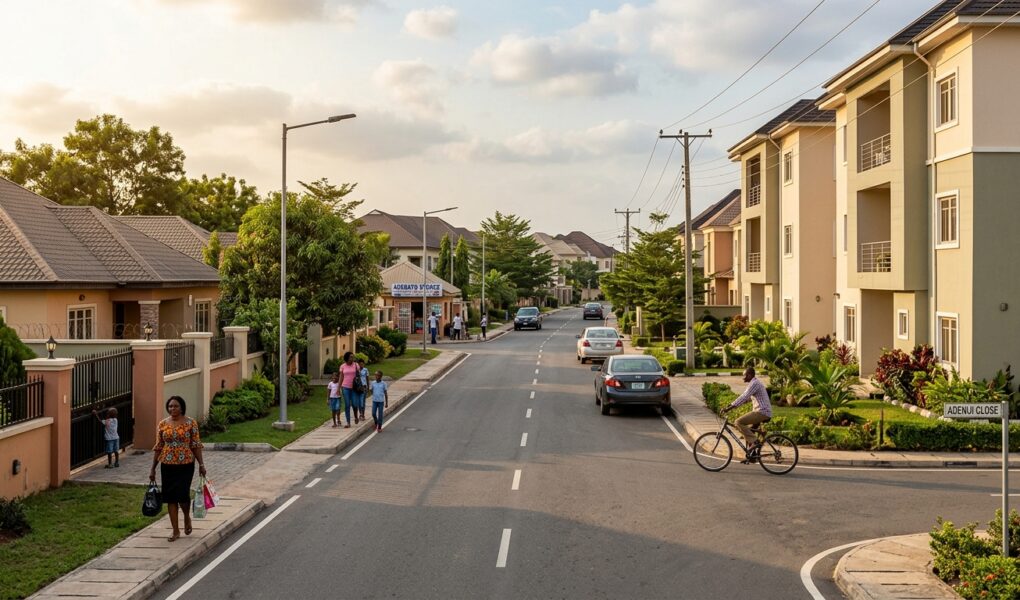
When investing in real estate in Nigeria, one of the most important questions to ask is not just how much a property costs, but whether people will want to rent it in the future.
A beautiful house in the wrong location can remain vacant for months, while a modest property in a convenient neighbourhood may attract tenants quickly. This is because most tenants are not simply looking for a building. They are looking for a place that makes their daily lives easier, safer, and more comfortable.
Whether you plan to build a rental property, buy an existing house, or invest in land for future development, understanding what tenants value can help you make a more informed investment decision.
So, what makes a location attractive to future tenants in Nigeria?
Let’s explore the major factors every property investor should consider before committing money to a rental property.
1. Proximity to Places of Work
One of the strongest factors influencing rental demand is how easily people can travel from their homes to their workplaces.
Many tenants prefer locations that reduce the time, cost, and stress of commuting. Workers may be willing to pay more for a property that allows them to reach their offices, shops, factories, hospitals, or business districts conveniently.
For example, a modest apartment near a major employment centre may attract more interest than a larger house in a distant neighbourhood where residents must spend considerable time and money travelling every day.
Before investing, identify the major employers and commercial centres around the proposed location.
Ask yourself:
- Are there offices, markets, factories, hospitals, or business districts nearby?
- Can workers reach these places without excessive commuting costs?
- Is the area likely to attract more employers or commercial activity in the future?
A location with strong employment connections can provide a useful foundation for long-term rental demand.
2. Good Road Access and Transportation
Accessibility plays a major role in the attractiveness of a rental property.
A neighbourhood may look promising on paper, but if tenants struggle to reach it, rental demand may be weaker than expected.
In many Nigerian cities, tenants consider the condition of access roads, availability of public transportation, distance to major roads, and ease of reaching essential destinations.
Before buying land or a rental property, visit the location at different times of the day.
Check whether vehicles can reach the property easily, whether public transport is available, and whether the access road becomes difficult to use during the rainy season.
Do not assume that a location will become attractive simply because a major road has been proposed nearby. Verify existing infrastructure and investigate the status of planned projects before using them to justify your investment.
3. Reliable Electricity and Other Essential Utilities
Electricity remains an important consideration for many Nigerian tenants.
Areas with more reliable electricity supply may appeal to households, remote workers, business owners, and professionals who depend on power for work or daily activities.
Water supply, drainage, waste disposal, and telecommunications coverage also affect how comfortable a neighbourhood is to live in.
Before investing, investigate:
- The area’s electricity supply pattern.
- Availability of boreholes, public water supply, or other reliable water sources.
- Mobile network coverage and internet options.
- Drainage systems and waste collection arrangements.
- The cost of providing alternative power and water where necessary.
Remember that a property in an area with poor infrastructure may still attract tenants, but the additional cost of making it comfortable could reduce your rental returns.
4. Safety and Security
Most tenants want to live in a place where they feel secure.
A neighbourhood’s reputation for safety can influence whether prospective tenants are willing to rent there, how long they stay, and whether they recommend the area to others.
Consider the availability of street lighting, the condition of access roads, community security arrangements, and reports of theft or other security incidents.
Speak with existing residents, shop owners, landlords, and local business operators to understand the area’s security situation.
Do not rely entirely on an agent’s assurances that a neighbourhood is safe. Visit the area yourself and investigate its conditions.
Security is particularly important for families, professionals, and tenants who regularly return home late from work.
5. Proximity to Schools and Educational Institutions
Locations near reputable schools, universities, colleges, and other educational institutions may attract specific groups of tenants.
Families often consider the distance between their homes and their children’s schools. Students and academic staff may also prefer accommodation that offers convenient access to their institutions.
For example, a location near a university may attract students, lecturers, administrative workers, and businesses serving the campus community.
However, proximity to a school does not automatically guarantee strong rental demand. Consider the type of accommodation required, the purchasing power of prospective tenants, the academic calendar, and competition from existing rental properties.
Before investing, determine who is most likely to rent in the area and whether your proposed property matches their needs.
6. Access to Markets, Hospitals, and Everyday Services
Tenants value convenience.
A location becomes more attractive when residents can easily access supermarkets, local markets, pharmacies, hospitals, restaurants, banks, fuel stations, and other essential services.
People generally prefer neighbourhoods where routine activities do not require long and expensive journeys.
For families, access to healthcare and schools may be particularly important. For busy professionals, nearby supermarkets, restaurants, and transport services may influence their choice.
You do not necessarily need to buy property in the middle of a busy commercial district. A residential neighbourhood with convenient access to essential services can offer a good balance between comfort and accessibility.
7. Affordability and the Type of Tenants in the Area
A location may be desirable, but your rental property must also match the financial capacity of its likely tenants.
For example, an area dominated by modest-income households may have stronger demand for affordable self-contained apartments than for expensive luxury flats.
Similarly, a neighbourhood popular with executives and higher-income professionals may support a different type of rental property.
Before investing, research the following:
- Typical rents for comparable properties.
- The income levels and occupations of likely tenants.
- The demand for self-contained apartments, one-bedroom flats, and family houses.
- The amount tenants are willing and able to pay for additional features.
- The number of similar vacant properties in the area.
Do not choose a location based only on the highest rent advertised. Find out what tenants actually pay and how long properties remain vacant.
A property that attracts a reasonable rent consistently may be a better investment than a more expensive property that struggles to find tenants.
8. Evidence of Growing Population and Economic Activity
Growing communities can create opportunities for rental property investors, especially when population growth is accompanied by employment, infrastructure, and commercial development.
New businesses, industrial facilities, educational institutions, hospitals, and transport connections may attract people who need accommodation.
However, claims that an area is the next big investment destination should be treated carefully.
Look for evidence of real economic activity rather than relying on marketing promises.
Visit the area and observe whether new homes are occupied, businesses are operating, roads are being improved, and essential services are expanding.
Also investigate whether the growth is translating into rental demand. An area can experience rapid construction without generating enough tenants to occupy every new property.
9. Flood Risk and Environmental Conditions
A location may have good roads, nearby businesses, and attractive property prices but still be a poor rental investment if it experiences frequent flooding or other environmental problems.
Tenants may avoid properties that suffer from waterlogging, poor drainage, erosion, excessive noise, unpleasant odours, or persistent waste disposal problems.
Before purchasing, visit the location during the rainy season if possible. Ask residents about past flooding and inspect the surrounding roads, drainage channels, and nearby waterways.
Where necessary, consult qualified professionals about flood exposure, soil conditions, and the suitability of the land for construction.
A cheaper property in a problematic environment can become expensive when repairs, tenant complaints, and prolonged vacancies are taken into account.
10. Good Neighbourhood Planning
The surrounding environment can influence whether tenants enjoy living in a particular location.
Some tenants prefer quiet residential neighbourhoods, while others want to live near commercial activities and entertainment.
Consider whether the area has adequate drainage, organised roads, reasonable noise levels, street lighting, and sufficient space for parking.
Also investigate whether nearby land uses could create future problems. A residential property beside a noisy industrial operation, for example, may be less attractive to certain tenants.
Check relevant planning and land-use requirements before investing, particularly where the surrounding area is undergoing rapid development.
11. Internet Connectivity and Modern Lifestyle Needs
Rental demand is increasingly influenced by the ability to work, study, and communicate conveniently from home.
Remote workers, entrepreneurs, students, and professionals may consider mobile network coverage, broadband availability, electricity, and suitable workspace when choosing accommodation.
In some locations, a property with dependable internet options and space for a home office may appeal to a particular group of tenants.
These features are not equally important to every renter, so research your target market before spending money on upgrades.
The objective is not to build the most expensive property. It is to provide the features that your likely tenants genuinely value.
12. Limited Competition From Similar Rental Properties
A location can have strong population growth and good infrastructure but still experience intense competition among landlords.
If dozens of similar apartments are available while relatively few people are looking to rent, landlords may struggle to secure tenants or maintain their preferred rental prices.
Before investing, examine comparable properties within the neighbourhood.
Find out:
- How many similar properties are available.
- Whether advertised properties are occupied or vacant.
- How long vacant units have been on the market.
- Whether landlords are offering discounts or other incentives.
- Which property features appear to attract tenants most quickly.
Speak with local letting agents and, where possible, confirm their claims with landlords and residents.
Understanding supply and demand can help you avoid building a property that the local market does not need.
13. Potential for Future Infrastructure Development
Planned roads, public transport, hospitals, educational institutions, and commercial developments may improve a location’s attractiveness over time.
However, investors must distinguish between confirmed projects, projects under construction, and proposals that may never be completed.
Before paying a premium for a property because of an expected development, investigate the project’s official status, funding, implementation timeline, and likely impact on the neighbourhood.
Also consider possible disadvantages. A new commercial road may improve access but increase traffic and noise for nearby homes.
The best investment decisions are based on realistic expectations rather than unverified promises of future development.
14. A Location That Encourages Long-Term Tenancy
Finding a tenant is important, but retaining a good tenant can be equally valuable.
Frequent tenant turnover may lead to additional advertising costs, repairs, repainting, letting fees, and periods without rental income.
Locations that provide convenient transport, essential services, reasonable living costs, and a comfortable environment may encourage tenants to stay longer.
Of course, the property’s condition, landlord’s conduct, maintenance standards, and rental terms also influence tenant retention.
When evaluating a location, consider whether it offers the practical benefits that would make someone comfortable living there for several years.
How to Evaluate a Location Before Investing
Before buying land or a rental property, use the following checklist to guide your investigation.
Accessibility
- Are the roads usable throughout the year?
- Is public transportation readily available?
- Can residents reach major employment centres conveniently?
Infrastructure
- Is electricity reasonably reliable?
- Are water supply, drainage, and internet services available?
- Is waste disposal adequately managed?
Rental demand
- Who is likely to rent in this area?
- What types of accommodation do they need?
- What are comparable properties renting for?
- How many similar properties are vacant?
Safety and environment
- Is the area reasonably secure?
- Is there a history of flooding or other environmental problems?
- Are essential services available nearby?
Future prospects
- Is there evidence of sustainable economic growth?
- Are planned infrastructure projects credible?
- Could additional housing supply weaken rental demand?
Financial viability
- Will the expected rent justify the purchase price and construction costs?
- Have maintenance, taxes, insurance where applicable, and vacancy periods been considered?
- Would the investment remain viable if rental income were lower than expected?
A location should be assessed using evidence gathered from physical inspections, local residents, comparable rental listings, letting agents, and relevant official records.
Final Thoughts
What makes a location attractive to future tenants is not simply its appearance, popularity, or distance from a major road. It is the combination of convenience, safety, infrastructure, affordability, employment opportunities, and a suitable living environment.
For Nigerian real estate investors, the key is to understand who is likely to rent in a particular location and what those people need from their homes.
A property near employment centres may appeal to workers. One near a university may attract students and academic staff. A property in a quiet, well-serviced neighbourhood may appeal to families.
There is no single perfect location for every rental property. The right choice depends on your target tenants, budget, expected rental income, and investment objectives.
Before buying land or building a rental property, ask yourself one important question: Who will want to live here, and why would they choose this location over other available options?
If you can answer that question with reliable evidence, you will be in a stronger position to make an informed real estate investment decision.
At Qadeva.com, our goal is to help Nigerians make smarter property decisions by looking beyond the building and understanding the factors that influence long-term property value and rental demand.