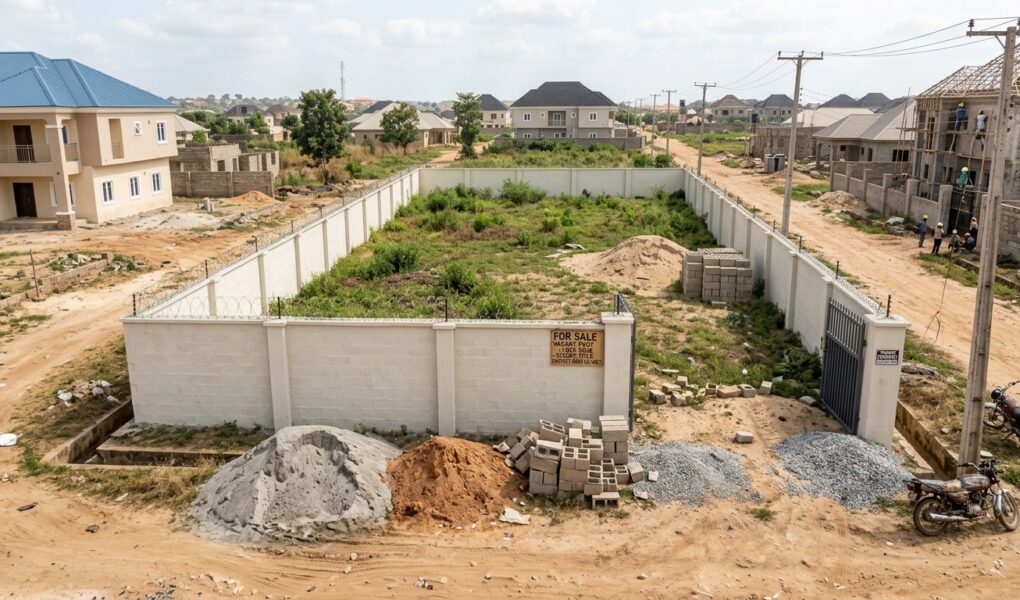
Buying land in Nigeria is a significant investment. Some people purchase land with the intention of building a family home, while others buy it to hold for future appreciation or sell when the price increases.
However, financial circumstances can change. You may buy a plot today and discover that you cannot afford to build for another five, ten or even fifteen years.
This raises an important question: can you lose your land in Nigeria simply because you have not developed it for many years?
The short answer is that leaving land undeveloped does not automatically mean you lose ownership. However, the legal position can be more complicated depending on your title documents, the type of land, applicable state laws, the terms attached to your right of occupancy and whether the government or another person has asserted a competing claim.
The Nigerian Land Use Act contains provisions relating to rights of occupancy, development conditions and the revocation of land rights. Certain state laws may also affect how long an owner has to bring legal proceedings to recover land after being dispossessed. Read the Land Use Act.
If you own land that you do not intend to develop soon, understanding these issues can help you avoid expensive mistakes.
1. Does Leaving Land Undeveloped Mean You Will Lose It?
No. There is no general rule that automatically transfers every undeveloped plot to another person after a fixed number of years.
For example, imagine you purchase a plot of land in Ibadan in 2026. You intend to build a house, but your finances only allow you to start construction in 2035.
The fact that you have not built a house during those nine years does not, by itself, establish that you have lost your rights to the land.
However, you should not assume that every plot can be left unattended indefinitely without consequences.
Your land may be subject to specific development conditions, planning requirements, government acquisition procedures or other legal obligations. Another person may also attempt to occupy it or challenge your ownership.
The important question is not simply how many years you have waited to build. It is whether your legal interest remains valid and whether you have taken reasonable steps to protect it.
2. Can the Government Take Your Land Because You Have Not Developed It?
Government action is one of the issues landowners should understand before deciding to hold vacant land for many years.
Under Section 28 of the Nigerian Land Use Act, a governor may revoke a right of occupancy for overriding public interest, subject to the applicable statutory requirements and procedures. The Act identifies circumstances in which revocation may occur, including certain breaches of the conditions attached to a right of occupancy.
The Act also provides for penal rent in certain circumstances involving breaches of development covenants attached to a certificate of occupancy. These provisions do not mean that every undeveloped plot is automatically forfeited. See the Land Use Act.
Consider a situation in which a landowner receives a right of occupancy containing a specific development condition but fails to comply with it.
Depending on the wording of the condition and the applicable law, the failure may expose the owner to regulatory or legal consequences.
This is different from a person purchasing land without a specific development deadline and simply deciding to build several years later.
What should you check?
Before leaving your land undeveloped for an extended period, review:
- The terms of your certificate of occupancy or other title documents.
- Any development deadlines or improvement conditions.
- Applicable planning and estate regulations.
- Any notices received from the government or a relevant authority.
- Whether the land falls within an area affected by an acquisition or development scheme.
If you receive an official notice concerning your land, do not ignore it. Ask a property lawyer to verify its authenticity, explain its legal implications and advise you on any applicable response deadline.
3. Can Another Person Take Your Land Because You Have Not Used It?
Leaving land vacant can make it more vulnerable to encroachment and ownership disputes.
For example, suppose you buy land in a developing neighbourhood and visit it only once every three years. A neighbouring landowner might gradually extend a fence into your plot. Alternatively, someone might begin occupying the property and eventually claim that they have a legal interest in it.
The fact that someone occupies land does not automatically make that person its lawful owner. Nevertheless, prolonged possession can create serious legal complications.
In some circumstances, limitation laws may restrict the period within which a person can bring an action to recover land after being dispossessed. The applicable period, exceptions and legal consequences depend on the relevant state’s law and the circumstances of the dispute.
For instance, the Supreme Court of Nigeria has considered limitation periods for land-recovery proceedings under Lagos State law in Elabanjo v. Dawodu (2006). The case illustrates why landowners should not assume that a long-standing possession dispute can always be resolved simply by producing a purchase receipt. Read the judgment on NigeriaLII.
This does not mean that a person automatically becomes the owner after occupying land for twelve years, or that every Nigerian state applies the same limitation period.
The safest approach is to prevent unauthorised occupation early and obtain legal advice immediately if another person begins claiming your property.
4. Does Fencing Your Land Prevent You From Losing It?
Fencing is one way to help protect vacant land, but it does not provide absolute legal protection.
A fence can make your boundaries visible, discourage trespassing and help you notice unauthorised activities.
However, fencing does not correct defective title documents, cancel a valid government acquisition or automatically defeat another person’s superior legal claim.
Before constructing a permanent fence, confirm the boundaries with a qualified surveyor and ensure that your proposed construction complies with relevant requirements.
If you cannot afford a complete perimeter fence immediately, consider these alternatives:
- Keep the land boundaries clearly identified.
- Arrange regular inspections.
- Clear excessive vegetation when appropriate.
- Photograph the land periodically.
- Ask a reliable representative to monitor the property if you live far away.
- Keep your purchase and title documents secure.
These measures are particularly useful when you intend to hold land for investment rather than begin construction immediately.
5. What If You Buy Land and Do Not Build for 10 or 20 Years?
The longer you intend to hold undeveloped land, the more important it becomes to monitor the property and understand the terms of your ownership.
There is no single nationwide rule stating that every plot becomes forfeited after ten or twenty years without construction.
Nevertheless, a long holding period can introduce practical and legal risks.
After five years
Check that the boundaries remain intact, your documents are safe and nobody has started using the land without your permission.
If you have received any official notices, have them reviewed promptly.
After ten years
Arrange a fresh review of the property’s title and any outstanding documentation where appropriate. Confirm that the land has not been affected by acquisition plans, boundary disputes or other developments that require attention.
Visit the property regularly rather than relying entirely on old photographs or assurances from third parties.
After twenty years
If you have held land for two decades without development, do not assume that its long-standing registration or your purchase receipt eliminates every possible legal risk.
Have a property lawyer review the ownership history, relevant documents, possession history and any potential limitation issues.
The passage of time alone does not provide a complete answer. What matters is the legal status of the land and what has happened during the period of non-development.
6. Can You Buy Land Today and Build Many Years Later?
Yes. Buying land now and building later is a common property strategy, particularly for people who want to secure a location before they have enough money for construction.
However, it is important to distinguish between holding land for future use and leaving it completely unattended.
Suppose you purchase a plot in Ogun State in 2026 and intend to build in 2032. Rather than rushing into construction that you cannot comfortably afford, you could develop a plan to protect the property until you are financially ready.
Your plan should include:
- Completing the relevant purchase and title documentation.
- Confirming the boundaries and checking for competing claims.
- Reviewing any development obligations.
- Establishing a realistic maintenance and inspection schedule.
- Setting aside funds for fencing or other appropriate security measures.
- Monitoring government notices and significant changes in the surrounding area.
You can then focus on saving for construction without completely neglecting the investment you have already made.
7. What Should You Do If You Have Owned Undeveloped Land for Many Years?
If you purchased land years ago and have never built on it, there is no need to assume automatically that you have lost it.
Instead, take practical steps to establish its current status.
Step 1: Gather your documents
Locate your purchase receipt, deed of assignment, survey plan, certificate of occupancy where applicable, and any other documents connected with the transaction.
A purchase receipt may be useful evidence, but it should not be treated as conclusive proof of valid title in every situation.
Step 2: Verify the current ownership position
Ask a property lawyer to investigate the title and determine whether the person who sold the land had the authority to do so.
Where appropriate, carry out searches through the relevant state land registry and other competent authorities.
Step 3: Visit the property
Inspect the land to determine whether the boundaries remain identifiable and whether anyone has built on, occupied or otherwise interfered with it.
If you discover an unauthorised structure, document its condition and seek legal advice before attempting to remove it.
Step 4: Check for government acquisition or official notices
Confirm whether the property is affected by any relevant acquisition, planning restriction or official notice.
Do not assume that rumours about government acquisition are accurate, but do not ignore credible information either.
Step 5: Resolve outstanding documentation issues
If the transaction was completed many years ago but relevant documentation remains outstanding, consult a lawyer about the steps required to establish, perfect or protect your interest.
The appropriate process depends on the type of land, the documents already obtained and the applicable legal requirements.
Step 6: Create a long-term protection plan
Once you have confirmed the position, decide how to monitor and maintain the land until you are ready to build or sell it.
Regular attention is usually more sensible than allowing the property to remain forgotten for years.
8. Is It Better to Develop Land Immediately or Hold It for Appreciation?
There is no single answer that suits every landowner.
Developing land immediately may make sense if you need a home, have sufficient funds and are satisfied with the property’s location and legal status.
Holding land for appreciation may be appropriate if you have a longer investment horizon and can afford to wait without depending on the money for essential expenses.
However, vacant land can involve ongoing risks and costs, including security, documentation, maintenance and the possibility that the surrounding area will not develop as quickly as expected.
Before deciding, consider:
- Your financial capacity.
- Your intended holding period.
- The demand for property in the area.
- The costs of protecting and maintaining the land.
- Any development conditions attached to the property.
- Whether you may need to sell the land to raise cash.
Do not develop land simply because you fear an automatic deadline that may not apply to your property. Equally, do not leave it unattended because you assume ownership is guaranteed forever.
Frequently Asked Questions
Can I lose my land in Nigeria after 10 years without building?
Not automatically. However, the terms of your title, applicable laws, government actions and any competing possession or ownership claims can affect your legal position.
Does the Nigerian government take over undeveloped land after a certain number of years?
There is no general rule that every undeveloped plot automatically reverts to the government after a fixed number of years. Government powers and the owner’s obligations depend on the applicable law, the land’s status and any conditions attached to the relevant right of occupancy.
Can someone claim my land if I do not visit it for many years?
A person may attempt to occupy your land or assert a competing claim. The legal effect of prolonged possession depends on the circumstances and applicable law. Regular inspections and prompt action when disputes arise can help protect your interests.
Do I have to build a house to prove that I own land?
Not necessarily. Valid ownership or a right of occupancy is not established solely by constructing a building. The relevant title documents, transaction history and other evidence must be considered.
Is fencing enough to protect my land for 20 years?
No. Fencing can help with physical security and boundary identification, but it does not replace valid title documents, compliance with applicable requirements and periodic inspections.
What should I do if I discover that someone has built on my land?
Gather your documents, photograph the property and obtain legal advice promptly. A lawyer can assess the claim, the evidence and the appropriate legal remedies. Avoid taking matters into your own hands in ways that could escalate the dispute.
Conclusion
Can you lose your land if you do not develop it for many years?
Not simply because you have delayed construction. However, the fact that you purchased land does not mean you should ignore it indefinitely.
Your legal position may be affected by development conditions, government acquisition, title defects, competing ownership claims and the consequences of prolonged dispossession under applicable state law.
If you cannot afford to build immediately, focus on confirming your title, keeping your boundaries identifiable, monitoring the property and responding promptly to any official notice or ownership dispute.
Remember: you do not necessarily have to build a house immediately after buying land, but you should have a plan for protecting your investment.
The goal is to ensure that when you are finally ready to build, your land is still legally secure, properly documented and available for your intended use.