
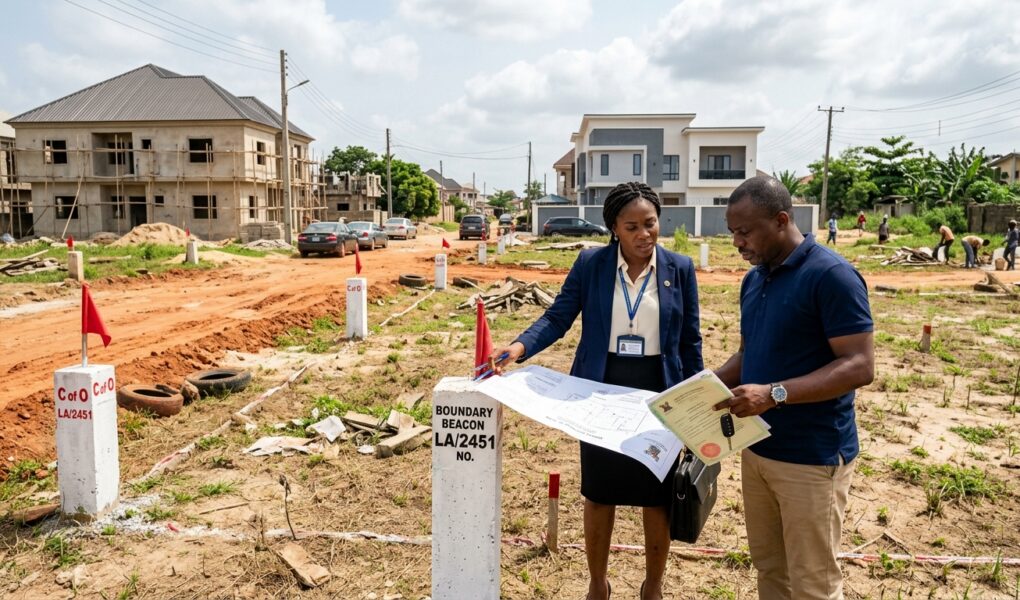
Buying land in Nigeria can be a valuable step toward building a home, starting a business, or investing in real estate. However, a land purchase can also become a costly mistake when the buyer fails to ask the right questions before making payment.
A plot may look attractive, the seller may appear trustworthy, and the price may seem affordable. Yet, there could be hidden ownership disputes, government acquisition issues, incomplete documentation, unclear boundaries, or additional costs that the buyer has not considered.
Whether you are buying land in Lagos, Abuja, Ogun State, Oyo State, or another part of Nigeria, you should verify the land and the seller before paying for it.
Here are seven important questions to ask before paying for land in Nigeria.
1. Who Legally Owns the Land, and Who Has the Right to Sell It?
The first question to ask is: Who actually owns this land, and can this person legally sell it to me?
Do not assume that someone has the right to sell land simply because they have physical possession of it, know the area well, or claim to represent the owner.
The seller could be the original landowner, a family representative, an estate developer, an agent, or someone claiming ownership without sufficient authority.
Before making payment, ask to see evidence of ownership and confirm the seller’s identity. If the land belongs to a family, ask who has the authority to approve the sale. If an agent is involved, establish whether the agent has proper authorization to act for the owner.
Where the property belongs to a deceased person, a company, or an estate, additional legal authority may be required before a valid sale can take place.
What to do: Engage an independent property lawyer to investigate ownership and confirm that the person selling the land has the legal authority to do so.
2. What Documents Prove Ownership of the Land?
The next question is: What documents are available to support the seller’s claim of ownership?
Depending on the property and its history, relevant documents may include a registered deed of assignment, a certificate of occupancy, a governor’s consent where applicable, a survey plan, a court judgment, or other documents establishing the seller’s interest.
However, the presence of a document does not automatically mean the land is safe to buy. Documents can be incomplete, inaccurate, disputed, or connected to a different parcel of land.
You should also understand the difference between documents that establish a person’s interest in land and documents that merely describe its location or boundaries.
For example, a survey plan can help identify a parcel of land, but it does not, by itself, prove that the person selling it owns the property.
What to do: Ask an independent lawyer to review the available documents and carry out the appropriate searches with the relevant land registry, survey authorities, or other government offices. The checks required will depend on the location and status of the land.
3. Is the Land Under Government Acquisition or Subject to Restrictions?
A plot may appear suitable for residential, commercial, or agricultural use but still have restrictions that could affect what you can do with it.
In some cases, land may be affected by government acquisition, an existing public project, planning restrictions, an approved road alignment, an environmental restriction, or another legal limitation.
These issues can affect whether you can develop the land, obtain the necessary approvals, or retain the property without future complications.
Do not rely only on the seller’s assurance that the land is free from government acquisition. A verbal promise is not a substitute for proper verification.
What to do: Ask your lawyer and the appropriate government authorities to investigate the land’s status and permitted use. Where necessary, obtain an official search or written confirmation through the relevant process.
4. Are the Exact Location and Boundaries of the Land Clear?
Another important question is: Can I identify the exact plot I am paying for?
Some buyers pay for land without confirming its precise location, dimensions, boundaries, access route, or relationship to neighbouring properties.
This can lead to disputes when the buyer later discovers that the plot is smaller than expected, overlaps another person’s land, has no legally established access, or is not the same parcel shown during the inspection.
Before making payment, visit the property and compare its physical location with the survey plan and other available records.
Where appropriate, engage a qualified surveyor to identify the boundaries and check for possible overlaps or discrepancies.
Do not depend entirely on directions from the seller or agent, particularly when the land is in a developing area with few visible landmarks.
What to do: Confirm the land’s location, dimensions, boundaries, and access arrangements before committing your money.
5. Is Anyone Else Claiming Ownership of the Land?
A seller may claim that a property is free from disputes, but that statement should still be independently verified.
The land could be involved in a family disagreement, a previous sale, a court case, a boundary dispute, or a competing ownership claim.
In some situations, the same parcel of land may have been sold to more than one buyer. Other disputes may arise when family members disagree about a transaction or when a previous buyer’s interest has not been properly resolved.
These problems can take considerable time and money to address.
Ask the seller directly whether there have been previous sales, disputes, court proceedings, or competing claims involving the property. Then have your lawyer conduct appropriate checks rather than relying solely on the answer.
Speaking with neighbouring landowners and people familiar with the area may also provide useful background, although their statements should not replace formal legal investigations.
What to do: Investigate the property’s ownership history and any known disputes before paying a deposit or signing an agreement.
6. What Is the Total Cost of Buying the Land?
The advertised price may not be the full amount you will eventually spend.
Before paying, ask for a clear breakdown of all charges associated with the transaction.
Depending on the property and the transaction, additional expenses may include:
- Legal fees.
- Survey fees.
- Deed preparation and documentation charges.
- Registration fees and applicable consent charges.
- Agency or commission fees.
- Estate development levies.
- Community or infrastructure charges.
- Outstanding obligations attached to the property, where applicable.
Not every charge applies to every transaction, so ask for an itemised explanation instead of assuming that all fees are standard.
You should also establish whether any payments will be required after allocation or whether there are ongoing estate obligations.
A plot that initially appears affordable may become expensive once these additional costs are included.
What to do: Request a written breakdown of the purchase price and other charges. Confirm who is responsible for each payment and obtain receipts for every amount paid.
7. What Happens After I Make Payment?
The final question is: What exactly will I receive after paying for the land?
A land transaction should not end with money changing hands and a verbal promise that the seller will provide the documents later.
Before making payment, clarify the process for executing the sale agreement, issuing receipts, signing the deed of assignment where appropriate, handing over possession, providing relevant documents, and completing any necessary registration or consent procedures.
If you are buying through an estate developer, ask about the allocation process, documentation timeline, development obligations, and the procedure for resolving complaints.
Make sure the agreement clearly identifies the property, the parties to the transaction, the purchase price, payment terms, responsibilities, and any conditions that must be fulfilled.
Avoid paying the full amount based only on promises that documents or allocation will be provided at an unspecified future date.
What to do: Have a qualified lawyer prepare or review the transaction documents and explain the steps required to complete the purchase. Make payments through traceable channels and retain receipts, agreements, and relevant correspondence.
Bonus Tip: Do Not Let Pressure Rush Your Decision
Some buyers make expensive mistakes because they are afraid that a plot will be sold to someone else.
A seller may insist that several people are interested, that the price will increase tomorrow, or that an immediate deposit is necessary to secure the property.
Although genuine sellers may have other interested buyers, pressure should never replace due diligence.
Take the time to inspect the property, verify ownership, review the documents, understand the total cost, and seek independent legal advice.
If a seller refuses reasonable verification or discourages you from consulting a lawyer, treat that behaviour as a warning sign.
It is better to lose an attractive offer than to commit your money to land that may create serious legal or financial problems.
Final Thoughts
Buying land in Nigeria requires more than finding a suitable location and agreeing on a price. You need to understand who owns the property, whether the seller has the authority to transfer it, what documents are available, whether restrictions or disputes exist, and what the transaction will cost.
The seven questions in this guide can help you approach a land purchase more carefully and identify issues that deserve further investigation.
At Qadeva.com, our goal is to help Nigerians make more informed real estate decisions by understanding the risks, asking better questions, and taking practical steps before committing their money.
Remember: verify the land before you pay, not after a problem arises.