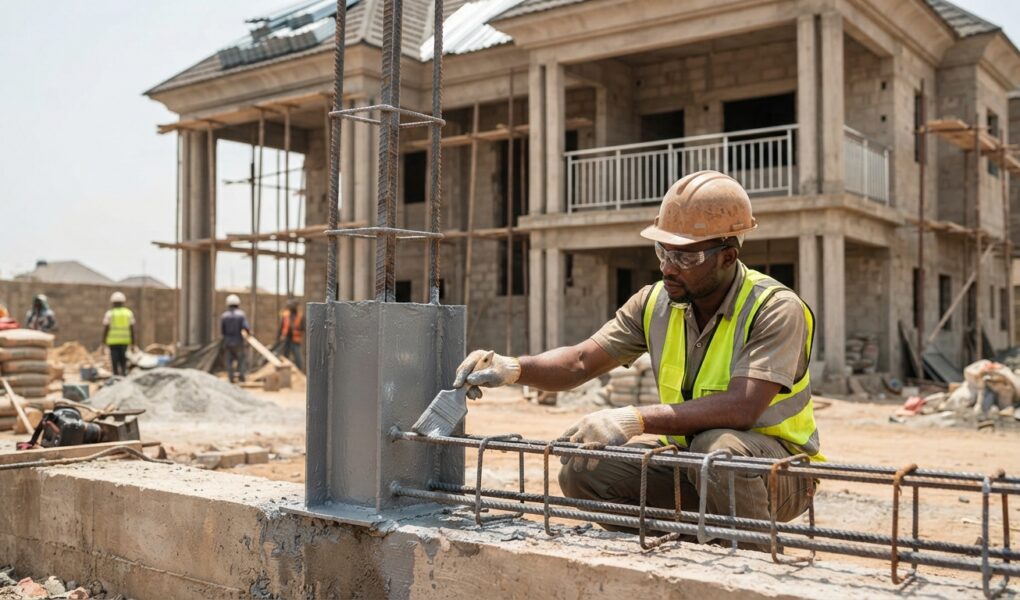
When building a house in Nigeria, choosing the right cement, iron rods and blocks is important. However, one construction material that is sometimes overlooked is sand.
Many property owners focus on the quantity of sand delivered to their construction site without paying enough attention to its quality. Unfortunately, using unsuitable sand can compromise the strength, durability and overall safety of a building.
Sand is a major component of concrete and mortar. It helps determine how well these materials bind together, resist external pressure and withstand environmental conditions.
Whether you are building a bungalow, duplex, block of flats or commercial property, understanding sand quality can help you avoid expensive construction mistakes.
1. Poor Sand Can Reduce Concrete Strength
One of the biggest dangers of using poor-quality sand is its effect on concrete strength.
Concrete is made by combining cement, sand, coarse aggregates (granite or gravel) and water. Each material has a specific role in producing a strong and durable mixture.
When sand contains excessive clay, silt, dust or other harmful impurities, it can interfere with the bonding between cement paste and aggregate particles.
This may result in weaker concrete that cannot withstand the loads it was designed to carry.
For example, concrete used for foundation bases, columns, beams and suspended floors must meet the strength requirements specified by the structural engineer. Using contaminated sand can make achieving the required strength more difficult.
2. It Can Cause Cracks in Walls and Concrete Structures
Have you ever noticed cracks appearing on the walls of a newly completed building?
Although cracks can result from several factors, including foundation movement, structural overloading, poor curing and temperature changes, unsuitable sand can also contribute to the problem.
Sand containing excessive clay or silt can affect the consistency and performance of mortar and concrete.
When the mixture requires additional water to achieve the desired workability, the resulting concrete may become more porous and vulnerable to shrinkage if the mix is not properly controlled.
Over time, this can contribute to cracking, especially when combined with poor construction practices.
3. It Can Weaken Blocks Used for Wall Construction
Sand is an important ingredient in cement blocks, particularly sandcrete blocks commonly used in Nigerian residential construction.
The quality of the sand used in block production influences the strength and consistency of the finished blocks.
When manufacturers use unsuitable sand, the blocks may have:
- Lower compressive strength.
- Poor bonding between particles.
- Excessive surface dust.
- Uneven texture and appearance.
- Greater susceptibility to damage during handling.
Weak blocks can create problems during transportation, construction and everyday use.
Before purchasing large quantities of blocks, property owners should consider asking about their production quality and requesting appropriate strength test results.
4. Poor Sand Can Increase Water Requirements
Not all sand requires the same quantity of water during concrete production.
Sand containing excessive fine particles, particularly clay and certain types of silt, may require more water to achieve the desired workability.
The problem arises when workers simply add more water without adjusting the concrete mix appropriately.
Excessive water can increase the water-cement ratio, which may reduce the strength of hardened concrete and increase its permeability.
This is one reason why experienced construction professionals pay attention to the quality, moisture condition and grading of sand before mixing concrete.
5. It Can Reduce the Durability of Your Building
A building should remain structurally sound for many years.
However, poor-quality sand can contribute to concrete that is more vulnerable to environmental exposure and deterioration.
For instance, excessive clay, organic impurities and certain harmful chemical substances can affect concrete setting, bonding and long-term performance.
Salt contamination is another concern, particularly where sand is obtained from coastal or marine environments.
Chloride contamination can increase the risk of corrosion in reinforced concrete, potentially damaging the steel reinforcement and surrounding concrete.
This is why using untreated sea sand in reinforced concrete without proper testing and approval is a serious construction risk.
6. It Can Affect Foundation and Structural Components
Foundations, columns and beams are among the most important components of a building.
These elements transfer and distribute structural loads. Their concrete must therefore meet the specifications established by the structural engineer.
If unsuitable sand is used in these components, the resulting concrete may fail to achieve its required design strength.
The consequences can include reduced load-bearing capacity, premature deterioration and, in severe cases, structural failure.
Poor sand alone does not automatically cause a building to collapse. However, it can become a significant contributing factor when combined with inadequate cement content, excessive water, poor reinforcement detailing and improper workmanship.
7. It Can Lead to Expensive Repairs and Reconstruction
Trying to save money by purchasing cheaper, untested sand can become an expensive decision.
Consider a property owner who purchases several truckloads of contaminated sand to produce blocks, concrete and mortar.
If the materials fail quality checks or the finished work develops defects, the owner may have to spend additional money on:
- Replacing defective blocks.
- Removing and recasting weak concrete.
- Repairing damaged plasterwork.
- Investigating structural cracks.
- Strengthening affected structural elements.
- Paying for additional professional inspections.
In some situations, defective construction work may require partial demolition and reconstruction.
Spending a little more on properly tested materials at the beginning can help prevent much larger expenses later.
How to Identify Poor-Quality Sand Before Buying
As a property owner, you do not need to be a civil engineer to recognise some warning signs of unsuitable sand.
However, visual inspection alone cannot establish whether sand is suitable for structural concrete.
Here are some practical checks to consider before accepting a delivery.
A. Check for Excessive Clay and Silt
Take a transparent bottle or jar and fill it partially with a representative sample of sand.
Add clean water, shake thoroughly and allow the contents to settle.
Sand particles settle while finer suspended materials may form a separate layer above them.
An unusually thick layer of fine material is a warning sign that further testing may be necessary.
This is only a preliminary screening method. A laboratory test is needed to establish the actual silt and clay content and determine whether the sand meets the applicable specification.
B. Look for Organic Materials
Good construction sand should be free from harmful quantities of organic matter.
Be cautious when sand contains visible roots, leaves, decaying vegetation or other organic debris.
Organic impurities can interfere with cement hydration and concrete strength development.
C. Check the Sand’s Particle Size
Sand should have an appropriate particle-size distribution for its intended application.
For example, concrete production generally requires suitable, well-graded fine aggregate, while plastering and block production may require different grading characteristics.
Very fine sand is not automatically suitable for every construction activity.
Your contractor should select sand according to the intended use and relevant material specifications.
D. Check for Salt Contamination
Sand obtained from coastal or marine environments requires particular attention because it may contain harmful salts.
Do not assume that washing sand automatically makes it suitable for reinforced concrete.
Where salt contamination is suspected, proper laboratory testing and professional approval are necessary.
Which Sand Is Suitable for Different Construction Activities?
Not every type of sand is appropriate for every stage of construction.
| Construction activity | What to look for |
|---|---|
| Concrete production | Clean, durable and properly graded sand that meets concrete aggregate specifications. |
| Block production | Suitable, clean and consistently graded sand appropriate for sandcrete blocks. |
| Plastering | Clean sand with suitable grading for a smooth and durable finish. |
| Bricklaying | Clean sand suitable for producing workable and durable mortar. |
| Screeding | Properly graded sand appropriate for the specified screed mix. |
Always allow your building professional to approve the material before large-scale use.
Should You Wash Sand Before Using It?
Washing may be appropriate when sand contains excessive removable dust, silt or other contaminants.
However, washing is not a universal solution.
It cannot correct every problem associated with unsuitable mineral composition, harmful chemical contamination or poor particle grading.
Furthermore, washed sand should be handled and stored properly to prevent contamination before use.
A materials laboratory or qualified construction professional should determine whether washing is sufficient or whether the sand should be rejected.
Why Property Owners Should Demand Sand Quality Tests
One mistake property owners make is leaving all material selection decisions to workers or suppliers without independent verification.
Although experienced contractors can recognise many quality problems, important construction materials should not be approved solely on appearance or personal judgment.
Before using sand for structural concrete, consider requesting appropriate laboratory tests, including:
- Sieve analysis to determine particle-size distribution.
- Silt and clay content testing.
- Organic impurity testing where necessary.
- Specific gravity and other relevant aggregate property tests.
- Concrete trial mixes and compressive strength tests where specified.
The appropriate tests depend on the source of the sand and its intended application.
For concrete work, the project specifications and relevant standards should guide acceptance.
Practical Advice for Anyone Building a House in Nigeria
If you are planning to build a property in Lagos, Ibadan, Abuja, Ogun State or any other part of Nigeria, do not make the mistake of choosing construction sand based on price alone.
Before paying for a large delivery, consider the following:
- Inspect the source: Ask where the sand was obtained and whether it has been assessed for construction use.
- Request a sample: Examine a representative sample before accepting a large quantity.
- Involve your contractor: Let your site engineer or qualified professional assess the material.
- Request laboratory testing: Especially when the sand will be used for foundations, columns, beams and other structural concrete.
- Avoid mixing different unverified sources: Different sand sources can have different properties and may affect concrete consistency.
- Store sand properly: Keep it away from rubbish, soil, wastewater and other contaminants.
- Monitor concrete production: Ensure workers follow the approved mix proportions and do not add excessive water.
Remember that quality control should continue throughout construction, not just when materials are first delivered.
Conclusion
The strength of a building depends on more than the quality of cement, iron rods and blocks. Sand also plays an important role in determining how strong, durable and reliable the finished structure will be.
Using poor-quality sand can contribute to weak concrete, defective blocks, cracking, increased permeability and premature deterioration.
As a property owner, do not allow the pressure to reduce construction costs to influence your decision about material quality.
A building is a long-term investment, and the materials used in its construction should be selected with care.
Before accepting that next truckload of sand, remember that what looks like ordinary sand could make a significant difference to the quality of your home.
Build with quality materials. Verify before you pay. Protect your investment.