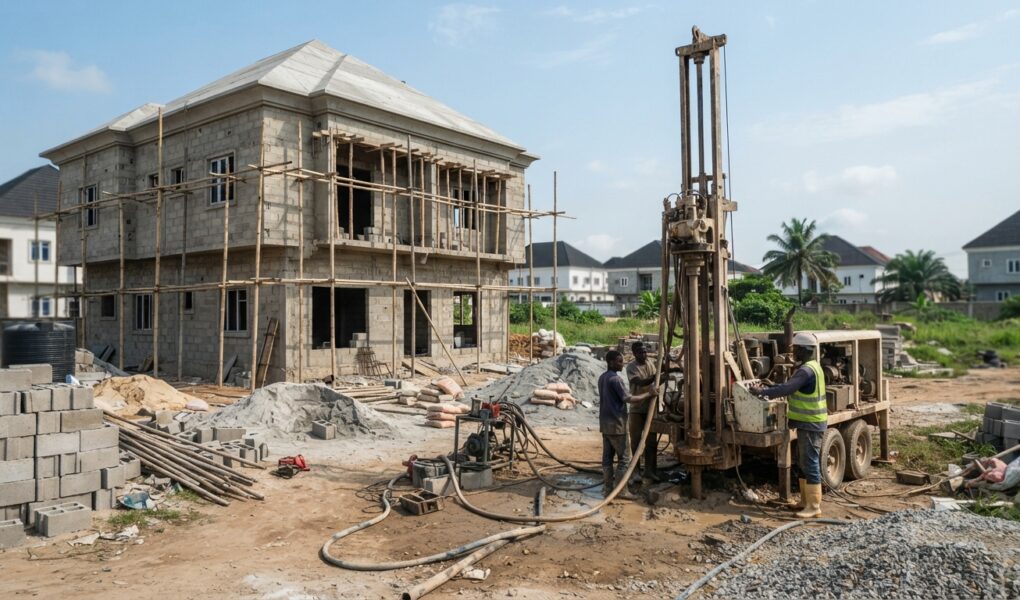
When building a house in Nigeria, access to a reliable water supply is one of the most important things to consider. Many homeowners depend on boreholes because public water supply may be unreliable or unavailable in their neighbourhoods.
However, one common construction question is whether a borehole should be installed before completing the house or after all building work has been finished.
The timing can affect construction costs, site accessibility, water availability during construction, plumbing arrangements, and the protection of the borehole from contamination or damage.
Understanding the advantages and disadvantages of both options can help homeowners make a better decision.
Installing a Borehole Before Completing the House
Installing a borehole during the construction stage can be convenient, particularly when the building site is still relatively open and accessible.
1. Water Is Available for Construction Work
Building construction requires substantial quantities of water for block laying, concrete mixing, curing, plastering, flooring, and other activities.
Installing a borehole early allows the homeowner and contractor to have access to water without depending entirely on water tankers, nearby neighbours, or temporary water sources.
This can reduce delays and make construction activities easier to coordinate.
2. Easier Access for Drilling Equipment
Borehole drilling machines and supporting equipment require adequate space to operate.
Before the house is completed, the construction site may have fewer obstacles, making it easier for drilling contractors to position their equipment.
This is particularly important where the property is located in a developing estate or a neighbourhood with narrow access roads.
3. Plumbing Can Be Planned Properly
Installing a borehole early allows the plumber to plan the water distribution system alongside the building’s plumbing design.
The location of water storage tanks, pumping equipment, underground pipes, water treatment systems, and connections to bathrooms and kitchens can be coordinated more effectively.
This may reduce the need for unnecessary pipe extensions or modifications later.
4. Potential Savings on Construction Water
Depending on the location and availability of alternative water sources, having a borehole during construction may reduce the amount of money spent buying water.
For projects that take several months to complete, these savings may contribute towards the cost of drilling.
However, the homeowner should compare the cost of drilling with the actual water expenses expected during construction.
Disadvantages of Installing a Borehole Too Early
Despite its advantages, early installation also comes with some risks.
1. The Borehole May Be Damaged During Construction
Construction activities can expose borehole infrastructure to damage.
Heavy equipment, vehicles, building materials, excavation work, and careless movement around the property may damage borehole pipes, casing, electrical connections, or the borehole head.
Without proper protection, the borehole may become an additional maintenance expense.
2. Contamination Risks
A borehole installed before the surrounding property is properly organised may be exposed to construction debris, cement waste, fuel, chemicals, sewage, and other contaminants.
If the borehole is not properly sealed and protected, these substances may compromise water quality.
The borehole should be properly completed, capped, and protected throughout the construction period.
3. The Location May Conflict With Final Landscaping
Homeowners sometimes change their landscaping plans after construction begins.
A borehole that was initially positioned in a convenient location may later interfere with a driveway, garden, outdoor sitting area, drainage channel, walkway, or other planned feature.
This is why its location should be determined before drilling begins.
Installing a Borehole After Completing the House
Some homeowners prefer to finish the building before drilling their borehole. This approach also has benefits.
1. Reduced Risk of Construction Damage
When major construction activities have been completed, there is less movement of heavy equipment and building materials around the property.
This reduces the likelihood of accidental damage to borehole infrastructure.
The homeowner can also install protective structures and organise the surrounding area more carefully.
2. Better Understanding of the Finished Property Layout
After construction, the homeowner can see how the building, driveway, fences, drainage, gardens, and outdoor spaces fit together.
This may make it easier to choose a suitable borehole location that does not interfere with the property’s final appearance or functionality.
3. Easier Protection and Maintenance
A borehole installed after construction may be easier to protect because the property is already organised.
The homeowner can properly plan access for maintenance, locate the pumping equipment, install water storage facilities, and arrange water treatment systems without interfering with ongoing construction.
4. Avoiding Unnecessary Early Expenses
Some homeowners prefer to concentrate their available funds on completing the building before investing in additional infrastructure.
If funds are limited, drilling the borehole later may help the homeowner prioritise essential construction work and avoid having an unfinished house with several incomplete installations.
Disadvantages of Waiting Until the House Is Completed
Waiting also has some drawbacks.
- Higher construction water expenses: The homeowner may spend more money purchasing water throughout the construction period.
- Possible disruption: Drilling equipment may need to operate around an already completed building, fence, paved surfaces, or landscaping.
- Additional plumbing work: Pipes may need to be routed through existing structures or around completed outdoor features.
- Restricted access: Depending on the property’s layout, bringing drilling equipment into the compound may become more difficult after construction.
What Is the Best Time to Install a Borehole?
For many residential construction projects in Nigeria, a practical approach is to install the borehole after the major structural work has been completed but before finishing works and final landscaping.
At this stage, the building’s footprint and general layout are established, but the compound may still have enough space for drilling equipment.
A suitable sequence may look like this:
- Complete foundation and major structural construction.
- Confirm the borehole location based on the site layout and professional assessment.
- Drill and properly complete the borehole.
- Install the pump, water storage tank, and necessary plumbing connections.
- Protect the borehole during the remaining construction activities.
- Complete paving, landscaping, and other external works.
This approach allows the homeowner to benefit from construction water while reducing the risk of damaging the borehole during the earliest stages of building.
However, the best timing may differ depending on the site, construction schedule, groundwater conditions, budget, and accessibility.
Important Things to Consider Before Drilling
Regardless of when you decide to install your borehole, several important issues should be considered.
1. Choose the Borehole Location Carefully
The borehole should be located away from potential sources of contamination, including septic tanks, soakaways, drainage channels, waste disposal areas, and chemical storage locations.
The required separation distances depend on local regulations, soil conditions, groundwater flow, and professional assessment. Simply choosing an available corner of the compound may not be sufficient.
2. Conduct a Proper Groundwater Assessment
Do not assume that every part of a neighbourhood has the same groundwater conditions.
A qualified professional can assess the site and advise on the likely drilling location, depth, and groundwater prospects. Where appropriate, geophysical surveys may help reduce the risk of drilling an unsuccessful borehole.
3. Test the Water Quality
A borehole producing water does not automatically mean the water is safe for drinking.
Water may contain iron, minerals, bacteria, or other contaminants that require treatment. Water quality testing should be conducted before the water is used for drinking and cooking.
4. Plan for Water Storage
The borehole should be integrated with a suitable water storage system.
The storage capacity should reflect the number of occupants, household water consumption, and expected supply reliability.
The location and structural support for overhead tanks should also be planned properly.
5. Protect the Borehole During Construction
If the borehole is installed before construction is completed, it should be properly sealed and protected.
Avoid allowing construction waste, dirty water, cement, oil, or other materials to enter the borehole. Protect pipes and connections from heavy vehicles and accidental impacts.
Conclusion
Installing a borehole before or after completing a house can both be practical, but the timing should be based on the construction plan, available funds, site accessibility, water requirements, and the need to protect the borehole.
For many homeowners, installing the borehole after major structural work but before finishing and landscaping is a convenient middle ground. It provides water for construction activities while allowing the homeowner to plan the installation around the property’s established layout.
The most important thing is not simply choosing whether to drill early or late, but ensuring that the borehole is properly located, professionally installed, protected, and tested.
A well-planned borehole can provide a dependable water source for years and make a residential property more comfortable and practical to live in.