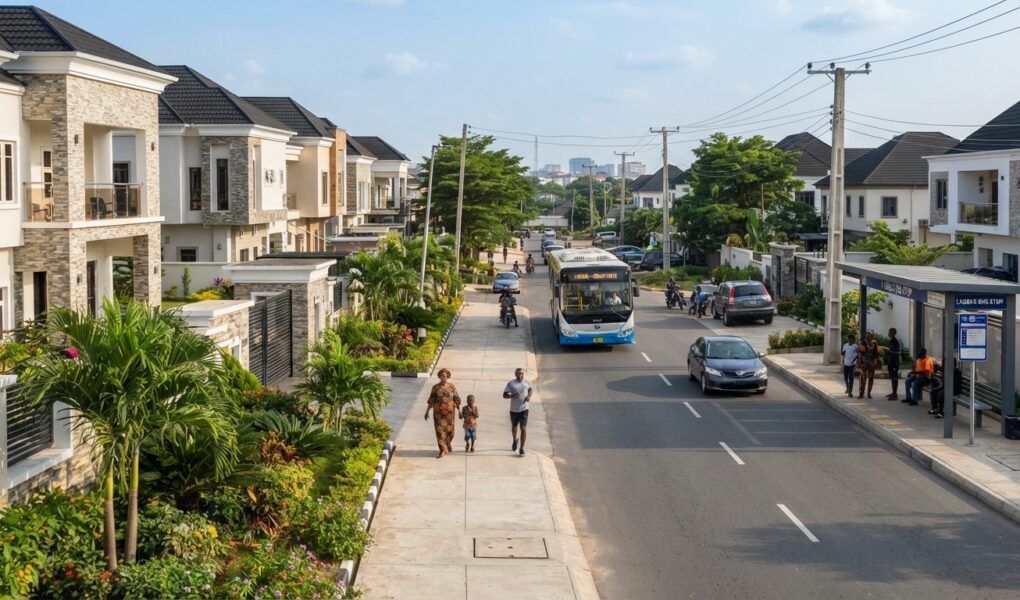
Choosing a home involves more than finding a beautiful building, affordable property or attractive neighbourhood. One important factor that can significantly influence everyday living is access to public transportation.
For many Nigerian households, transportation is part of the daily cost of living. Workers need reliable ways to get to their offices, students need access to schools, business owners need to reach their customers, and families require convenient transportation for shopping, healthcare and other essential activities.
A property located in a beautiful neighbourhood may become inconvenient if residents have to travel long distances before finding a bus, taxi, train or other means of public transportation.
This is why accessibility should be an important consideration when buying or renting residential property. Understanding how transportation affects daily life can help homebuyers make better decisions and choose locations that remain practical and attractive over the long term.
1. Reduces Daily Transportation Costs
One of the biggest advantages of living close to public transportation is the potential reduction in daily commuting expenses.
When a home is located near accessible transport routes, residents may spend less money reaching their workplaces, schools, markets and other destinations.
For example, someone living close to a major bus route may not need to pay for multiple connections before reaching work.
In contrast, residents of poorly connected neighbourhoods may have to hire private vehicles, use expensive motorcycle services or combine several forms of transportation to complete relatively short journeys.
Over several months and years, these additional expenses can become a significant part of household expenditure.
For prospective homeowners, comparing transportation costs across different neighbourhoods can provide a more realistic picture of the total cost of living.
2. Makes Daily Commuting More Convenient
Accessibility to public transportation can make everyday movement considerably easier.
Residents who live close to established transport routes generally have more options when travelling to work, attending appointments or handling personal responsibilities.
This convenience is particularly important for households where different family members have different daily schedules.
For example, parents may need to travel to work while children attend school and other family members visit markets or healthcare facilities.
A well-connected neighbourhood can make these journeys easier to organise.
Before purchasing a property, consider the distance between the house and the nearest transport stops, the availability of vehicles and the frequency of services.
3. Can Improve the Attractiveness of a Property to Tenants
For real estate investors, access to public transportation can influence the type of tenants interested in a property.
Many tenants consider commuting convenience when choosing rental accommodation.
Workers, students, young professionals and small business owners may prefer properties located close to established transport routes because these locations can reduce travel difficulties.
In cities such as Lagos, where many residents travel considerable distances for employment and business activities, accessibility can be an important rental consideration.
A property located in a well-connected neighbourhood may appeal to a broader range of prospective tenants than a similar property in an isolated location.
However, rental demand also depends on factors such as security, infrastructure, property condition, affordability and access to essential services.
4. Saves Valuable Time
Transportation challenges can consume a considerable amount of time, particularly in busy Nigerian cities.
Residents who live far from major transport routes may spend additional time walking to bus stops, waiting for available vehicles or arranging alternative transportation.
These delays can affect productivity, family responsibilities and personal activities.
For instance, a worker who spends an extra 30 minutes each morning reaching an accessible transport point may lose several hours every month.
Choosing a home with convenient transport connections can help residents manage their daily schedules more effectively.
Homebuyers should therefore consider not just the distance between a property and their workplace but also the time required to reach available transportation.
5. Improves Access to Schools and Healthcare Facilities
Public transportation is important for accessing essential services.
Families with school-age children may benefit from living in neighbourhoods with convenient transportation connections to educational institutions.
Similarly, older residents and people who require regular medical appointments may find accessible transportation particularly valuable.
A neighbourhood with reliable transport options can make it easier to reach hospitals, clinics, pharmacies and other essential facilities.
When evaluating a property, consider whether public transportation provides convenient access to important destinations within the surrounding area.
6. Can Support Long-Term Property Value
Transportation infrastructure can influence the long-term attractiveness of residential locations.
Neighbourhoods with good road connections and convenient access to public transportation may attract more residents, businesses and property investors.
When new transport infrastructure is introduced, previously less accessible areas may become more attractive for residential and commercial development.
For example, the development of railway stations, bus terminals and improved transport corridors can change how easily residents move between different parts of a city.
In Lagos, access to the Lagos Rail Mass Transit network and established BRT corridors can be relevant considerations when evaluating residential locations.
However, improved transportation does not automatically guarantee property appreciation. Buyers should also consider the property’s legal status, neighbourhood development, infrastructure quality and actual demand.
7. Reduces Dependence on Private Vehicles
Owning and maintaining a private vehicle comes with several expenses, including fuel, insurance, servicing, repairs and parking.
Households living in well-connected neighbourhoods may have more opportunities to use public transportation for everyday journeys.
This can reduce their dependence on private vehicles and provide greater flexibility when managing household expenses.
It may also be useful for families with only one vehicle, especially when different household members need to travel to separate destinations.
For first-time homebuyers, choosing an accessible location may help reduce the pressure to purchase a car immediately after moving into a new property.
8. Provides Greater Flexibility for Different Household Members
A home should support the needs of everyone living in it.
While one household member may own a car, others may depend entirely on public transportation.
Children attending school, university students, working adults and older family members may all have different transportation requirements.
A property located close to multiple transport options can make the neighbourhood more practical for different age groups and lifestyles.
This flexibility becomes particularly important when household circumstances change over time.
A location that is convenient for a working couple today may also need to accommodate children, elderly relatives or other family members in the future.
9. Supports Local Businesses and Neighbourhood Development
Accessible public transportation can encourage economic activity within residential communities.
When people can easily travel to and from a neighbourhood, local businesses may benefit from increased customer movement.
Shops, restaurants, pharmacies, supermarkets, salons and other service providers can attract customers from surrounding areas.
Improved accessibility may also encourage commercial investment and the development of supporting infrastructure.
For property owners, these developments can improve neighbourhood convenience and contribute to its overall attractiveness.
Nevertheless, buyers should consider whether increased commercial activity could also bring traffic congestion, noise or parking difficulties.
10. Not All Transport Access Is Equally Beneficial
Although living close to public transportation offers several advantages, the quality of the available transport system is equally important.
A property may be located near a major road or bus stop but still experience transportation difficulties if vehicles are unreliable, routes are limited or services are unavailable during certain hours.
Similarly, living immediately beside a busy bus terminal may expose residents to noise, traffic congestion and increased commercial activity.
Homebuyers should consider several factors:
- Distance from the property to the nearest transport stop.
- Availability of vehicles during peak and off-peak periods.
- Reliability of transportation services.
- Availability of alternative routes.
- Safety of walking routes to transport stops.
- Accessibility during rainy seasons.
- Traffic congestion around major transport corridors.
- Availability of transport during evenings and weekends.
The objective should be to find a property with convenient transportation access without sacrificing residential comfort.
11. What Nigerian Homebuyers Should Check Before Purchasing
Before committing money to a residential property, buyers should investigate the surrounding transportation infrastructure.
Here are some practical considerations:
Visit the property during rush hours: Observe how easily residents can access buses, taxis, trains and other transportation options during busy periods.
Check the walking distance to transport stops: A transport route may appear close on a map but could require walking through difficult roads or poorly maintained pathways.
Investigate available routes: Find out whether residents can conveniently travel to major employment centres, schools, hospitals and commercial districts.
Consider future transport developments: Investigate officially announced transport projects that may improve accessibility around the neighbourhood.
Assess road conditions: Poor roads, flooding and inadequate drainage can make nearby transportation routes difficult to access.
Speak with existing residents: Ask people living in the area about transportation costs, waiting times and commuting challenges.
Consider your household’s future needs: Think about how transportation requirements may change as your family grows or employment circumstances change.
These checks can help prevent the disappointment of purchasing a property that looks attractive but creates daily transportation difficulties.
Conclusion
Access to public transportation is an important factor to consider when choosing a home. It can influence daily commuting costs, convenience, time management, access to essential services and the attractiveness of a property to potential tenants.
For Nigerian homebuyers, particularly those considering properties in rapidly developing cities and satellite towns, transportation accessibility deserves attention before making a purchase.
A house should not only provide comfortable accommodation but also make it reasonably convenient for residents to participate in everyday activities.
Before buying land or a completed property, investigate the available transport options, road conditions and future infrastructure plans around the neighbourhood.
Ultimately, a well-located home is one that combines residential comfort, accessibility and practical convenience, helping residents enjoy their investment long after the purchase has been completed.