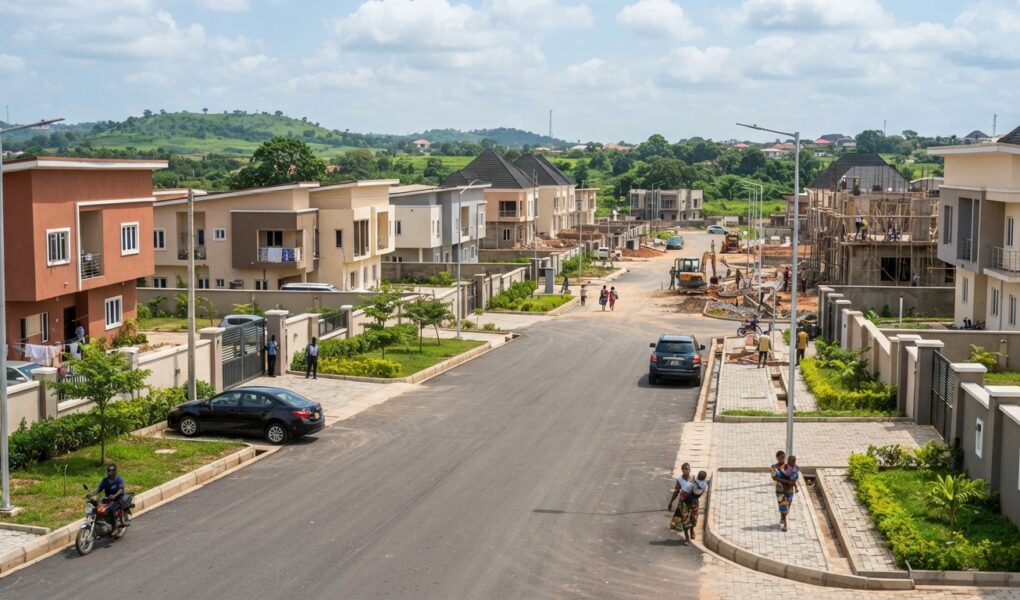
Emerging satellite towns are becoming increasingly attractive to Nigerian homebuyers looking for affordable land, spacious homes, and opportunities to own property outside overcrowded city centres. Areas surrounding major cities such as Lagos, Abuja, Ibadan, Port Harcourt, and Ogun State’s growing urban corridors are attracting developers, investors, and families seeking a better balance between affordability and future growth.
Buying property in an emerging satellite town can be a smart long-term decision. However, the fact that an area is developing or being marketed as the next major residential destination does not automatically make every property a good investment.
Before purchasing land or a house in an emerging satellite town, prospective homeowners should carefully evaluate several important factors.
1. Verify the Legal Status of the Property
One of the most important steps when buying property in a developing area is confirming that the land legally belongs to the seller and can be transferred to you without complications.
Some emerging satellite towns contain large parcels of land being sold by families, community leaders, private developers, estate companies, or government-approved schemes. Buyers should not assume that attractive prices or impressive marketing materials guarantee legitimate ownership.
Before making payment, investigate the property’s title documents, ownership history, survey plan, land boundaries, and any existing disputes or government acquisition restrictions.
Where necessary, engage an independent property lawyer to conduct proper searches with the relevant land registry and authorities.
A property that appears affordable today could become an expensive legal problem if ownership is disputed in the future.
2. Assess the Accessibility of the Town
Accessibility can significantly influence the quality of life of homeowners and the future value of their property.
An emerging satellite town may offer affordable housing, but buyers should consider how easily they can travel to their workplaces, schools, hospitals, markets, business centres, and other important destinations.
Investigate the available roads and transportation options. Consider whether the area has reliable public transportation, whether residents depend heavily on motorcycles or private vehicles, and how difficult commuting becomes during rainy seasons or peak traffic periods.
A location that requires several hours of travel every day may eventually become inconvenient, particularly for homeowners who work or conduct business in the main city.
Buyers should also investigate proposed road projects carefully. A road advertised as coming soon may be part of a long-term plan that has not yet received funding or commenced construction.
3. Investigate the Flooding and Drainage Situation
Flooding is a major concern when purchasing property in developing areas, especially where infrastructure has not yet caught up with residential expansion.
Some satellite towns are developing around agricultural land, wetlands, riverbanks, valleys, or previously undeveloped areas. These locations may have natural drainage challenges that become more apparent during heavy rainfall.
Before purchasing a property, visit the location during the rainy season if possible. Speak with residents, inspect nearby drainage channels, observe the elevation of surrounding properties, and investigate whether roads become flooded.
Do not rely solely on the appearance of the property during dry weather.
A beautiful plot of land or newly completed house can become difficult to access or expensive to maintain if the area experiences regular flooding.
4. Confirm the Availability of Essential Infrastructure
Infrastructure development is one of the biggest differences between established urban neighbourhoods and emerging satellite towns.
Buyers should investigate the availability and reliability of:
- Electricity supply
- Water supply
- Drainage systems
- Roads and street lighting
- Internet and telecommunications
- Waste collection
- Security arrangements
Some estates provide internal infrastructure, including paved roads, drainage, boreholes, electricity connections, and security gates. However, buyers should verify what has actually been completed rather than relying on brochures or promises.
Ask existing residents about the quality of services and the additional expenses required to maintain them.
For example, a property with an attractive purchase price may require substantial spending on borehole installation, solar power, fencing, road repairs, and security infrastructure before it becomes comfortable to live in.
5. Understand the Town’s Development Potential
Emerging satellite towns are often promoted based on anticipated development. New roads, universities, industrial facilities, airports, commercial centres, and government projects can increase demand for residential properties.
However, buyers should distinguish between actual developments and speculative announcements.
Investigate the town’s existing economic activities, population growth, nearby employment opportunities, commercial developments, and infrastructure projects.
Are people already moving into the area? Are businesses opening? Are schools, healthcare facilities, supermarkets, and other services operating? Are new residential developments attracting genuine occupants?
An area with visible economic activity and increasing residential demand may have stronger long-term prospects than one relying entirely on future promises.
6. Consider the Cost of Living in the Area
Buying a home is not just about the purchase price. The cost of living in the neighbourhood can influence how comfortable and sustainable homeownership becomes.
Consider transportation expenses, electricity costs, water supply, food availability, school fees, healthcare access, security charges, estate maintenance fees, and other recurring expenses.
A house located far from major commercial centres may require significantly higher transportation costs. Similarly, an estate with expensive monthly service charges may not be suitable for every household.
Calculate your expected monthly expenses before committing to the purchase.
7. Examine the Quality of Nearby Schools and Healthcare Facilities
Families planning to live in an emerging satellite town should pay particular attention to educational and healthcare facilities.
Check whether there are accessible primary and secondary schools, childcare centres, hospitals, clinics, pharmacies, and emergency medical services.
Some developing communities may initially have limited facilities, forcing residents to travel long distances whenever they need healthcare, education, or other essential services.
If you have children or plan to raise a family in the property, these considerations may be just as important as the size of the house or the price of the land.
8. Find Out Whether the Area Is Already Occupied
A developing town with an increasing number of residents may offer a more realistic indication of growth than an estate containing hundreds of empty plots.
Visit the neighbourhood at different times of the day. Observe the level of residential activity, the number of occupied houses, the availability of shops, and the general movement of people.
Speak with homeowners who have already moved into the area.
Their experiences can reveal practical information about security, electricity, water, roads, waste disposal, estate management, and the overall suitability of the location for residential living.
An occupied neighbourhood also provides opportunities for community development and social interaction that may be missing in isolated developments.
9. Investigate Security Conditions
Security should never be overlooked when buying property in a developing area.
Some emerging towns may have low population density, undeveloped surrounding land, limited street lighting, and insufficient security infrastructure.
Ask residents about their experiences with theft, burglary, trespassing, and other security concerns.
Investigate whether the estate or community has functioning security arrangements, neighbourhood patrols, access controls, emergency contacts, and adequate lighting.
A property may look peaceful during a daytime inspection but have a completely different atmosphere at night.
10. Evaluate the Estate Developer’s Reputation
If you are buying within a private estate, investigate the developer’s reputation and track record.
Find out whether the company has successfully completed previous projects, delivered promised infrastructure, allocated plots correctly, and maintained good communication with buyers.
Visit completed estates developed by the same company, if possible.
Speak with previous customers and ask whether their experiences matched the promises made during the sales process.
Be cautious when dealing with developers who cannot clearly explain their ownership structure, documentation process, construction timelines, infrastructure commitments, or allocation procedures.
A developer’s reputation can significantly influence the safety and convenience of your property purchase.
11. Understand the Estate’s Rules and Additional Charges
Some residential estates have rules governing building designs, construction timelines, fencing, security, waste disposal, landscaping, and property usage.
Before purchasing, request a copy of the estate’s rules and regulations.
Find out whether there are development levies, annual service charges, infrastructure fees, security charges, maintenance contributions, or penalties for non-compliance.
These charges can affect your overall homeownership budget and should not come as a surprise after you have completed payment.
12. Consider Your Long-Term Plans
Your reason for buying property should influence the location you choose.
If you intend to build immediately and move in, prioritise accessibility, infrastructure, security, schools, healthcare, and daily convenience.
If you are buying land for future construction, you may be more willing to accept a less developed location, provided the legal title is secure and the area has realistic growth prospects.
If you intend to build a house for rental income, investigate the potential tenant market, employment opportunities, transportation links, and demand for accommodation.
A location that is suitable for land banking may not necessarily be the best location for a family seeking immediate residential comfort.
13. Compare the Property Price With Other Locations
Do not rush into purchasing simply because a property is advertised as cheap.
Compare land and house prices across neighbouring communities and other emerging satellite towns.
Investigate what similar properties are selling for, the infrastructure available, the quality of access roads, and the level of development.
A cheaper property may be located in an area with significantly higher development costs, poor accessibility, or limited demand.
The objective should not simply be to buy the cheapest property but to acquire one that offers a reasonable balance between affordability, safety, convenience, and future potential.
14. Plan for Future Infrastructure and Property Maintenance
Homeowners in emerging satellite towns may need to contribute to infrastructure development or maintain facilities that are not yet adequately supported by local authorities.
Road maintenance, drainage improvements, security, electricity infrastructure, water systems, and waste management may require collective contributions from residents.
Before buying, consider whether you can comfortably manage these responsibilities.
It is also important to understand how the community organises infrastructure projects, collects contributions, and manages funds.
Well-organised residents can significantly improve the living conditions and attractiveness of an emerging neighbourhood over time.
15. Avoid Making Decisions Based on Marketing Pressure
Property sales campaigns frequently use phrases such as limited plots available, prices increasing soon, guaranteed appreciation, fast allocation, and investment opportunities that will not last.
While some opportunities may genuinely be attractive, buyers should avoid allowing sales pressure to replace proper due diligence.
Take time to inspect the property, review documents, compare prices, investigate the location, and seek professional advice.
Never make a significant property payment simply because a salesperson claims that the opportunity will disappear within hours.
A good property investment should withstand careful investigation.
Conclusion
Buying property in an emerging satellite town can provide Nigerian homeowners with an opportunity to own affordable land, build spacious homes, and benefit from future urban development.
However, successful homeownership requires more than identifying a location with attractive prices or promising development prospects.
Buyers should carefully evaluate legal ownership, accessibility, infrastructure, flooding risks, security, population growth, developer reputation, recurring costs, and long-term residential suitability.
The best emerging satellite towns are not necessarily those receiving the most aggressive marketing. They are locations where genuine development, infrastructure improvements, economic activity, responsible planning, and growing residential demand are creating a foundation for sustainable living.
Before purchasing, conduct proper due diligence and think beyond the price of the property. A home should not only be affordable to acquire; it should also be practical, secure, comfortable, and sustainable to live in for years to come.