Building a house in Nigeria while living abroad can be a rewarding investment, but it also comes with unique challenges. From purchasing land and sourcing building materials to supervising artisans and monitoring construction activities, managing a building project from another country requires careful planning and reliable people on the ground.
For many Nigerians living in the United Kingdom, United States, Canada, Germany and other countries, travelling home regularly to inspect construction work is neither convenient nor financially practical.
Flights are expensive, work schedules can be demanding, and family responsibilities may make frequent trips difficult. Unfortunately, leaving an entire building project in the hands of someone without proper supervision can expose property owners to unnecessary expenses, construction delays, poor workmanship and even financial losses.
The good news is that modern technology, professional project management and proper documentation make it possible to monitor building progress remotely.
If you are a Nigerian living abroad and planning to build a house back home, here are practical ways to supervise your construction project without constantly travelling to Nigeria.
1. Hire a Reliable Independent Project Supervisor
One of the most important decisions you can make when building from abroad is choosing someone trustworthy to supervise the project.
This person could be a qualified project manager, construction consultant, architect or experienced building professional.
However, avoid relying entirely on someone simply because they are a relative, friend or family acquaintance.
Although relatives can be helpful, personal relationships do not automatically guarantee construction expertise or professional accountability.
Ideally, appoint an independent professional who understands construction activities, can assess workmanship and is willing to provide regular reports.
Before hiring anyone, establish:
- Their professional qualifications and experience.
- Previous construction projects they have supervised.
- Their responsibilities and reporting schedule.
- Their fees and payment arrangements.
- How they will document construction activities.
- Their willingness to provide independent progress assessments.
Where possible, appoint a professional who can work independently of your main contractor.
This creates an additional level of accountability.
2. Request Regular Video Updates From the Construction Site
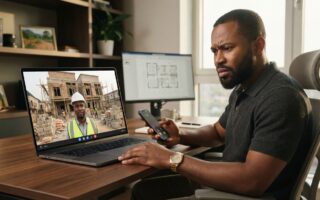
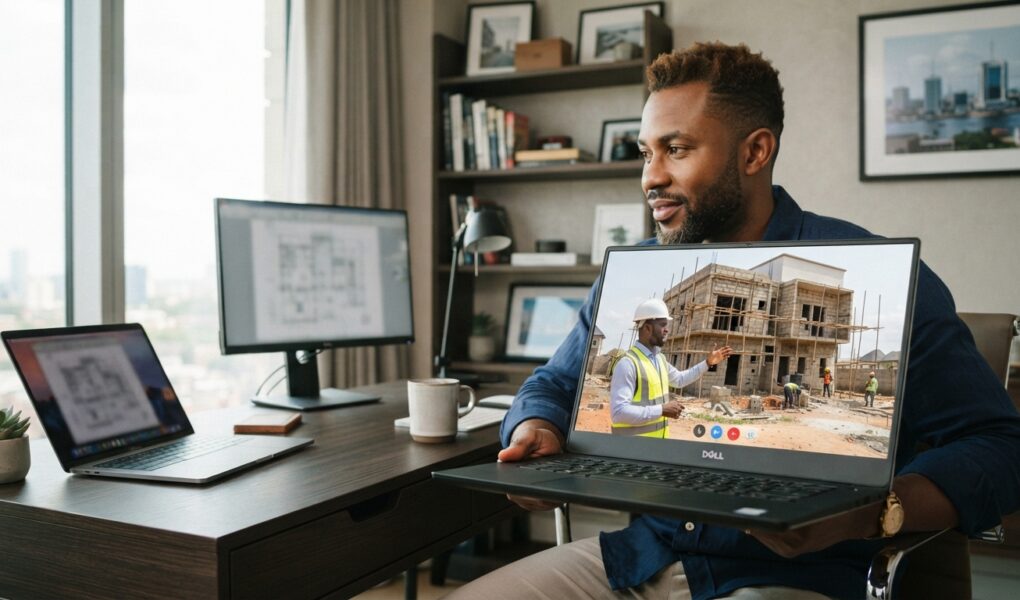
One of the easiest ways to monitor construction from abroad is through regular video updates.
Your contractor or site supervisor can use a smartphone to record different sections of the building and share the videos through WhatsApp, Google Drive or other communication platforms.
However, do not settle for random videos showing workers mixing cement or carrying blocks.
Request organised video updates that demonstrate actual progress.
For example, your weekly updates could include:
- A complete view of the construction site.
- Current building activities.
- Completed structural components.
- Materials delivered to the site.
- Work that is yet to be completed.
- Areas requiring your approval.
- Any problems affecting construction.
Ask the person recording the videos to provide dates and explain what is happening.
This makes it easier to compare progress from one week to another.
For additional accountability, request occasional live video calls during which you can ask questions and inspect specific areas of the building in real time.
3. Use CCTV Cameras to Monitor the Construction Site
Installing security cameras at your construction site can provide additional visibility into activities taking place when you are not physically present.
Internet-enabled CCTV cameras allow authorised users to access live footage remotely through mobile applications.
Depending on the camera system, you may be able to:
- View construction activities in real time.
- Monitor access to the property.
- Check whether workers are present.
- Observe material deliveries.
- Review recorded footage.
- Receive motion-detection notifications.
Before installing cameras, ensure that the site has a reliable power supply and internet connection.
Solar-powered security cameras may be worth considering where electricity supply is unreliable.
Position cameras strategically to cover important sections of the property, including the entrance, material storage area and main construction space.
However, CCTV should not replace professional site inspections. A camera can show that workers are present, but it cannot reliably determine whether concrete has been properly mixed or reinforcement bars have been installed according to structural drawings.
4. Demand Photographic Evidence Before Releasing Payments
One of the biggest mistakes Nigerians abroad make when building houses is releasing construction funds without confirming the work that has actually been completed.
A contractor may request additional money while the property owner has little information about the current state of construction.
To avoid this problem, connect payments to clearly defined construction milestones.
For example:
- Completion of foundation excavation.
- Completion of foundation reinforcement and concrete works.
- Completion of foundation blockwork and filling.
- Completion of ground-floor slab.
- Completion of columns and beams.
- Completion of lintels and roof-level structural works.
- Completion of roofing.
- Completion of plastering and other finishing activities.
Before approving each payment, request photographs, videos and an independent assessment where necessary.
For major structural activities, photographs alone may not be sufficient. A qualified professional should inspect the work before it is covered by subsequent construction activities.
This is particularly important for reinforcement works, foundations, concrete slabs and other structural components.
Never allow payment pressure to replace proper verification.
5. Establish a Detailed Construction Budget
Monitoring building progress is not only about knowing how many blocks have been laid or how many rooms have been completed.
You also need to understand how construction funds are being spent.
Without a detailed budget, it becomes difficult to identify unnecessary expenses, unexplained cost increases or possible financial mismanagement.
Ask your contractor or quantity surveyor to prepare a detailed cost estimate covering:
- Building materials.
- Labour expenses.
- Transportation.
- Equipment hire.
- Professional fees.
- Finishing materials.
- Contingency expenses.
Maintain a record of every payment made.
You should also request supporting evidence for significant purchases, including receipts, supplier invoices and delivery notes.
A simple spreadsheet can help you compare the original budget with actual expenditure.
For example, if you allocated a particular amount for roofing materials, you should be able to see how much was spent, what was purchased and what remains.
This approach makes financial monitoring easier and reduces the risk of uncontrolled spending.
6. Use Digital Project Management Tools
Technology has made it easier to coordinate construction activities across different countries.
Instead of depending entirely on phone calls and scattered WhatsApp messages, you can use digital tools to organise project information.
Some useful platforms include:
Google Drive: Store construction photographs, videos, receipts, drawings, contracts and progress reports in organised folders.
Google Sheets: Track expenses, material purchases, contractor payments and outstanding work.
Trello: Organise construction activities into stages and monitor completed and pending tasks.
WhatsApp: Communicate with your contractor, supervisor, architect and other professionals.
Google Meet or Zoom: Hold regular project meetings and discuss construction challenges.
The most important thing is not the number of applications you use but how consistently project information is documented.
Create a central location where important construction records can be accessed whenever necessary.
7. Request Independent Site Inspection Reports
Even with regular photographs, video calls and CCTV cameras, there are certain construction details that cannot be properly assessed remotely.
For this reason, independent professional inspections are extremely important.
An architect, structural engineer, quantity surveyor or construction consultant can visit your property and assess whether work is progressing according to the approved plans and specifications.
Depending on the stage of construction, an inspection report may cover:
- Quality of workmanship.
- Materials used.
- Compliance with architectural and structural drawings.
- Reinforcement placement.
- Concrete works.
- Construction measurements.
- Progress against the project schedule.
- Identified defects or deviations.
Request a written report accompanied by dated photographs.
You can arrange inspections at important construction milestones rather than waiting until the entire building is completed.
For instance, foundations, reinforcement works, concrete slabs, roofing and major finishing activities deserve particular attention.
The cost of independent inspections should be included in your construction budget.
8. Maintain Direct Relationships With Material Suppliers
Another way to monitor construction from abroad is to establish direct communication with suppliers.
If your contractor is purchasing cement, reinforcement bars, roofing sheets, tiles and other building materials, request documentation showing what was purchased and delivered.
Where practical, obtain quotations directly from suppliers and compare prices.
You may also arrange for suppliers to issue invoices in your name or provide delivery confirmations.
This does not mean you should personally manage every material purchase from abroad.
Rather, it gives you an additional way to verify expenditure and reduce the possibility of inflated material costs or unexplained purchases.
For expensive materials, consider dealing directly with reputable suppliers while allowing your site supervisor to coordinate delivery and storage.
9. Create a Weekly Construction Progress Report
A properly organised weekly report can help you understand the actual condition of your project without having to call different people repeatedly.
Ask your site supervisor to submit a report at an agreed time every week.
The report should include:
Project information
- Property location.
- Reporting date.
- Current construction stage.
- Names of responsible professionals.
Work completed
- Activities completed during the week.
- Percentage of work completed where measurable.
- Materials delivered.
- Photographic evidence.
Outstanding activities
- Work yet to be completed.
- Delayed activities.
- Materials required for the next stage.
Financial information
- Money spent during the week.
- Payments made.
- Outstanding financial obligations.
- Remaining project budget.
Problems and recommendations
- Construction challenges.
- Quality concerns.
- Weather-related delays.
- Decisions requiring your approval.
This reporting system helps you identify problems before they become expensive.
10. Avoid Paying for Work That Has Not Been Verified
Financial accountability is essential when building a property remotely.
Some property owners make the mistake of transferring large sums of money because a contractor claims that additional materials or funds are urgently required.
Although genuine construction emergencies can occur, every major request should be properly explained and documented.
Consider using a milestone-based payment arrangement.
Under this arrangement, payment is released after agreed construction activities have been completed and verified.
For larger projects, you may also consider a professionally structured contract administration or payment certification arrangement.
Avoid paying the entire construction cost upfront.
Also, keep financial records separate from personal family expenses and ensure that every transaction has a clear purpose.
A good payment system protects both the property owner and the contractor.
11. Protect Your Property Against Material Theft and Unauthorised Access
Construction materials can represent a significant portion of your investment.
Cement, reinforcement bars, electrical cables, plumbing materials, roofing sheets and other items may be vulnerable to theft or unauthorised removal.
When building from abroad, you may not immediately notice when materials disappear from the construction site.
To reduce this risk:
- Install appropriate security arrangements.
- Keep a record of materials delivered.
- Maintain an inventory of expensive items.
- Restrict access to authorised workers.
- Use CCTV where practical.
- Request regular material inventory reports.
- Ensure that unused materials are properly stored.
You should also make arrangements for the security of the property after working hours and during construction breaks.
12. Make Occasional Physical Inspections at Critical Stages
Although technology can significantly reduce the need for frequent travel, there are situations where visiting the property personally may be worthwhile.
You do not necessarily need to travel home every month.
Instead, plan visits around major construction milestones or decisions that require your physical presence.
For example, you may choose to visit when:
- Land documentation and initial site preparation are being completed.
- Foundation construction is underway.
- Major structural works are approaching completion.
- Roofing and external finishing are being planned.
- The property is nearing handover.
If travelling is impossible, appoint an independent professional to represent your interests and provide a detailed inspection report.
The goal is to make physical visits purposeful rather than allowing construction to depend entirely on your availability to travel.
13. Keep All Building Documents Organised
Documentation is one of the most valuable tools available to Nigerians building properties from abroad.
Ensure that important records are stored digitally and backed up.
These documents should include:
- Land ownership documents.
- Survey plans.
- Approved building plans.
- Architectural drawings.
- Structural drawings.
- Construction contracts.
- Bills of quantities.
- Material purchase receipts.
- Payment records.
- Inspection reports.
- Construction photographs.
- Completion and handover documents.
Having these records readily available makes it easier to resolve disagreements, verify construction decisions and establish the history of your property.
It also helps when you eventually want to sell, rent or transfer ownership of the building.
Red Flags Nigerians Abroad Should Watch Out For
Remote construction management requires paying attention to warning signs.
Be cautious when:
- Your contractor consistently refuses to provide recent photographs or videos.
- Construction progress does not match the amount of money spent.
- Material purchase receipts are unavailable.
- The contractor frequently requests additional funds without clear explanations.
- Different people provide conflicting information about the project.
- Construction work repeatedly stops without a reasonable explanation.
- Structural changes are made without your approval.
- Independent inspectors are discouraged from visiting the site.
- You cannot obtain clear information about materials delivered to the property.
- Your contractor becomes difficult to contact whenever you request financial or construction updates.
One warning sign does not automatically mean fraud is taking place, but repeated problems deserve immediate attention.
Do not ignore concerns simply because the contractor is a family friend or someone you have known for years.
A Practical Remote Building Supervision System
If you want to make remote construction management easier, consider establishing the following routine:
Every day: Your site supervisor records important construction activities and reports urgent issues.
Every week: You receive a structured progress report with photographs, videos and financial updates.
Every month: You review the budget, construction schedule, outstanding payments and material inventory.
At major construction milestones: An independent professional inspects the work before payment approval or before critical components are covered.
At agreed intervals: You hold a video meeting with the contractor and relevant professionals to discuss progress and upcoming activities.
This arrangement creates a predictable reporting system and reduces unnecessary communication problems.
Conclusion
Building a house in Nigeria while living abroad does not mean you must constantly travel home to supervise construction.
With a reliable independent site supervisor, regular video updates, CCTV cameras, organised financial records, digital project management tools and professional inspections, you can maintain meaningful control over your construction project from another country.
However, technology alone cannot guarantee good construction. You still need qualified professionals, a properly documented agreement and a clear system for verifying work before releasing payments.
Whether you are building your first family home, developing rental apartments or investing in Nigerian real estate from the diaspora, proper supervision is essential.
Your physical absence should not mean your investment is left without supervision.
Build with a plan, demand accountability and make every naira spent on your property count.