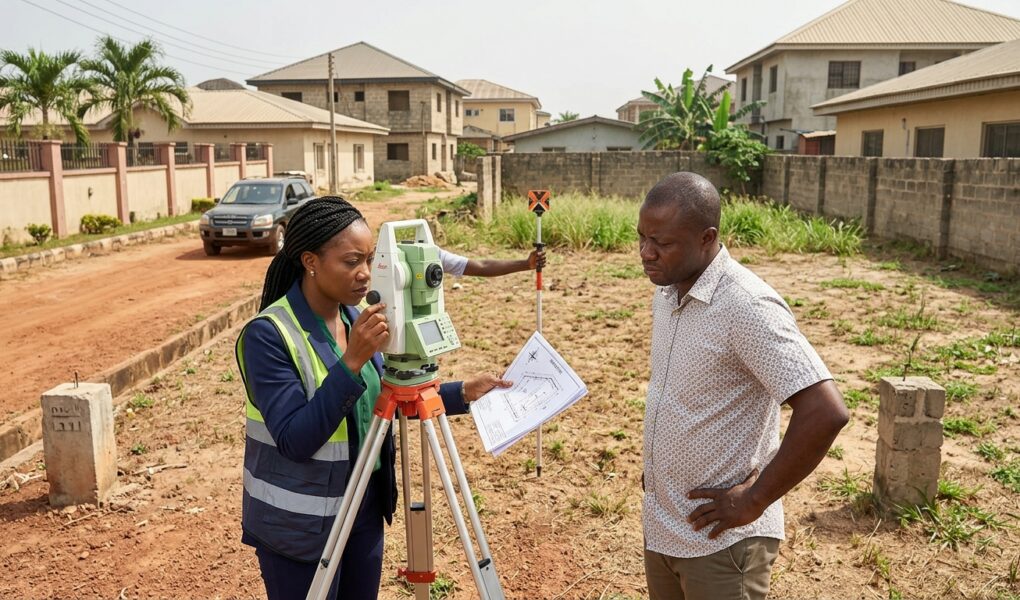
Imagine buying a plot of land in Nigeria after being told that it measures 600 square metres. You make the payment, receive your allocation letter, and begin planning your building. However, when a surveyor visits the property to measure the boundaries, you discover that the land is only 450 square metres.
You have paid for 600 square metres but received significantly less than you expected.
What should you do? Can you demand the missing portion? Are you entitled to a refund? And what happens if the real estate company insists that the allocation is correct?
This situation can be frustrating, especially when you have invested your hard-earned money in a property you intend to develop or keep for future appreciation.
The good news is that you do not have to accept the discrepancy without investigation. Depending on your agreement, the evidence available, and the circumstances of the transaction, you may have grounds to request an explanation, additional land, a price adjustment, a refund, or another appropriate remedy.
Here is what to do when the size of your allocated plot is smaller than promised.
1. Confirm the Actual Size of the Land
Before accusing the seller or real estate company of shortchanging you, establish the actual size of the allocated plot.
Do not rely solely on visual estimates or measurements taken with ordinary tape. Land boundaries can be difficult to judge by sight, particularly when neighbouring plots are undeveloped.
Engage a qualified surveyor to measure the property and determine its boundaries.
Ask the surveyor to compare the measured plot with the dimensions stated in your allocation documents, survey plan, purchase agreement, or other relevant records.
For example, if the seller promised 600 square metres but the measured area is 450 square metres, the difference is 150 square metres.
That represents a shortfall of 25% of the promised area.
However, make sure the comparison uses the correct plot dimensions and agreed method of measurement. A discrepancy may sometimes result from misunderstanding the plot layout, an incorrect allocation plan, or the way the area was originally described.
Do not begin building, fencing, or moving boundary markers until the discrepancy has been properly investigated.
2. Review Your Purchase Agreement and Allocation Letter
Your next step is to examine the documents you received when buying the land.
Look for the exact description of the property and any statement about its size.
Check the following documents, where applicable:
- Purchase agreement or contract of sale.
- Allocation letter.
- Survey plan.
- Receipt or evidence of payment.
- Estate layout showing plot numbers and dimensions.
- Promotional materials or written communications describing the promised plot size.
Determine whether the seller expressly promised a specific area, such as 600 square metres, or merely described the property as a standard plot.
This distinction can matter when determining your rights.
If your signed agreement specifies 600 square metres but the allocated land measures only 450 square metres, you may have grounds to challenge the discrepancy.
However, if the agreement defines the land by precise boundaries and those boundaries are inconsistent with a general size estimate in an advertisement, the legal position may require closer examination.
Ask a property lawyer to review the documents before deciding how to proceed.
3. Contact the Seller or Real Estate Company in Writing
Once you have evidence of the shortfall, contact the seller or property developer.
Remain professional and focus on the facts rather than making immediate accusations.
Explain that the property was advertised or sold as having a particular size, but an independent measurement indicates that the allocated plot is smaller.
Attach relevant evidence, such as the surveyor’s findings, and request a written explanation.
Ask the seller to clarify:
- Why the allocated plot is smaller than promised.
- Whether the allocation was made in error.
- Whether the missing area is available for allocation.
- What solution the seller proposes.
- When the issue can be resolved.
Keep copies of your letter, email, WhatsApp messages, and any responses you receive.
A written record may become important if the matter later requires legal intervention.
Avoid relying exclusively on telephone conversations or verbal promises that cannot easily be verified.
4. Request the Missing Land if It Is Available
If the discrepancy resulted from an allocation error and sufficient land remains available, you may ask the seller to allocate the missing area.
For example, suppose you paid for a 600-square-metre plot but received only 450 square metres. If an additional 150 square metres can be lawfully allocated beside your plot, the seller may be able to correct the shortfall.
However, the additional land must be properly identified and allocated. It must not overlap another buyer’s plot or violate the approved estate layout or applicable planning requirements.
Do not accept a verbal assurance that the remaining portion belongs to you.
Request an updated allocation letter, an appropriate survey plan, and any other necessary documentation reflecting the corrected allocation.
Have your lawyer and surveyor verify the arrangement before accepting it.
5. Negotiate a Price Adjustment or Refund
Sometimes the seller cannot provide the missing land.
In that situation, you may request a price adjustment or partial refund, depending on the terms of the agreement and your legal rights.
Consider this example:
You paid ₦12 million for a plot advertised as 600 square metres, but the actual area is 450 square metres.
If the entire price were allocated proportionally to the land area, the indicative calculation would be:
- Price paid: ₦12,000,000.
- Promised area: 600 square metres.
- Actual area: 450 square metres.
- Shortfall: 150 square metres.
- Proportional value of the shortfall: ₦3,000,000.
This calculation may help you begin a negotiation, but it does not automatically establish that you are legally entitled to a ₦3 million refund.
The actual value may depend on the plot’s location, shape, access, boundaries, agreed pricing terms, and the applicable legal remedy.
If you cannot agree on compensation, seek advice from a property lawyer about your options.
6. Find Out Whether the Shortfall Affects the Usability of the Land
Not every land-size discrepancy has the same practical effect.
A reduction of 50 square metres might have little effect on one property but make another unsuitable for its intended purpose.
For example, a smaller plot may affect your ability to:
- Build the type of house you planned.
- Provide the required setbacks and parking spaces.
- Meet applicable building and planning requirements.
- Accommodate a septic tank or other necessary facilities.
- Maintain suitable access to the property.
- Construct an additional building in the future.
The shape of the plot matters as well as its total area.
A rectangular plot measuring 15 metres by 40 metres has an area of 600 square metres. A plot with an irregular shape may have the same area but offer fewer practical building options.
Ask an architect, surveyor, or other relevant professional to determine whether the allocated land can accommodate your proposed development.
Do not spend money on building plans or construction until you are confident about the property’s actual dimensions and suitability.
7. Check Whether the Missing Portion Belongs to Another Buyer
One of the more serious possibilities is that the seller has allocated overlapping land to different buyers.
For example, your allocation plan may show that your plot extends to a particular boundary, while a neighbouring buyer has documents showing that the same area belongs to them.
This is more serious than a simple measurement error.
If you suspect an overlapping allocation, ask your surveyor to identify the boundaries and document the discrepancy. Your lawyer should then investigate the competing claims and review the relevant allocation and title records.
Do not move boundary markers, fence the disputed area, or attempt to take possession through confrontation.
If the dispute cannot be resolved amicably, your lawyer can advise whether formal proceedings or other protective measures are appropriate.
Resolving an overlapping allocation early can help prevent more expensive problems after construction begins.
8. What If the Seller Refuses to Accept Responsibility?
Unfortunately, some sellers may insist that the allocated plot is correct even when independent measurements suggest otherwise.
Others may stop responding to messages or claim that the buyer should have measured the land before making payment.
If this happens, take the following steps:
First, organise your evidence. Keep the signed agreement, allocation documents, payment records, advertisements, messages, and surveyor’s report.
Second, send a formal written complaint. State the promised size, the measured size, the difference, and the resolution you are requesting.
Third, consult a property lawyer. Your lawyer can assess whether the facts support a claim for correction, compensation, a refund, or another remedy.
Fourth, consider appropriate dispute-resolution channels. Depending on the circumstances, negotiation, mediation, a relevant regulatory authority, or court proceedings may be suitable.
The appropriate route depends on the seller’s identity, the terms of the contract, the location of the property, and the nature of the dispute.
Avoid making public accusations of fraud before the facts have been properly established. Focus on documenting the discrepancy and pursuing a practical, lawful resolution.
9. Can You Cancel the Transaction Because the Plot Is Smaller?
Possibly, but cancellation is not automatic in every case.
Your rights may depend on whether the seller breached an important contractual obligation, the size of the discrepancy, the wording of the agreement, and whether the problem can be corrected.
If the seller promised a specific plot size and delivered substantially less, you may have grounds to seek a remedy.
Depending on the circumstances, that remedy could involve obtaining the missing land, negotiating compensation, seeking a refund, or pursuing another legal claim.
However, do not assume that you can simply cancel the transaction and automatically recover every naira paid.
Before terminating the agreement, consult a lawyer about the available remedies, any notice requirements, and the potential consequences of cancellation.
If you have already started building, the situation may require additional consideration because of the money spent on construction and the rights of other parties.
10. How to Protect Yourself Before Buying Land in Nigeria
The best way to reduce the risk of receiving a smaller plot than promised is to verify the property’s dimensions before completing the transaction.
Use these precautions when buying land:
- Request a survey plan or estate layout showing the plot’s dimensions.
- Confirm the promised area in the written purchase agreement.
- Engage an independent surveyor to verify the plot boundaries and measurements.
- Check that the allocated plot corresponds with the correct plot number and layout.
- Confirm that the land does not overlap neighbouring allocations.
- Verify the seller’s authority to sell the property.
- Keep copies of all allocation documents and payment records.
- Avoid making the final payment until important allocation discrepancies are resolved, where the agreed transaction terms allow this.
- Have a property lawyer review the contract and explain your rights if the actual plot differs from what was promised.
If you are buying land from a property developer, do not assume that a professionally designed estate layout guarantees that every allocation is accurate.
Independent verification remains important.
Frequently Asked Questions
What if I bought 600 square metres but received only 500 square metres?
First, engage a qualified surveyor to confirm the actual area and compare it with your purchase documents. If the shortfall is established, contact the seller in writing and request a correction or appropriate remedy.
Can a real estate company change my plot size after payment?
The answer depends on the agreement, the circumstances of the change, and applicable law. A developer should not assume that it can disregard an agreed plot size simply because the allocation has become inconvenient. Obtain legal advice if the company refuses to honour the agreed terms.
Should I accept another plot instead?
An alternative plot may be a reasonable solution if it meets your needs and has been properly verified. Before accepting it, confirm its location, size, boundaries, title status, access, and any differences in value. Ensure that the change is documented in writing.
What if the allocation letter shows the correct size but the land is smaller?
An allocation letter does not resolve a physical boundary discrepancy by itself. Obtain an independent survey and ask your lawyer to compare the actual land with the allocation documents and relevant estate records.
Can I demand compensation for the smaller plot?
You may have grounds to seek compensation or another remedy if the seller failed to provide the land promised under the agreement. Whether compensation is available, and how much may be recoverable, depends on the contract, the evidence, and applicable law.
Final Thoughts
Discovering that your allocated plot is smaller than promised can be disappointing, particularly when you have already paid the full purchase price.
However, do not rush into confrontation or accept the loss without investigating your options.
Confirm the actual size with a qualified surveyor, review your purchase documents, notify the seller in writing, and seek professional advice if the discrepancy cannot be resolved.
Depending on the circumstances, you may be able to obtain the missing land, negotiate a price adjustment, seek a refund, or pursue another appropriate remedy.
Remember: Before you buy land, verify not only who owns it, but also exactly what you are paying for.
At Qadeva.com, we encourage Nigerian property buyers to verify land measurements, examine their allocation documents, and make informed decisions before committing their money to real estate.