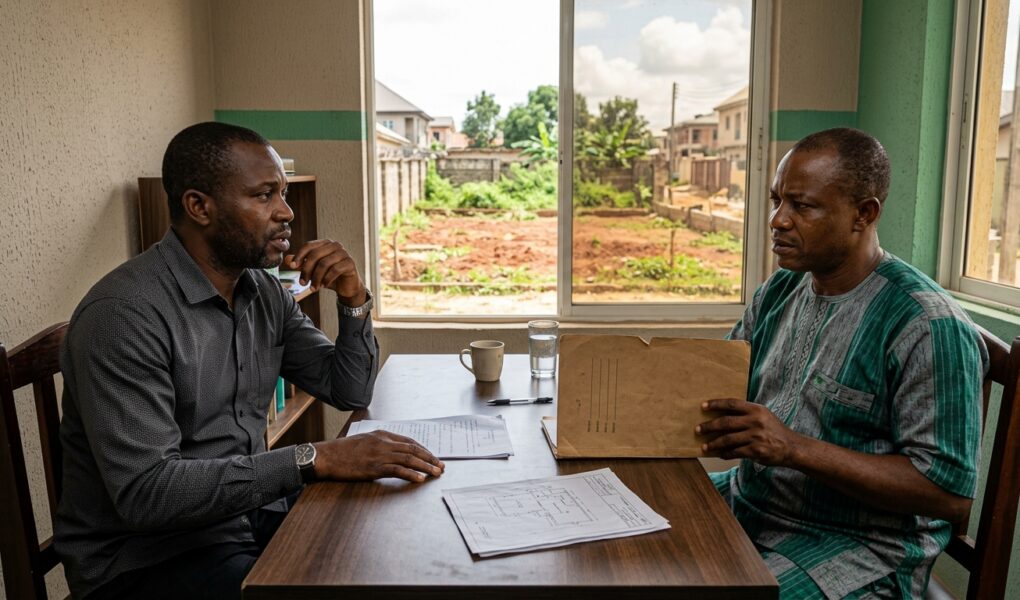
Buying land in Nigeria requires more than trusting a seller’s promises, inspecting a plot, or agreeing on a price. One of the most important steps is verifying that the seller has a legitimate right to sell the property.
Imagine finding a beautiful plot of land in a promising location. The price seems reasonable, the seller appears trustworthy, and you are ready to make payment. However, when you request to see the original land documents, the seller gives excuses, promises to produce them later, or insists that you should pay a deposit first.
What should you do in this situation?
The safest approach is to pause the transaction, investigate the seller’s explanation, and independently verify the property’s ownership before committing your money.
For buyers dealing with landowners, agents, property developers, or real estate companies in Nigeria, here is how to handle the situation without putting your investment at unnecessary risk.
1. Ask the Seller Why the Original Documents Are Unavailable
Before assuming the seller is dishonest, ask for a clear explanation.
There may be a genuine reason. For example, the original document might be held by a bank as security for a loan, kept by a lawyer, or undergoing an official process. In other cases, the seller may have only a copy because of how the land was originally acquired.
However, the explanation must be verifiable.
Ask these questions:
- Who is the current legal owner of the land?
- Which documents are available, and which are missing?
- How did the seller acquire the land?
- Where are the original documents currently kept?
- Can the documents be independently verified?
- Is there any dispute, mortgage, government acquisition, or competing claim involving the land?
A seller who gives a clear explanation and cooperates with reasonable checks is easier to assess than one who avoids every question.
2. Do Not Pay a Deposit Just to See the Documents
One of the biggest mistakes land buyers make is paying a commitment fee because the seller promises to produce the documents afterward.
You might hear statements such as:
- “Pay something first; I will bring the documents later.”
- “Other buyers are waiting, so you must act fast.”
- “You don’t need to see the originals. Just trust me.”
- “The documents are with someone else, but everything is genuine.”
Do not allow urgency to replace verification.
Until the seller’s ownership and authority to sell have been established, avoid paying a deposit or signing an agreement that commits you financially.
If you have already paid, keep all receipts, messages, agreements, and transfer records. Do not make additional payments until an independent property lawyer has assessed the situation.
3. Engage Your Own Property Lawyer
Do not rely exclusively on the seller’s lawyer, the estate agent, or the developer’s assurances.
Engage an independent Nigerian property lawyer to investigate the transaction on your behalf.
The lawyer should determine which documents are appropriate for the particular land and whether the seller has a transferable interest.
Depending on the property’s history, the investigation may involve:
- Certificate of Occupancy (C of O), where applicable.
- Deed of Assignment or other documents showing the chain of ownership.
- Registered survey plan and confirmation of the property’s location.
- Gazette or excision evidence, where relevant.
- Probate, letters of administration, or a valid power of attorney, where applicable.
- Relevant searches at the appropriate land registry and checks for government acquisition, encumbrances, or disputes.
The absence of an original document does not automatically mean the transaction is fraudulent. However, a photocopy or receipt alone should not be treated as conclusive proof of ownership.
Your lawyer can advise whether alternative evidence is sufficient and what additional steps are necessary before proceeding.
4. Verify the Documents Independently
Even if the seller eventually shows you the documents, do not stop there.
A document may look genuine but contain incorrect information, relate to another plot, or fail to establish the seller’s current interest.
Ask your lawyer to verify the relevant records through the appropriate government authorities.
An independent surveyor should also confirm that the land being offered corresponds with the survey plan and its coordinates.
Certificate of Occupancy or Other Title Evidence
Check the named holder, property description, registration details, and whether the seller can establish a valid chain of ownership.
Not every legally transferable interest in land is evidenced by a Certificate of Occupancy, so the appropriate documents depend on the property’s circumstances.
Survey Plan
Confirm the location, boundaries, coordinates, and relevant survey records.
A survey plan helps identify a parcel of land, but it does not independently prove ownership.
Deed of Assignment and Previous Ownership Records
Establish how the seller acquired the property and whether the available documents support the proposed transfer.
The exact checks and documents required vary by state and by the property’s title history.
5. Find Out Whether the Original Documents Are With a Third Party
Sometimes the seller claims that a bank, lawyer, family member, or previous owner is holding the originals.
Do not simply accept this explanation.
Ask the seller to arrange a verification meeting with the person or institution holding the documents. Where appropriate, your lawyer can confirm their existence and status directly.
If the documents are held by a bank, for example, there may be an outstanding mortgage or other security interest. Your lawyer must establish the terms for releasing the documents and whether the transaction can proceed lawfully.
If the originals are held by a previous owner, investigate why they have not been handed over and whether the seller’s ownership chain is complete.
Never assume that a third party’s possession of the documents is harmless.
6. Be Extra Careful With Family Land and Estate Properties
Some Nigerian land transactions involve customary ownership, inherited property, or land sold through an estate developer.
These transactions may require additional checks.
For family land: Verify the family’s root of title and identify the people legally authorised to sell it. A single family member’s consent or signature may not be sufficient in every situation.
For inherited property: Confirm who has the legal authority to act for the deceased owner’s estate.
For estate developments: Request the relevant title documents and evidence that the developer has authority to allocate or sell the particular plot. Confirm the plot allocation directly with the appropriate party.
For land sold through an agent: Establish the owner’s identity and verify the agent’s authority to act.
A receipt or allocation letter may form part of the evidence, but its existence does not automatically establish a valid title.
7. Watch Out for These Warning Signs
Pay close attention to the following red flags when dealing with a land seller.
The Seller Demands Payment Before Verification
You are told to pay immediately before being allowed to examine the title documents.
The Seller Keeps Changing the Story
The explanation for the missing documents changes every time you ask.
The Seller Refuses Independent Legal Checks
You are told that involving your own lawyer is unnecessary or unacceptable.
The Seller Cannot Explain the Ownership History
There is no convincing explanation of how the land passed from the original owner to the current seller.
Someone Else Claims Ownership
A family member, neighbour, previous buyer, or another party raises a competing claim.
Any one of these signs deserves attention. Several together are strong reasons to suspend the transaction until the concerns are resolved.
8. What If the Seller Still Refuses?
If the seller continues to refuse reasonable document inspection or independent verification, the safest decision is to walk away from the deal.
Do not let the money you have already spent on transport, inspections, or negotiations pressure you into taking a bigger risk.
Another plot will become available. Recovering money from a disputed land transaction can be much more difficult.
If you have already made a payment and now suspect wrongdoing, preserve the evidence and consult a lawyer promptly about the available options for recovering your money or protecting your legal position.
9. Can You Buy Land Without Seeing the Original Documents?
In some circumstances, a property transaction may proceed without the buyer physically taking possession of the original documents before completion. For example, originals may be held by a mortgagee or another legitimate custodian.
However, this does not mean you should buy land without verifying the seller’s title.
Your lawyer must establish the seller’s legal interest, investigate the relevant records, determine why the originals are unavailable, and confirm that the proposed transaction can be completed safely.
Where necessary, the transaction should include appropriate arrangements for producing or releasing the originals and completing the transfer.
The important distinction is between buying land without physically holding the original documents at an early stage and buying land without adequate proof of the seller’s ownership. The latter exposes you to unnecessary risk.
10. Use This Checklist Before Buying the Land
Before making payment, confirm that you have completed the following steps:
- The seller’s identity and authority to sell have been verified.
- The ownership history and relevant title documents have been examined.
- The land registry and other appropriate records have been checked.
- The survey plan and physical location have been independently verified.
- Potential disputes, mortgages, acquisition issues, and competing claims have been investigated.
- Any missing original documents have been properly accounted for.
- My independent property lawyer has approved proceeding with the transaction.
Do not treat this checklist as a substitute for a professional title investigation. Each property has its own history, and the necessary checks may differ.
Final Thoughts
When a land seller refuses to show you the original documents, do not immediately assume fraud, but do not ignore the warning sign either.
Find out why the originals are unavailable, ask your lawyer to investigate the seller’s title, and verify the property’s records independently. If the seller refuses to cooperate with reasonable checks, be prepared to walk away.
Remember: You are not just buying a piece of land. You are buying the legal interest that the seller claims to have in it.
At Qadeva.com, we encourage prospective property buyers to ask questions, verify ownership, and make informed decisions before committing their hard-earned money to real estate.