A residential estate should offer more than houses, roads and security infrastructure. It should provide an environment where residents can feel comfortable, develop relationships with their neighbours and participate in activities that strengthen the community.
In many residential developments, considerable attention is given to architectural designs, building materials, drainage systems, security arrangements and other physical features. While these elements are important, the social environment of an estate also deserves careful consideration.
A well-designed residential estate can encourage neighbours to interact naturally, create opportunities for families to connect and make everyday living more enjoyable.
For property developers in Nigeria, incorporating community-friendly features into residential estate planning can also make developments more attractive to prospective homebuyers and investors.
Here are practical ways to design residential estates that encourage meaningful community interaction.
1. Create Shared Recreational Spaces
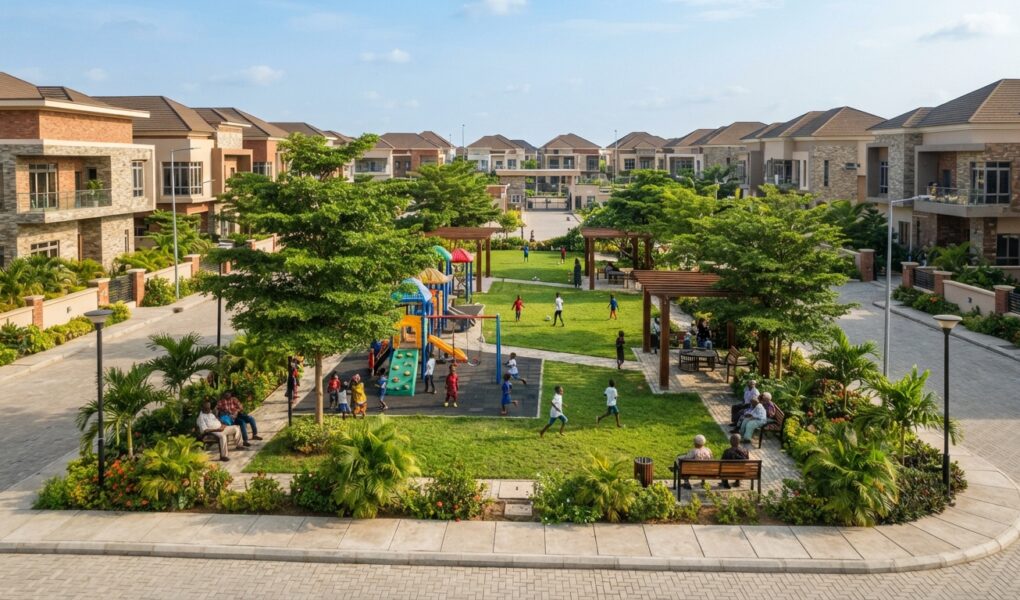
One of the simplest ways to encourage interaction among residents is to provide shared recreational spaces.
These spaces give people opportunities to meet outside their homes and participate in activities together.
Depending on the size and target market of the development, recreational facilities may include:
- Children’s playgrounds.
- Outdoor fitness areas.
- Walking and jogging paths.
- Basketball and football courts.
- Landscaped gardens.
- Open recreational lawns.
- Picnic areas.
For example, parents who regularly take their children to a shared playground may naturally become familiar with other families living in the estate.
Similarly, residents who use the same outdoor fitness facilities may develop friendships through regular interaction.
Developers should ensure that recreational spaces are accessible, properly maintained and suitable for the expected number of residents.
2. Design a Central Community Gathering Area
A central gathering area can become an important social point within a residential estate.
Rather than designing every part of an estate exclusively around individual houses, developers can dedicate a suitable area to shared activities.
This space could accommodate community meetings, small celebrations, social gatherings and organised recreational events.
Depending on the development’s budget, it could include a community pavilion, shaded seating areas, landscaped gardens or a multipurpose hall.
Having a designated gathering area gives residents a convenient place to meet without having to organise every activity inside individual homes.
It can also support residents’ associations and other community initiatives.
3. Incorporate Pedestrian-Friendly Walkways
The design of internal roads and pedestrian routes can influence how residents interact.
In estates where walking is comfortable and safe, residents are more likely to encounter their neighbours while moving around the neighbourhood.
Developers should consider providing:
- Dedicated pedestrian walkways.
- Clearly marked pedestrian crossings.
- Proper street lighting.
- Accessible pavements.
- Safe walking routes connecting residential areas to shared facilities.
- Landscaped pathways with appropriate shade.
These features can encourage residents to take evening walks, exercise outdoors and interact naturally.
In Nigerian cities, where vehicle movement can be challenging, separating pedestrian areas from busy vehicle routes is particularly important.
4. Provide Well-Designed Children’s Play Areas
Children’s recreational facilities can create opportunities for parents and families to interact.
A properly planned playground allows children to play safely while parents supervise them and meet other residents.
Developers should consider age-appropriate play equipment, protective surfaces, adequate lighting, seating for adults and appropriate safety measures.
Where space permits, separate areas can be provided for younger children and older children.
Playgrounds should also be located away from dangerous vehicle routes, deep drainage channels and other potential hazards.
A family-friendly estate is more likely to attract households looking for a comfortable environment in which their children can grow and socialise.
5. Include Community Gardens and Green Spaces
Landscaped gardens and shared green spaces can serve purposes beyond beautification.
Community gardens, in particular, can encourage residents to work together on gardening activities, environmental projects and neighbourhood improvement initiatives.
Residents could collectively maintain flower beds, grow vegetables or organise occasional gardening activities.
Even where a formal community garden is not practical, developers can incorporate green spaces with seating areas, shade trees and attractive landscaping.
These spaces can provide comfortable environments for informal conversations, relaxation and outdoor activities.
However, proper maintenance arrangements should be established to prevent shared gardens from becoming neglected.
6. Design a Multipurpose Community Centre
A community centre can provide an indoor location for activities that bring residents together.
Depending on the size and positioning of the estate, the facility may accommodate:
- Residents’ association meetings.
- Children’s educational activities.
- Fitness classes.
- Social events.
- Community celebrations.
- Workshops and training sessions.
- Meetings with estate management.
A multipurpose facility can also support activities during rainy weather when outdoor gatherings may not be convenient.
Developers should consider the expected population of the estate before determining the size and facilities required.
For smaller developments, a modest shared hall may be sufficient, while larger estates may benefit from more comprehensive community facilities.
7. Encourage Neighbourhood Shopping and Small Businesses
Commercial facilities can contribute to community interaction when they are properly integrated into residential estate planning.
A small shopping area with a supermarket, pharmacy, bakery, convenience store or other essential businesses can give residents opportunities to meet while handling everyday activities.
These facilities can also reduce the need for residents to travel outside the estate for basic purchases.
However, commercial spaces should be positioned carefully to avoid disturbing nearby homes with excessive traffic, noise or business activities.
The objective is to create convenient shared destinations without compromising the privacy and comfort of residential areas.
8. Use Street Design That Encourages Social Interaction
The arrangement of buildings, roads and shared spaces can influence how people experience their neighbourhood.
Residential streets that are excessively wide, poorly illuminated or designed exclusively for vehicle movement may discourage walking and informal interaction.
Developers can consider designs that promote pedestrian comfort and neighbourhood visibility.
For example, properly positioned streetlights, landscaped setbacks, shaded seating and accessible communal spaces can make streets more welcoming.
The location of entrances, shared facilities and pedestrian routes should also be considered during the estate planning stage.
A well-organised layout can make it easier for residents to move around and encounter one another naturally.
9. Provide Adequate Seating and Shaded Outdoor Areas
Not every community interaction requires a playground, sports centre or formal gathering.
Sometimes, simple seating arrangements are enough to encourage conversations.
Developers can install benches beneath trees, provide shaded seating near walking routes and create small resting areas around landscaped spaces.
These facilities can be useful for elderly residents, parents supervising children and people who enjoy spending time outdoors.
In Nigeria’s warm climate, shade is particularly important because it makes outdoor spaces more comfortable throughout the day.
Well-positioned seating can transform otherwise unused corners of an estate into welcoming neighbourhood spaces.
10. Make the Estate Inclusive for Different Age Groups
A residential estate may accommodate young professionals, families with children, older adults and people with different mobility requirements.
Community-friendly planning should consider the needs of these different groups.
For example, children may benefit from playgrounds, young adults may prefer fitness and sports facilities, while older residents may appreciate shaded gardens, accessible walkways and quiet seating areas.
Developers should also consider accessibility for people with disabilities by providing suitable ramps, pathways and appropriately designed shared facilities.
An inclusive estate gives more residents opportunities to participate in community activities rather than limiting shared spaces to a particular age group or lifestyle.
11. Combine Community Interaction With Proper Security
Although encouraging interaction is important, residents must also feel safe when using shared spaces.
Community facilities should be designed with appropriate security considerations.
These may include:
- Adequate street and pathway lighting.
- Clear visibility around playgrounds and recreational spaces.
- Appropriate access-control arrangements.
- Strategically positioned security personnel.
- CCTV coverage in suitable common areas.
- Safe pedestrian routes.
- Emergency access for security and medical services.
However, security planning should not make shared spaces unnecessarily restrictive.
The goal is to create an environment where residents can comfortably use communal facilities while maintaining reasonable privacy and safety.
12. Involve Residents in Community Planning
Residential estate developers should recognise that community interaction does not depend entirely on physical infrastructure.
Residents also need opportunities to participate in decisions affecting their shared environment.
Developers and estate managers can establish residents’ associations or other suitable community structures to encourage participation.
Residents could contribute ideas about recreational activities, shared facility management, neighbourhood cleanliness and community events.
For example, an estate could organise monthly clean-up exercises, children’s activities, fitness sessions or annual community celebrations.
When residents have opportunities to participate in shaping their neighbourhood, they may develop a stronger sense of ownership and responsibility.
13. Plan for the Long-Term Maintenance of Shared Facilities
Shared facilities can only continue encouraging interaction when they remain functional and attractive.
A playground that is damaged, a community hall that is poorly maintained or a garden filled with waste may eventually discourage residents from using these spaces.
Developers should establish clear maintenance arrangements before handing over an estate to its residents.
These arrangements should address:
- Cleaning and sanitation.
- Landscaping and gardening.
- Repairs to recreational equipment.
- Streetlight maintenance.
- Waste collection.
- Security of communal facilities.
- Management of shared expenses.
It is also important to communicate maintenance responsibilities and service charges transparently.
A properly managed estate is more likely to preserve its communal facilities and maintain a pleasant residential environment.
14. Balance Community Spaces With Residential Privacy
Although shared facilities are valuable, residential privacy must not be overlooked.
Not every homeowner wants recreational activities taking place directly outside their windows.
For this reason, developers should carefully position playgrounds, sports courts, event centres and commercial facilities.
Noisy facilities may need to be separated from quiet residential sections, while landscaped buffers can help reduce disturbances.
The estate layout should provide a reasonable balance between opportunities for social interaction and the privacy residents expect within their homes.
This balance is essential for creating a neighbourhood that accommodates different lifestyles and preferences.
Why Community-Friendly Estate Design Matters to Property Developers
For real estate developers, community interaction should be viewed as part of the overall residential experience rather than an unnecessary additional expense.
Well-planned communal facilities can differentiate an estate from competing developments and give prospective buyers additional reasons to consider purchasing a property.
They can also support:
- Greater residential satisfaction.
- Stronger neighbourhood relationships.
- A more attractive family environment.
- Better utilisation of shared facilities.
- Increased resident participation.
- A positive reputation for the development.
- Potentially stronger long-term buyer and tenant interest.
However, these benefits depend on proper design, affordability, effective management and consistent maintenance.
Developers should therefore consider the long-term operating costs of shared facilities before introducing them into a project.
Conclusion
Designing residential estates that encourage community interaction requires more than constructing beautiful houses and providing basic infrastructure. It involves creating shared environments where residents can comfortably meet, socialise, participate in activities and develop relationships with their neighbours.
From recreational parks and pedestrian walkways to community centres, playgrounds and landscaped gardens, thoughtful planning can transform a residential development into a more connected neighbourhood.
For Nigerian real estate developers, incorporating these features can improve the overall appeal of an estate while creating a more enjoyable living environment for homeowners and tenants.
Ultimately, a successful residential estate should not only provide people with somewhere to live. It should also provide opportunities for them to feel connected, comfortable and genuinely part of a community.