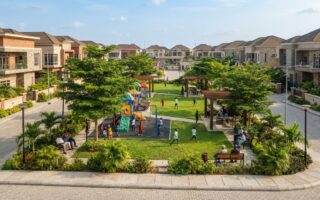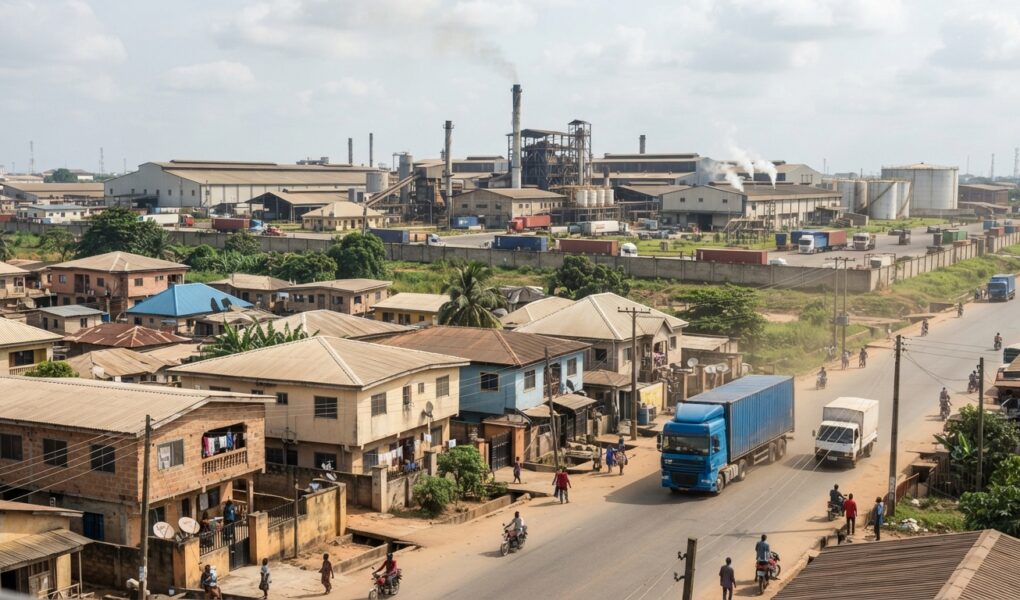
Industrial development plays an important role in economic growth, job creation and infrastructure development. Factories, warehouses, processing plants and other industrial facilities provide employment opportunities, support businesses and contribute to the growth of surrounding towns and cities. However, when industrial activities take place close to residential communities, they can create environmental, health and lifestyle challenges that property owners and prospective homebuyers should understand.
For people considering buying land or a house in Nigeria, the proximity of industrial facilities is an important factor to investigate. While some industrial developments can increase property values and create economic opportunities, poorly managed industrial operations may reduce the comfort, safety and long-term attractiveness of nearby residential areas.
Understanding these effects can help property buyers make informed decisions and avoid unexpected problems after purchasing a home.
1. Air Pollution Can Affect Residential Comfort
One of the most common concerns associated with industrial activities is air pollution. Some factories release smoke, dust, chemical particles and other emissions during production.
Depending on the type of industrial operation, nearby residents may experience unpleasant smells, reduced air quality and increased exposure to airborne pollutants.
In Nigeria, communities located close to cement factories, manufacturing plants, asphalt facilities and certain processing industries may experience dust and emissions, particularly where environmental controls are inadequate.
Continuous exposure to polluted air can contribute to respiratory irritation and other health problems. It can also make everyday activities such as opening windows, drying clothes outdoors and enjoying fresh air less comfortable.
Before buying property near an industrial area, investigate the type of industries operating nearby and whether they comply with applicable environmental standards.
2. Industrial Noise Can Disrupt Daily Life
Industrial facilities often operate heavy machinery, generators, compressors, loading equipment and transportation vehicles. These activities can produce considerable noise, particularly when factories operate throughout the day or night.
For nearby residential communities, persistent noise can interfere with sleep, relaxation, concentration and other everyday activities.
Imagine purchasing a house in what appears to be a peaceful neighbourhood, only to discover that a nearby factory operates noisy machinery throughout the night.
Such conditions can make the property less attractive to families, retirees and people who work from home.
Homebuyers should therefore visit prospective properties at different times of the day to understand the surrounding noise levels before making a commitment.
3. Water Pollution Can Affect Homes and Local Water Sources
Some industrial operations generate wastewater containing chemicals, oils, heavy metals and other potentially harmful substances.
When industrial wastewater is improperly treated or discharged into nearby streams, rivers, drainage channels or groundwater systems, it can affect the quality of local water resources.
This is particularly concerning for communities that depend on boreholes, wells and nearby surface water for domestic activities.
In some Nigerian communities, industrial pollution may also affect agricultural land, fish populations and other natural resources that support local livelihoods.
Prospective property buyers should investigate the area’s water sources, drainage systems and any history of industrial wastewater discharge.
Where necessary, independent water-quality testing can help identify potential contamination risks.
4. Industrial Traffic Can Increase Road Congestion
Factories and industrial facilities frequently receive raw materials and distribute finished products using trucks, trailers and other heavy-duty vehicles.
When these facilities are located close to residential communities, the resulting traffic can increase pressure on local roads.
Residents may experience:
- Longer commuting times.
- Increased road congestion.
- Damage to residential roads caused by heavy vehicles.
- Greater risk of road accidents.
- Difficulty accessing homes during busy industrial periods.
- Increased noise from trucks and loading operations.
In developing areas around Lagos, Ogun, Oyo and other Nigerian states, industrial expansion can place additional pressure on existing road infrastructure.
Before purchasing a property, consider whether the surrounding roads can accommodate industrial traffic without significantly affecting residential access.
5. Industrial Activities Can Affect Property Values
The effect of industrial development on residential property values is not always negative. In some locations, industrial facilities create employment opportunities, attract commercial investments and encourage infrastructure improvements.
However, properties located too close to poorly managed industrial operations may become less attractive to potential buyers and tenants.
Factors such as persistent noise, air pollution, unpleasant odours, heavy traffic and environmental contamination can reduce demand for residential accommodation.
For example, a house situated beside a well-managed industrial estate with good road access may benefit from employment opportunities and commercial activity.
On the other hand, a residential property directly beside a noisy factory with visible pollution may struggle to attract buyers willing to pay a premium.
Property investors should therefore consider both the economic benefits and environmental disadvantages of nearby industrial development.
6. Industrial Accidents Can Create Safety Concerns
Certain industrial facilities handle combustible materials, chemicals, petroleum products, pressurised equipment and other potentially hazardous substances.
Accidents such as industrial fires, chemical leaks, explosions and gas releases can create serious risks for surrounding communities.
Although responsible industrial operators implement safety procedures, emergency response systems and protective measures, accidents cannot always be eliminated.
The potential consequences may extend beyond factory boundaries, depending on the nature of the incident and the distance between the facility and nearby homes.
Homebuyers should investigate the type of industrial operations in the neighbourhood and whether appropriate safety measures are in place.
Properties located near facilities handling hazardous materials deserve particularly careful assessment.
7. Dust and Industrial Waste Can Affect Property Maintenance
Industrial activities can increase the amount of dust and airborne particles settling on nearby buildings, windows, roofs, vehicles and outdoor surfaces.
This may increase the frequency of cleaning and maintenance required to keep residential properties in good condition.
Industrial waste can also create unpleasant surroundings when disposal practices are inadequate.
For homeowners, these conditions may translate into additional maintenance expenses and reduced enjoyment of their outdoor spaces.
Before purchasing a property, inspect nearby roads, drainage channels, open spaces and surrounding buildings for signs of excessive dust or poorly managed industrial waste.
8. Industrial Development Can Encourage Economic Growth
Despite the potential disadvantages, industrial activities can bring important economic benefits to surrounding residential communities.
Factories and industrial estates often create direct and indirect employment opportunities for local residents.
They may also encourage the development of:
- Shopping centres and retail businesses.
- Restaurants and food vendors.
- Transport and logistics services.
- Schools and healthcare facilities.
- Banks and other financial services.
- Rental accommodation for industrial workers.
These developments can increase economic activity and create demand for residential properties.
For property investors, locations near well-planned industrial estates may offer opportunities to attract employees, contractors and business owners seeking accommodation.
The important consideration is whether industrial expansion is properly planned and separated from residential areas.
9. Industrial Expansion Can Affect Neighbourhood Planning
One major concern for residential property owners is the possibility of industrial development expanding into previously quiet neighbourhoods.
A community that was originally designed for residential purposes may gradually experience the arrival of warehouses, workshops, factories and other commercial or industrial operations.
Such changes can affect the character of the neighbourhood and create conflicts between residential and industrial land uses.
This is why prospective buyers should investigate the area’s existing land-use designation and future development plans.
In Nigeria, buyers should make appropriate enquiries with relevant state planning authorities to understand permitted land uses and proposed developments.
A property that appears to be in a peaceful residential location today may face different environmental conditions in the future.
10. How Homebuyers Can Protect Themselves
Before purchasing residential property close to an industrial area, buyers should conduct proper investigations rather than relying entirely on the appearance of the neighbourhood during a property inspection.
Consider the following steps:
Visit the neighbourhood at different times: Industrial noise, traffic and emissions may be more noticeable during working hours or at night.
Identify nearby industrial facilities: Find out what businesses operate in the surrounding area and the nature of their activities.
Investigate environmental conditions: Look for evidence of smoke, chemical odours, excessive dust, wastewater discharge and poorly managed waste.
Check land-use regulations: Confirm whether the property is located within an approved residential zone and investigate nearby industrial zoning.
Assess access roads: Determine whether heavy-duty vehicles regularly use roads serving the residential community.
Investigate future developments: Ask relevant planning authorities about proposed industrial estates, factories and major infrastructure projects.
Speak with existing residents: People who have lived in the neighbourhood for several years may provide useful information about environmental conditions and industrial activities.
Seek professional advice: Where significant environmental risks are suspected, consider engaging qualified environmental consultants, surveyors and property professionals.
Conclusion
Industrial development can contribute significantly to economic growth, employment generation and property investment opportunities. However, when industrial activities are poorly managed or located too close to residential communities, they can create challenges involving air quality, noise, water pollution, traffic, safety and property maintenance.
For Nigerian homebuyers and real estate investors, choosing the right location requires looking beyond the appearance and purchase price of a property. The surrounding environment, existing industrial activities and future land-use plans can have a significant influence on residential comfort and long-term property value.
A beautiful house in an unsuitable environment may eventually become an uncomfortable investment. Therefore, before committing money to residential property, take time to understand what is happening around the neighbourhood and what developments may emerge in the future.
Making these checks early can help protect your investment and ensure that your chosen property provides a safe, comfortable and suitable living environment for years to come.