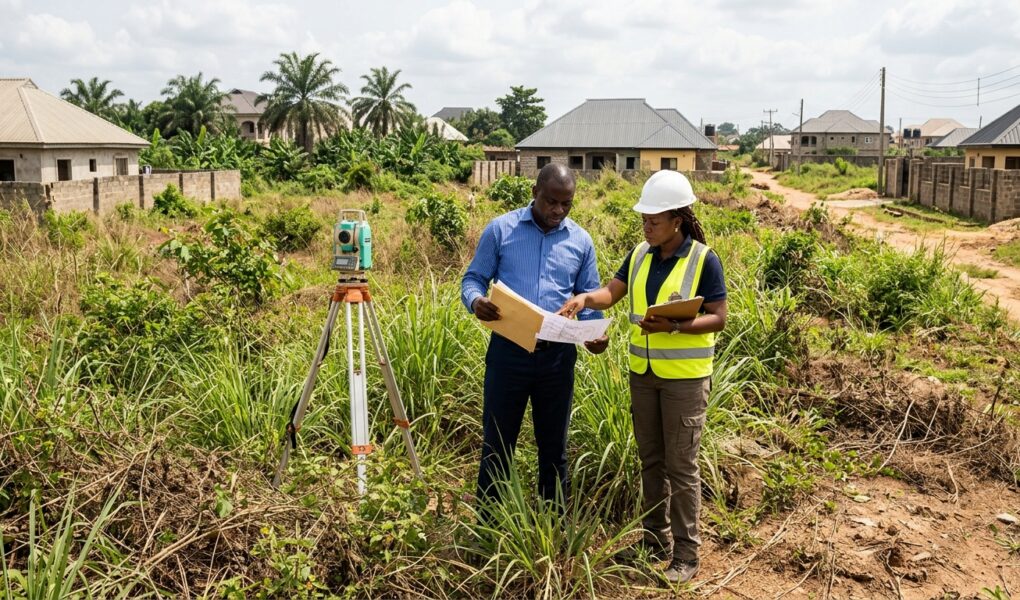
Finding a piece of land that has been abandoned for many years can seem like an excellent opportunity for property buyers and real estate investors in Nigeria. The land may be covered with weeds, surrounded by bushes, or located in a developing neighbourhood where property prices are gradually increasing. Sometimes, the owner may appear uninterested in the property, making it seem like an opportunity to negotiate a favourable price.
However, before you rush to purchase such land, there are important questions you need to answer. Why has the land been abandoned? Who owns it? Are there unresolved family disputes, legal issues, or unpaid obligations attached to the property? Is the land genuinely available for sale?
Abandoned land is not automatically a bargain, and an overgrown plot does not mean it has no owner. In Nigeria, buying land without investigating its ownership, history, documentation, and physical boundaries can expose you to expensive disputes and financial losses.
In this guide, we will examine the advantages and risks of buying land that has been abandoned for many years, the checks you should carry out before making payment, and the warning signs that should make you reconsider the purchase.
1. Why Has the Land Been Abandoned for So Long?
The first thing to investigate is why the land has remained unused for many years.
There are several possible explanations.
The owner lives far away
The owner may have relocated to another state or country and may not have the time or resources to develop the property. Some Nigerians living abroad own land they have not visited for many years.
In this situation, the land may be available for a legitimate sale if the owner can be identified and the transaction properly verified.
The owner has financial difficulties
A person may have purchased land with plans to build a house but later experienced financial challenges. Instead of selling the property immediately, the owner may have decided to leave it undeveloped until their circumstances improve.
This could create an opportunity to negotiate a reasonable price, provided the ownership is clear and the seller genuinely wants to sell.
The property is involved in a family dispute
One of the most important possibilities to investigate is whether the land belongs to a family or estate whose members disagree about its ownership or future.
For example, a deceased landowner may have left property to several children who cannot agree on whether to sell, develop, or share it.
One family member might approach you with an offer to sell the land without having the authority or consent required for the transaction.
Even if the person possesses documents relating to the property, you should not assume that they have the right to sell the entire plot.
There may be a legal or ownership problem
The land could be subject to competing ownership claims, litigation, an inheritance dispute, government acquisition, or another restriction affecting its sale or use.
The fact that the land has remained unused does not establish that any of these problems exist. However, the possibility makes proper investigation essential.
The land may have physical disadvantages
Some plots remain undeveloped because they are difficult or expensive to use.
The land could be waterlogged during the rainy season, located in a flood-prone area, difficult to access, or affected by drainage problems.
Other properties may be close to erosion channels, have unstable soil, or require extensive clearing and site preparation before construction can begin.
Before deciding that an abandoned plot is a bargain, investigate both its ownership history and its physical condition.
2. Is Abandoned Land Automatically Available for Sale?
No.
This is one of the most dangerous assumptions a prospective buyer can make.
Land does not become ownerless simply because the owner has not visited it, built on it, fenced it, or maintained it for many years.
The owner may still possess valid ownership rights even if the property looks neglected. The land may also belong to a family, an estate, or another legally recognised owner.
You should never assume that you can acquire abandoned land merely by clearing the bushes, fencing the property, or beginning construction.
Questions about ownership, possession, and any possible claims arising from long-term occupation depend on the applicable law and the particular facts of the case.
If you discover abandoned land that interests you, the appropriate approach is to identify the owner and investigate whether the property can legally be sold.
Never treat the absence of visible activity as proof that a piece of land is available for purchase.
3. Investigate the Land’s Ownership History
Before negotiating seriously, establish who owns the property and how the seller acquired it.
Start by asking the seller questions such as:
- Who originally owned the land?
- When and how did the current owner acquire it?
- Why has the land remained undeveloped?
- Has the land ever been sold to another person?
- Has anyone previously claimed ownership?
- Is the land part of a family estate?
- Has the property ever been involved in litigation?
- Are there other people who must consent to the sale?
Do not rely entirely on verbal answers. Ask for the relevant documents and have an independent property lawyer investigate the ownership history.
Where the property is family land, inherited property, or part of a deceased person’s estate, additional questions about the authority to sell and the necessary consents may arise.
A seller who becomes hostile whenever you ask reasonable questions about ownership deserves closer scrutiny.
However, a seller’s willingness to answer questions is not proof of ownership either. Independent verification remains essential.
4. Verify the Land Documents Before Paying
A major part of purchasing abandoned land in Nigeria is checking the available property documents.
Depending on the property’s location, ownership history, and legal status, relevant documents may include:
- A registered deed of assignment or other relevant conveyance document.
- A Certificate of Occupancy, where applicable.
- An approved survey plan.
- Previous title documents showing how ownership was transferred.
- Probate or letters of administration where an estate transaction requires them.
- Relevant planning, acquisition, or land registry records.
Not every property will have exactly the same documents, and possessing one document does not automatically prove that the seller has good title.
For example, a survey plan can help identify the location, boundaries, and dimensions of a plot, but it does not, by itself, establish ownership.
Similarly, a document bearing an official stamp should not be accepted without checking its authenticity and legal significance.
Ask a qualified property lawyer to review the documents and conduct appropriate searches through the relevant land registry and government offices.
The applicable procedures differ across Nigerian states, so the checks required for land in Lagos may not be identical to those required in Oyo, Ogun, Abuja, or another location.
Do not pay a substantial deposit simply because the seller presents documents that look convincing. Verify them independently first.
5. Conduct a Proper Land Registry Search
A land registry search can help reveal information relevant to the property’s ownership and legal status.
Depending on the available records and the search conducted, it may help establish whether a registered interest exists, whether documents correspond with official records, or whether there are registered encumbrances affecting the property.
Your lawyer should determine which searches are appropriate for the specific plot.
Where necessary, further investigations may be required beyond a registry search. For example, a search of available records may not resolve every dispute involving customary ownership, inheritance, competing transactions, or unregistered interests.
You should also investigate whether the land is affected by government acquisition, planning restrictions, or other issues that could interfere with your intended use.
If you are buying land in a developing area, do not assume that the absence of houses or roads means the government has no plans affecting the location.
The objective is to establish whether the seller can lawfully transfer the interest being offered to you and whether the property is suitable for your plans.
6. Visit the Land With a Registered Surveyor
An abandoned plot can look very different from the description provided by the seller.
The seller may describe the property as a standard residential plot, but the actual boundaries could be unclear, the accessible area could be smaller than expected, or nearby development could have encroached on part of the land.
Visit the property with a suitably qualified and registered surveyor.
The surveyor can help you:
- Identify the property’s location and boundaries.
- Compare the land on the ground with the available survey documentation.
- Investigate discrepancies in the stated dimensions.
- Identify possible overlaps with neighbouring plots.
- Determine whether nearby buildings, fences, or other structures appear to cross the claimed boundaries.
- Assess whether the plot’s shape and dimensions are suitable for your intended development.
Where necessary, the surveyor can also help determine whether the property’s location corresponds with relevant official survey records.
Do not rely exclusively on old boundary markers, the seller’s directions, or statements from people living nearby.
The land you are shown must correspond with the land described in the transaction documents.
If the seller refuses to allow an independent survey, consider it a serious warning sign.
7. Find Out Whether Someone Else Is Using the Land
One reason abandoned land can become complicated is that other people may already be using it.
For example, a neighbour may have extended a fence into the plot. A nearby farmer may be cultivating part of it. Someone may be storing building materials on the property, or a person may have constructed a small structure on the land.
These activities do not automatically establish ownership, but they may indicate an existing claim, boundary disagreement, or possession issue that needs investigation.
During your inspection, look for:
- Fences that appear to extend beyond neighbouring plots.
- Buildings or foundations inside the property’s claimed boundaries.
- Farm crops and cultivated sections.
- Makeshift structures or storage areas.
- Signs that someone regularly occupies or maintains the property.
- Access routes that may be shared or disputed.
Speak with nearby residents where appropriate, but treat their information as leads for further investigation rather than conclusive proof of ownership.
If someone claims to own or occupy part of the land, do not confront them aggressively or attempt to remove them yourself.
Ask your lawyer to investigate the claim and determine how it should be resolved before you proceed with the purchase.
Buying land with an existing dispute can be costly even when the seller appears confident that the claim is unfounded.
8. Speak With Neighbours and Long-Term Residents
People who have lived in a neighbourhood for many years may know useful information about an abandoned property.
They may know the previous owner, remember when the land was last used, or be aware of a family disagreement involving the property.
They may also know whether the plot becomes flooded during heavy rainfall or whether previous buyers have attempted to acquire it.
You can ask questions such as:
- Who is generally known as the owner of the land?
- Has the land ever been sold before?
- Has anyone previously attempted to develop it?
- Has there been a dispute over the property?
- Does anyone use the land regularly?
- Does the area experience flooding during the rainy season?
- Is there a history of boundary disagreements in the neighbourhood?
Where possible, speak with more than one independent person.
Be cautious if different residents provide conflicting accounts about the owner or the land’s history. Such disagreements do not necessarily mean the property is unsafe to buy, but they are a reason to investigate further.
Remember that local knowledge can be helpful, but it cannot replace professional legal and survey checks.
9. Assess the Physical Condition of the Land
An abandoned property may require substantial work before it becomes suitable for development.
Overgrown vegetation can conceal drainage channels, rubbish, uneven ground, pits, debris, and other hazards.
The land may also need clearing, filling, grading, or other preparation before construction can begin.
Before purchasing, consider the following factors.
Drainage and flooding
Inspect the property during the rainy season if possible, or ask an appropriate professional to assess its drainage and flood risk.
Look for signs of erosion, standing water, damaged nearby roads, and water flowing toward the plot from higher ground.
A plot that appears dry during the dry season may experience serious drainage problems during heavy rainfall.
Soil and ground conditions
If you intend to build a house, commercial property, or another substantial structure, obtain appropriate professional advice about the ground conditions.
Depending on the location and proposed development, a geotechnical investigation may be necessary to establish whether the site is suitable and what foundation requirements might apply.
Access roads
Determine whether the property has practical and legally supportable access.
A plot that can only be reached by passing through someone else’s land may create serious difficulties if there is no valid access arrangement.
Also consider the cost of reaching the property, transporting construction materials, and connecting to available infrastructure.
Clearing and preparation costs
Estimate the costs of clearing vegetation, removing rubbish, improving drainage, levelling the ground, and carrying out other necessary site works.
These expenses can reduce the apparent savings from buying an abandoned plot.
Do not assume that every abandoned property will require expensive preparation, but obtain realistic estimates before deciding whether the purchase makes financial sense.
10. Check Whether the Land Is Under Government Acquisition or Subject to Restrictions
A piece of land may appear attractive because it is undeveloped and relatively inexpensive. However, its location or legal status could limit what you can do with it.
Before buying, investigate whether the land is affected by government acquisition, an approved public project, planning restrictions, designated road alignments, drainage reservations, or other relevant restrictions.
The appropriate checks depend on the location and the intended use of the property.
For instance, a plot that looks suitable for a residential building may be affected by a proposed road corridor or another planning restriction.
Do not rely solely on the seller’s assurance that the land is free from government interference.
Ask your lawyer to make the relevant enquiries with the appropriate authorities and obtain professional advice on any findings.
If the land is affected by a restriction, establish exactly what it means for your proposed purchase before committing money.
11. Determine Whether the Price Is Really a Bargain
One of the main attractions of abandoned land is the possibility of buying below the prevailing market price.
However, a low asking price does not automatically make a property a good investment.
The price may reflect genuine disadvantages, such as poor access, drainage problems, unclear ownership, or high development costs.
Compare the asking price with similar plots in the same neighbourhood, taking account of differences in title status, accessibility, size, location, and development potential.
You should also estimate the additional costs involved in completing the purchase and preparing the land for use.
These may include:
- Legal fees.
- Survey and verification costs.
- Applicable transaction taxes, duties, or registration charges.
- Land clearing and waste removal.
- Drainage improvements.
- Site preparation.
- Fencing and security.
- Infrastructure or access improvements, where necessary.
For example, imagine two plots in the same developing neighbourhood.
Plot A is offered for ₦8 million but requires substantial clearing, drainage work, and access improvements estimated at another ₦2 million.
Plot B is offered for ₦9 million, has better access, and requires little preparation.
If both plots have satisfactory title and comparable development potential, Plot B may offer better overall value despite its higher asking price.
These figures are illustrative only. Actual prices and costs depend on the location, property condition, and transaction details.
The important lesson is to compare the total cost of acquiring and preparing the land rather than focusing only on the seller’s asking price.
12. Be Careful When the Seller Claims to Represent the Owner
Some legitimate property transactions are handled by representatives because the owner lives abroad, is elderly, or cannot attend the transaction personally.
However, an abandoned plot may also attract people who falsely claim to represent the owner.
Someone may tell you that the owner is deceased, lives overseas, or is too busy to participate in the sale. The person may then offer to handle the transaction in exchange for payment.
Before proceeding, independently verify the identity of the owner and the representative’s authority to act.
Depending on the circumstances, this may involve checking an appropriate power of attorney, confirming the authority of an estate administrator, or establishing the necessary authority and consent for a family property transaction.
Do not assume that possession of the owner’s identification, a photocopy of a title document, or a letter bearing a signature automatically gives someone the legal authority to sell the land.
Where the owner is alive but lives abroad, make reasonable efforts to verify the transaction directly with the owner using independently confirmed contact details.
If the owner is deceased, ask a property lawyer to establish who has the legal authority to deal with the property.
Never pay a representative simply because they appear familiar with the land.
13. Avoid Pressure to Make an Immediate Payment
A seller may tell you that several buyers are interested in the property and that you must pay immediately to secure it.
Although genuine sellers may have multiple interested buyers, pressure to pay before completing basic checks should make you cautious.
You should not be forced to skip a survey, overlook missing documents, or ignore questions about ownership simply because the seller claims the opportunity will disappear.
Before making a payment, ensure that:
- The seller’s identity has been verified.
- The seller’s authority to sell has been established.
- The property has been properly identified.
- The relevant title investigations have been completed to your lawyer’s satisfaction.
- Any material disputes or restrictions have been investigated.
- The purchase terms are documented.
- The payment arrangements are appropriate and independently verified.
Where the seller refuses reasonable verification or insists on receiving a substantial payment before allowing proper checks, consider walking away.
There will be other opportunities to buy land. Recovering money paid for a fraudulent or seriously defective transaction can be difficult and expensive.
14. What if the Land Belongs to a Family Whose Members Live Abroad?
Family-owned land can present additional challenges when some family members live abroad or cannot easily participate in the transaction.
An individual may claim that the family has agreed to sell the property, but other members may disagree or dispute the person’s authority.
Before proceeding, establish the property’s ownership history and identify the people whose participation or consent may be legally necessary.
The requirements depend on how the property is owned, how it was inherited or acquired, and the applicable law.
Where the land belongs to a deceased person’s estate, verify the relevant estate documents and the authority of the person handling the sale.
Where it is family land, ask a qualified property lawyer to determine who can validly authorise the transaction and what documentation is required.
If some family members live abroad, their absence does not automatically prevent a legitimate sale. However, the appropriate arrangements must be made to establish authority and obtain any necessary consent.
Do not accept one person’s claim that everyone has agreed without independently verifying the position.
A seemingly attractive price is not worth years of conflict with people who later claim that the seller had no authority to transfer the property.
15. Can Abandoned Land Appreciate in Value?
Yes, abandoned land can appreciate in value, but appreciation is not guaranteed.
A previously neglected plot may become more valuable if the surrounding neighbourhood develops, new roads improve accessibility, businesses move into the area, or demand for residential and commercial property increases.
Investors sometimes purchase land in developing areas and hold it for several years before selling.
However, the investment outcome depends on more than the number of years the land remains undeveloped.
Factors that may affect its future value include:
- The strength of demand for property in the area.
- Road access and transportation links.
- Availability of electricity, water, drainage, and other infrastructure.
- Local employment and commercial activity.
- Planning rules and permitted uses.
- The quality of the property’s title.
- Flood risk and other environmental conditions.
- The availability of comparable properties for sale.
A plot that is difficult to access, affected by ownership disputes, or unsuitable for development may remain difficult to sell even when nearby properties appreciate.
Also remember that an increase in the asking prices of neighbouring plots does not necessarily mean that those properties are actually selling at those prices.
Before investing, consider how you would eventually sell or use the land and whether the expected return justifies the risks and holding costs.
16. What Should You Do Before Buying Abandoned Land in Nigeria?
Use the following checklist before making a final decision.
Step 1: Identify the owner.
Establish who owns the property and how the seller acquired it. Do not assume that the person who points out the land has the right to sell it.
Step 2: Ask why the land has remained unused.
Investigate whether the reason is financial, personal, family-related, legal, or connected to the property’s physical condition.
Step 3: Obtain the available title documents.
Request the relevant documents and have an independent property lawyer review them.
Step 4: Conduct appropriate searches.
Investigate ownership, registered interests, possible disputes, government acquisition, and relevant planning restrictions through the appropriate channels.
Step 5: Engage a registered surveyor.
Confirm the plot’s location, boundaries, dimensions, and relationship to the available survey records.
Step 6: Inspect the neighbourhood.
Speak with long-term residents where appropriate and investigate any claims made about the property.
Step 7: Assess the land’s physical condition.
Check access, drainage, flood risk, soil conditions, vegetation, and likely preparation costs.
Step 8: Estimate the total cost.
Include the purchase price, transaction expenses, verification costs, and any necessary improvements.
Step 9: Confirm the seller’s authority.
Where a representative, family member, or estate administrator is involved, establish that the person has the necessary authority and that any required consents have been obtained.
Step 10: Document the transaction properly.
Have a qualified property lawyer prepare or review the appropriate sale documents and advise on payment, completion, and any required registration or consent procedures.
Step 11: Use a traceable payment method.
Verify the payment recipient independently and retain appropriate evidence of every payment. Avoid sending money to an unrelated person’s account without a satisfactory, independently verified explanation.
Step 12: Do not rush the decision.
If ownership, boundaries, authority to sell, or a major restriction remains unresolved, postpone the purchase until the issue has been addressed.
No checklist can eliminate every property risk, but these steps can help you avoid many preventable mistakes.
17. When Should You Walk Away From Abandoned Land?
Some abandoned properties may offer genuine opportunities. Others are too risky to pursue.
Consider walking away if:
- The seller cannot satisfactorily establish ownership or authority to sell.
- The available documents contain significant inconsistencies that cannot be resolved.
- The land’s location or boundaries cannot be reliably established.
- Different people make competing ownership claims and the dispute remains unresolved.
- The seller refuses independent legal or survey verification.
- The property is affected by a restriction that makes your intended use impractical or unlawful.
- The transaction depends on forged documents or misleading representations.
- The seller demands payment before permitting reasonable due diligence.
- The total cost of purchasing and preparing the land exceeds its realistic value to you.
- You are being asked to rely entirely on verbal promises.
You do not need to prove that a seller is dishonest before deciding not to proceed.
If the risk is too high, the information is inadequate, or the seller will not cooperate with reasonable checks, you can look for another property.
A good investment should make sense after proper investigation, not only when viewed through the excitement of a low asking price.
Is Buying Land That Has Been Abandoned for Many Years a Good Idea?
Buying land that has been abandoned for many years can be a worthwhile investment in Nigeria, but only when the ownership, legal status, physical condition, and price have been properly investigated.
Some owners leave their land undeveloped because they live abroad, lack the resources to build, or have postponed their plans. Such properties may present legitimate opportunities for buyers who are prepared to conduct careful due diligence.
Other plots may have unresolved family disputes, competing ownership claims, difficult access, drainage problems, or restrictions that make them unsuitable for purchase.
The key is to distinguish a neglected property with a clear and verifiable ownership history from a property whose problems have not yet been discovered.
Before paying, verify the seller’s authority, investigate the title, confirm the boundaries with a registered surveyor, inspect the land, and calculate the full cost of acquisition and preparation.
Remember: land that has been abandoned for years may be an opportunity, but neglect is not proof of ownership, and a low price is not proof of a good investment.
Make your decision based on verified facts, not appearances or promises.