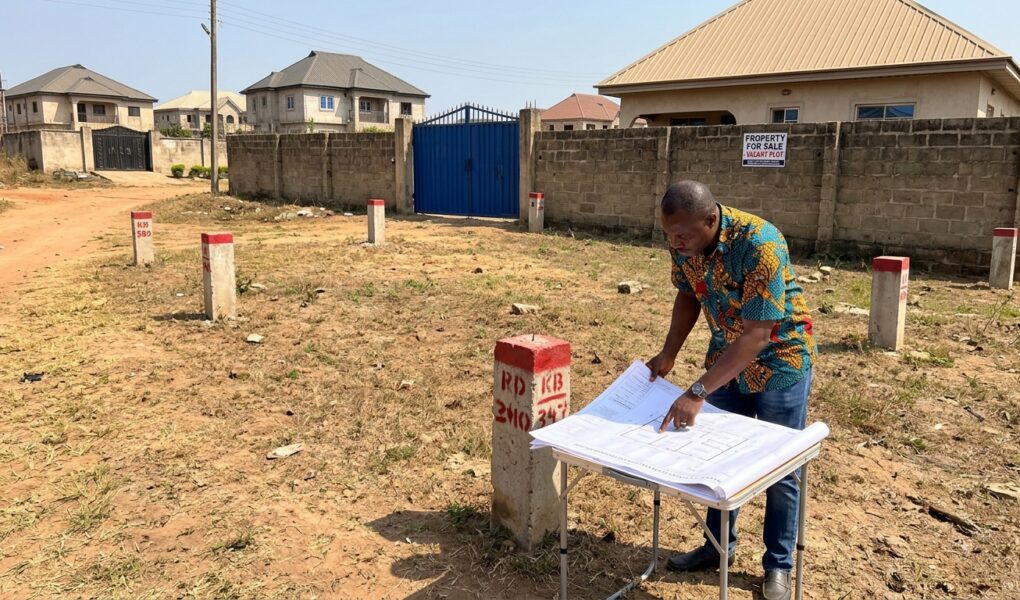
Buying land in Nigeria is a significant investment, whether you intend to build a family home, develop rental properties, or hold the land for future appreciation. However, owning a plot of land without developing it comes with risks that many property owners underestimate.
Vacant land can attract encroachers, fraudulent sellers, trespassers, and individuals who may attempt to claim ownership of a property simply because the rightful owner rarely visits it. In some cases, a landowner may return after several months to discover that someone has erected a fence, started construction, or even sold the same plot to another buyer.
These situations can lead to expensive legal disputes, financial losses, and years of uncertainty.
The good news is that you can take practical steps to reduce these risks. From verifying your documents and marking your boundaries to conducting regular inspections and keeping your ownership records secure, protecting vacant land requires consistent attention.
This guide explains how to protect vacant land from encroachment and illegal sales in Nigeria, especially if you own land that you do not intend to develop immediately.
1. Keep Your Land Documents Complete and Secure
One of the most important steps in protecting vacant land is maintaining accurate records of your ownership.
Many land disputes become more complicated because owners cannot quickly produce the documents needed to support their claims. Others discover that their paperwork contains errors, incomplete information, or inconsistencies that make verification difficult.
Depending on how you acquired the land, your documents may include:
- A Deed of Assignment or other relevant transfer instrument.
- An appropriate survey plan prepared by a licensed surveyor.
- A purchase receipt and evidence of payment.
- An allocation letter, where applicable.
- A Certificate of Occupancy, where applicable.
- Evidence of registration and Governor’s Consent, where required.
- Relevant family or customary land documents, where applicable.
- Records of applicable land charges and payments.
Not every property will have every document listed above. The appropriate documents depend on the nature of the land, its title, the transaction history, and applicable legal requirements.
Keep your original documents in a secure location and maintain clear digital copies. Store copies separately from the originals so that you can access your records if physical documents are lost or damaged.
Practical tip: Create a dedicated folder for each property. Include the purchase date, seller’s details, survey information, payment evidence, legal documents, and records of subsequent transactions.
2. Verify the Land Title and Complete Necessary Registration
Having a receipt or a survey plan does not automatically establish that your land title is valid or that the property cannot be claimed by another person.
Before assuming that your investment is fully protected, confirm that the person who sold the land had the legal authority to do so and that the transaction was properly documented.
Depending on the property, the verification process may involve:
- Searching the relevant State Land Registry.
- Examining the chain of ownership.
- Confirming the authenticity of relevant title documents.
- Checking the survey plan with the appropriate survey authority.
- Investigating whether the land is affected by government acquisition or other restrictions.
- Confirming whether registration or Governor’s Consent is required and whether it has been obtained.
These checks are particularly important when buying family land, land sold through agents, or property in a developing area where documentation may be incomplete.
A registered document is important, but registration alone should not replace a thorough investigation of the seller’s title and the property’s status.
Practical tip: Engage an independent property lawyer to review your documents and identify any outstanding legal steps. Where necessary, use a licensed surveyor to confirm the land’s location and boundaries.
3. Mark the Boundaries With Proper Survey Beacons
A vacant plot with unclear boundaries can become vulnerable to disputes.
A neighbouring landowner may mistakenly extend a fence into your property, or someone may deliberately move boundary markers to occupy additional land. In other situations, two people may have survey plans that appear to describe overlapping plots.
To reduce these risks, ensure that the land’s boundaries are accurately established on the ground.
A licensed surveyor can use the relevant survey information to locate the plot, identify its corners, and establish appropriate boundary markers.
You should also confirm that the physical boundaries correspond with the survey plan and other relevant records.
Do not rely solely on trees, informal markers, wooden stakes, or directions given by people familiar with the area.
Practical tip: Photograph the boundary beacons after the surveyor has identified them. Record their positions and retain the surveyor’s details and report.
If a beacon disappears or appears to have been moved, arrange a professional verification rather than repositioning it based on guesswork.
4. Fence the Land Where Practical and Lawful
Fencing is one of the most visible ways to discourage unauthorised access to vacant land.
A clearly marked perimeter makes it easier for neighbours and passers-by to recognise the boundaries. It can also discourage people from treating the property as unused community space.
However, fencing must be done carefully. Constructing a wall in the wrong position can create the very boundary dispute you are trying to prevent.
Before fencing your land:
- Confirm the boundaries with a licensed surveyor.
- Check any applicable planning and building requirements.
- Confirm whether there are restrictions affecting the plot.
- Obtain any necessary approvals.
- Use a reputable contractor.
- Inspect the completed fence to ensure that it follows the verified boundaries.
If a full perimeter fence is not affordable, you may consider other lawful ways to make the boundaries visible while planning for more substantial protection.
Remember that a fence does not establish ownership by itself. Its purpose is to discourage unauthorised access and make the land’s boundaries more obvious.
Practical tip: Do not rush into fencing simply because another landowner has fenced an adjoining plot. Verify your own boundaries first.
5. Visit the Land Regularly
One of the biggest mistakes vacant landowners make is purchasing a plot and leaving it unattended for years.
Even if your documents are complete, a lack of regular monitoring can allow problems to develop without your knowledge.
During an inspection, look for:
- New fences or walls near your boundaries.
- Fresh excavation or foundation work.
- Buildings appearing on or near the plot.
- Crops planted without your permission.
- Removed or damaged beacons.
- Materials stored on the land.
- Signs of unauthorised occupation.
- Changes to access routes or surrounding boundaries.
Regular visits also help you remain familiar with changes in the surrounding neighbourhood.
If you live far from the property, arrange inspections through a trusted person and ask for dated photographs or videos after each visit.
Practical tip: Establish a routine inspection schedule based on the property’s location and risk level. For example, you might inspect monthly or quarterly, with more frequent checks if nearby development is rapid or you have previously experienced boundary problems.
6. Employ a Trusted Caretaker When Necessary
If your land is located far from where you live, you may find it difficult to inspect it frequently.
In such cases, a reliable caretaker can help monitor the property, report suspicious activity, and notify you when intervention is needed.
However, selecting the right person is essential.
A caretaker should understand that their role is to monitor the property and report issues, not to sell, lease, transfer, or otherwise dispose of the land without your express authority.
Consider documenting the arrangement in writing. The agreement should specify the caretaker’s responsibilities, payment terms, reporting requirements, and limits of authority.
You should also maintain direct contact with nearby residents so that you are not relying entirely on one person.
Practical tip: Require regular inspection reports with dated photographs. Keep the original title documents and other important ownership records under your control rather than handing them to the caretaker unnecessarily.
7. Make Your Ownership Known to Neighbours
Building a good relationship with people living around your vacant land can provide an additional layer of protection.
Neighbours may notice unusual activities before you do. They may see someone measuring the plot, removing boundary markers, dumping materials, or telling others that the property is available for sale.
If they know how to contact you, they can alert you when something appears suspicious.
You do not need to disclose sensitive personal information or publicise every detail of your investment. The objective is to establish reasonable communication with people who can help you monitor the property.
Consider introducing yourself to nearby residents, sharing an appropriate contact number, and explaining that you own the plot.
Where community arrangements are relevant, you may also communicate with recognised community representatives while independently retaining control of your legal documents.
Practical tip: Maintain a record of important communications and avoid relying on informal assurances when dealing with ownership disputes or requests involving your land.
8. Never Allow Anyone to Sell Your Land Without Clear Authority
Illegal sales can occur when someone falsely claims to represent a landowner or uses an informal relationship to persuade a buyer that they have permission to sell.
For example, a person employed to clear vegetation on your property might begin telling prospective buyers that the land is available. Someone with access to your documents might also attempt to misrepresent their authority.
To reduce these risks, clearly define who is permitted to act on your behalf.
If you appoint an agent to market the property, use a written agreement that specifies the agent’s authority and limitations.
If another person is authorised to complete a transaction, have the arrangement reviewed by a lawyer and ensure that the necessary legal requirements are satisfied.
Never allow someone to assume that they can sell your land simply because they are a relative, caretaker, community representative, or long-standing associate.
Practical tip: Keep control of your original documents, monitor advertisements involving your property, and confirm any proposed sale directly through a secure communication channel.
If you are not selling the land, make that position clear to anyone who has legitimate reason to manage or monitor it on your behalf.
9. Protect Your Documents From Misuse
Fraudulent land transactions may involve altered documents, forged signatures, misleading copies, or the unauthorised use of an owner’s identity.
You should therefore treat your property records as important financial documents.
Avoid casually distributing complete copies of your title documents to people whose identities and purposes you have not verified.
When documents must be shared with a lawyer, surveyor, prospective buyer, or government office, keep a record of what was supplied and why.
Where appropriate, use copies marked with the intended recipient and purpose. Such markings do not guarantee protection against fraud, but they can help establish how a copy was originally provided.
Secure your email account and other digital locations containing property records.
Practical tip: If an unfamiliar person contacts you claiming to have purchased your land, do not immediately assume the claim is genuine or false. Request relevant information, preserve the communication, and have your lawyer independently investigate the claim.
10. Monitor Your Land Registry and Survey Records
A landowner should not assume that keeping documents at home is enough to identify every potential problem.
Where appropriate, conduct periodic checks with the relevant land administration authorities, especially if the property is valuable, has a complicated ownership history, or is located in a rapidly developing area.
Depending on the state and property, checks may help establish whether relevant records have changed or whether there are issues concerning the registered interest, survey information, or restrictions affecting the land.
You should also retain evidence of any registration, consent, or other required process completed after the original purchase.
The available search procedures and records differ between states, so the appropriate steps should be confirmed locally.
Practical tip: Ask your property lawyer what type of periodic registry or survey verification is available for your specific land. Do not assume that every state has the same online search facilities or that every transaction is automatically reflected in a public database.
11. Be Careful When Allowing People to Use Your Vacant Land
Sometimes, a neighbour or community member may request permission to use your vacant land temporarily.
They may want to cultivate crops, store building materials, park a vehicle, or use part of the plot for another purpose.
Although such arrangements may appear harmless, they can create confusion if the terms are not clear.
A person who begins using land with permission may later disagree about the duration or nature of that permission. In other cases, temporary use can make it harder to identify when an unauthorised occupation began.
If you decide to allow temporary use, document the arrangement properly.
Specify the permitted activity, duration, conditions, and requirement to stop using the land when the arrangement ends. Have a lawyer prepare or review the agreement where appropriate.
Do not rely on a vague verbal promise when the property represents a substantial investment.
Practical tip: If someone is already occupying your land under an informal arrangement, seek legal advice before attempting to remove them. The correct procedure will depend on the facts and the applicable law.
12. Watch Out for Signs of Illegal Land Sales
Fraudulent sellers may advertise vacant land that they do not own or have no authority to transfer.
In other situations, a genuine owner may have already sold the property to another buyer, while a second person attempts to sell it again.
Warning signs may include:
- Unauthorised signs advertising the land for sale.
- Strangers inspecting or measuring the plot.
- Agents claiming to represent you without permission.
- Someone requesting payment from prospective buyers.
- New boundary markers appearing without your knowledge.
- Conflicting ownership claims.
- Unexplained changes to access routes.
- Reports from neighbours that someone is marketing the property.
A single sign does not automatically prove fraud. Nevertheless, it should prompt you to investigate promptly.
Practical tip: Preserve evidence of suspicious advertisements, messages, signs, or activities. If someone is claiming ownership, have a lawyer compare the claim with the relevant documents and registry records.
Where there is credible evidence of attempted fraud, consider reporting the matter to the appropriate authorities.
13. Keep Clear Records of Your Visits and Activities
Documentation can be important when you need to establish what happened to your land and when you became aware of a problem.
Create a simple record of every inspection, including the date, people present, observations, and actions taken.
Take photographs of the boundaries, access routes, surrounding properties, and any notable changes.
Keep copies of letters, messages, caretaker reports, surveyor reports, and receipts for maintenance work.
If you clear vegetation, repair a boundary marker, or carry out authorised work, record the activity and retain evidence of the expense.
These records may help your lawyer assess a dispute if one develops.
Practical tip: Maintain a digital folder with dated photographs and a separate backup of important documents. Avoid editing original evidence in ways that remove relevant information or make it difficult to establish its authenticity.
14. Act Quickly if Someone Encroaches on Your Land
If you discover that someone has entered your property, started construction, moved a boundary marker, or erected a fence, do not ignore the situation.
However, you should also avoid taking matters into your own hands.
A sensible response involves establishing the facts, preserving evidence, and obtaining appropriate professional advice.
Take the following steps:
Step 1: Document the situation. Photograph and record the suspected encroachment from a safe and lawful position.
Step 2: Verify the boundary. Engage a licensed surveyor to compare the physical situation with the relevant survey information.
Step 3: Gather your documents. Assemble the deed, survey plan, payment records, title documents, and previous inspection reports.
Step 4: Consult a property lawyer. Ask the lawyer to assess the ownership claim and advise on the appropriate response.
Step 5: Send a formal notice where appropriate. Your lawyer may communicate with the person involved or take other steps suited to the circumstances.
Step 6: Consider formal remedies. Depending on the facts, this may involve reporting suspected criminal conduct, approaching an appropriate government agency, pursuing mediation, or seeking relief through the courts.
Do not demolish a structure, seize another person’s property, or use threats or violence to resolve the dispute. Such actions can create additional legal and personal risks.
15. Know What to Do if Someone Sells Your Land Illegally
Discovering that someone has sold your land to another person can be particularly distressing.
The first step is to establish exactly what happened.
Was the land sold by someone who forged your signature? Did an agent exceed their authority? Did the original seller transfer the same property to multiple buyers? Or is the dispute based on overlapping survey plans or competing claims to family land?
These situations are not identical, and the appropriate response will depend on the evidence.
Collect all relevant documents, including the original purchase records, title documents, communications with the seller, and evidence of the disputed transaction.
Have a property lawyer investigate the competing claims and advise you on the available remedies.
Where fraud is reasonably suspected, you may need to report it to the appropriate law-enforcement agency. A civil claim may also be necessary to establish title, prevent further dealings, or seek other remedies available under the law.
If another buyer has begun construction, act promptly to obtain legal advice. Do not assume that the dispute will resolve itself simply because you purchased the property first.
Practical tip: Preserve evidence and avoid making public accusations that you cannot substantiate. Let your lawyer guide the legal response based on verified facts.
16. Use Legal Notices and Court Orders When Necessary
In some cases, an informal discussion or a written request may resolve a misunderstanding. In others, the dispute may require formal legal action.
Depending on the circumstances, your lawyer may recommend a formal demand, mediation, an application for an injunction, or proceedings to establish ownership and address the alleged encroachment.
An injunction may be particularly relevant when there is a risk that construction, occupation, or another transaction will make the dispute more difficult to resolve.
The appropriate remedy depends on the evidence, the nature of the dispute, and the applicable law.
Do not assume that every encroachment can be resolved by sending a notice or that every ownership dispute requires the same court process.
Practical tip: Seek legal advice as soon as you identify a credible threat to your property. Delays can complicate evidence gathering and may affect the remedies available in your particular case.
17. Consider Technology for Monitoring Vacant Land
Technology can make it easier to monitor property, particularly when you own land in another city or state.
Depending on the location and available facilities, you may use:
- A caretaker’s smartphone photographs and inspection reports.
- Dated photographs from regular visits.
- Security cameras where power and connectivity permit.
- Satellite imagery for observing broader changes.
- Digital records of surveys and boundary coordinates.
- Mapping tools to help identify the property’s general location.
For large plots or multiple properties, a structured digital monitoring system can help you identify changes more quickly.
However, satellite images and online maps do not necessarily establish legal ownership or accurately show every boundary. They should supplement, not replace, professional surveying and legal verification.
Practical tip: Keep an updated digital record of the plot’s location, boundary information, access routes, and physical condition. Ensure that your surveyor can help you interpret the information when a boundary issue arises.
18. Make a Long-Term Protection Plan for Your Land
Protecting vacant land is not a one-time activity. It requires a practical system that continues for as long as you own the property.
Your protection plan should include:
- Secure and complete ownership documents.
- Verification of relevant registration requirements.
- Accurate boundary demarcation.
- Regular physical inspections.
- A trusted caretaker when necessary.
- Good communication with neighbouring residents.
- Prompt investigation of suspicious activities.
- Records of every important property-related action.
- A plan for obtaining legal help if a dispute develops.
You should review the plan periodically, especially when nearby development increases or you receive reports of new activity in the area.
If you own several plots, create a separate record and inspection schedule for each one.
Practical tip: Treat vacant land like any other valuable asset. Do not assume that its value alone will protect it from unauthorised occupation or fraudulent dealings.
A Practical Checklist for Protecting Vacant Land in Nigeria
Use this checklist to review the current protection of your property.
- I have the relevant ownership and purchase documents.
- I have verified the seller’s title and my transaction records.
- I have confirmed the plot’s location and boundaries with a qualified surveyor.
- The boundary markers are visible or their locations are documented.
- I have considered fencing or other appropriate boundary protection.
- I inspect the property regularly.
- A trusted person monitors the land if I live far away.
- Nearby residents know how to contact me about suspicious activities.
- No one has authority to sell or transfer my land without proper authorisation.
- My digital and physical records are stored securely.
- I document visits, maintenance, and changes to the property.
- I know which lawyer to contact if an ownership dispute develops.
If you cannot tick several of these boxes, consider addressing the gaps before the property becomes the subject of a dispute.
Final Thoughts
Vacant land can be a valuable long-term asset, but leaving it unattended can expose you to encroachment, unauthorised occupation, boundary disputes, and illegal sales.
The strongest approach combines sound documentation, verified boundaries, regular monitoring, secure control of your records, and prompt action when suspicious activity occurs.
Remember that no single measure guarantees complete protection. A fence may discourage trespass, but it does not prove ownership. A receipt may show payment, but it does not replace a thorough title investigation. A caretaker may help monitor the plot, but that person should not have unrestricted authority over your property.
If you own vacant land in Nigeria, establish a protection routine now rather than waiting until someone challenges your ownership.
The best time to protect your land is before a dispute begins. The earlier you identify a problem, preserve evidence, and obtain appropriate advice, the better prepared you will be to protect your investment.
Disclaimer: This article provides general property information, not legal advice for a specific dispute. Land documentation, registration requirements, and remedies vary according to the property and applicable state law. Consult a qualified Nigerian property lawyer and licensed surveyor when necessary.