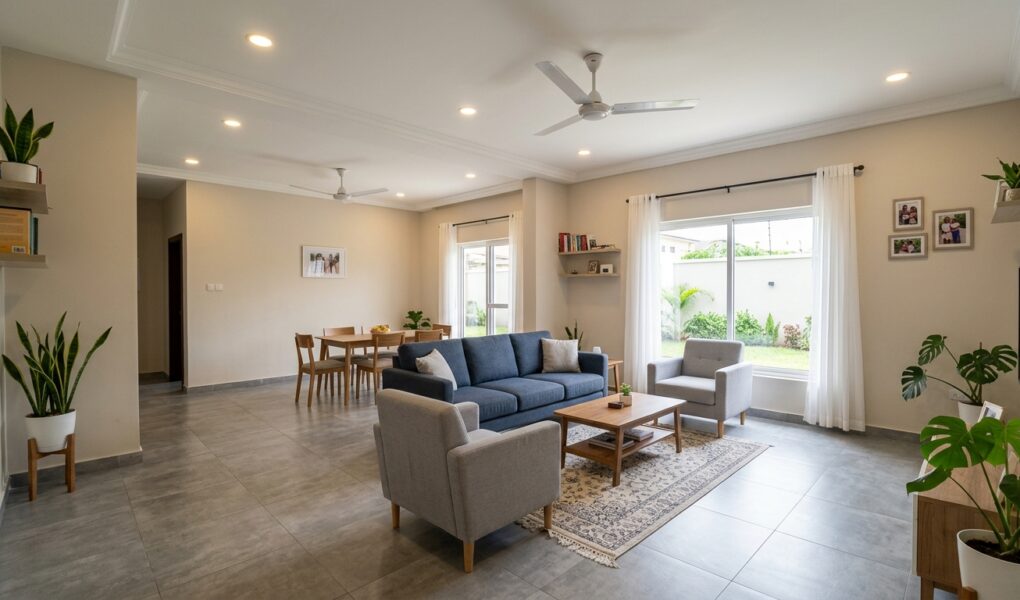
Building a house in Nigeria is a major financial commitment. From buying land and laying the foundation to roofing and completing the interior, every stage requires careful planning and spending. However, one area where many homeowners waste money is house finishing.
House finishing includes plastering, POP ceilings, floor tiles, painting, lighting, doors, windows, kitchen cabinets, wardrobes, bathroom fittings, and other details that make a building comfortable and attractive. While these features improve the appearance and usability of a house, some finishing choices can consume a large portion of your budget without providing enough practical value.
If you are building your own house or developing a property for rental income, understanding where to spend and where to save can help you avoid unnecessary expenses.
In this guide, you will learn how to avoid wasting money on unnecessary house finishing in Nigeria while still creating a beautiful, durable, and comfortable home.
1. Decide Your Finishing Budget Before Starting
One common mistake homeowners make is beginning finishing work without deciding how much they can afford to spend.
You might start with ordinary tiles, affordable lighting, and simple ceiling designs. However, after visiting a showroom or seeing a neighbour’s newly completed house, you may become interested in more expensive materials and designs.
These small upgrades can quickly increase your total spending.
Before starting, prepare a finishing budget that covers essential items such as:
- Floor and wall finishes.
- Ceiling installation.
- Painting and decorative work.
- Doors and windows.
- Electrical fittings and lighting.
- Plumbing fixtures and bathroom fittings.
- Kitchen cabinets and wardrobes.
- Labour, transportation, and installation.
- A contingency fund for unexpected expenses.
Request quotations from different suppliers and artisans before making major purchases. Set a spending limit for each category and avoid exceeding it simply because a more expensive option looks attractive.
Practical tip: Keep a written record of every finishing expense. This makes it easier to identify unnecessary purchases before they damage your budget.
2. Focus on Functionality Before Luxury
Your house should first serve its purpose as a comfortable and functional place to live. Decorative features should come after the essentials.
For example, a well-installed ceiling that conceals wiring and provides a neat appearance may be more valuable than an elaborate POP design with multiple layers, decorative shapes, and expensive lighting.
Similarly, durable floor tiles that are easy to clean may be a better investment than imported luxury tiles that cost several times more but provide little additional practical benefit.
Before paying for any finishing feature, ask yourself three questions:
- Does it improve the comfort or functionality of the house?
- Will it last long enough to justify its cost?
- Is there a less expensive alternative that can achieve the same result?
If the answer to these questions does not justify the expense, consider removing the feature from your plan.
3. Avoid Excessive POP Ceiling Designs
POP ceilings can improve the appearance of a house, but elaborate designs can significantly increase finishing costs.
Some homeowners spend heavily on multiple ceiling levels, decorative borders, hidden lighting, and complex patterns in nearly every room.
These features are not always necessary, particularly in bedrooms, corridors, storage areas, and properties intended for rental purposes.
Instead, consider a simple ceiling design that suits the size and purpose of each room. You can reserve more decorative designs for selected areas, such as the living room, if they fit your budget.
Also, ensure that the ceiling design allows reasonable access to electrical connections and other services that may require maintenance.
Remember that a simple, well-executed ceiling can look better than an elaborate design installed poorly.
4. Choose Tiles Based on Durability, Not Just Appearance
Tiles are among the finishing materials that can consume a large amount of money, especially when you select premium products for every part of the house.
Before choosing tiles, consider the room, expected usage, maintenance requirements, slip resistance, and replacement cost.
For example:
- Living room: Choose durable tiles that complement the room’s design and are easy to maintain.
- Bedrooms: Affordable, attractive tiles may be sufficient because these rooms usually experience less traffic than common areas.
- Bathrooms: Prioritise slip resistance and suitability for wet areas rather than appearance alone.
- Kitchen: Choose tiles that are easy to clean and appropriate for the conditions in the kitchen.
- Outdoor areas: Use materials suitable for outdoor exposure and local weather conditions.
You do not necessarily need the most expensive tiles in every room. A coordinated combination of affordable materials can produce an attractive result without excessive spending.
However, do not compromise on proper installation, suitable adhesives, waterproofing, or surface preparation. Poor workmanship can make inexpensive tiles costly in the long run.
5. Do Not Copy Another Person’s House Finishing
One of the easiest ways to waste money is to copy another homeowner’s finishing choices without considering your own financial situation.
Your neighbour may install imported lighting, expensive marble finishes, luxury sanitary fittings, a decorative staircase, or custom-made furniture. However, that person may have a different income, budget, property purpose, or long-term financial plan.
What is affordable for one homeowner may create serious financial pressure for another.
Instead of competing with friends, relatives, or neighbours, identify the finishing features that matter most to you.
If your budget is limited, concentrate on durability, comfort, ventilation, lighting, security, and ease of maintenance.
A beautiful home does not have to contain every expensive feature available in the market.
6. Avoid Expensive Wall Designs in Every Room
Decorative wall panels, artificial stone, wall mouldings, textured finishes, and feature walls can improve interior design. However, installing them throughout the house can add considerable cost.
You may not need decorative wall treatments in every bedroom, corridor, dining area, and living room.
A more affordable approach is to use good-quality paint throughout the house and select one or two areas for decorative treatment if your budget allows.
For example, you could create a feature wall behind the television or use a simple decorative finish in the living room while keeping other walls plain.
This approach creates visual interest without making every room expensive to complete.
Choose wall finishes that are easy to clean, appropriate for the room, and unlikely to require frequent repairs.
7. Be Careful With Imported Finishing Materials
Imported finishing materials can be attractive, but their total cost may include shipping, customs-related charges, transportation, handling, installation, and possible replacement delays.
Some locally available materials may offer comparable performance at a lower overall cost.
Before importing a product or choosing an expensive foreign brand, compare it with locally available alternatives.
Consider:
- Purchase price.
- Transportation and installation costs.
- Availability of replacement parts.
- Ease of future repairs.
- Warranty and after-sales support.
- Durability under local conditions.
Imported materials are not automatically bad investments, and local products are not automatically better. The important thing is to compare quality, suitability, and total ownership cost rather than choosing a product because of its origin.
8. Avoid Installing Too Many Decorative Lights
Lighting is important, but excessive decorative lighting can increase the cost of electrical installation and the number of fittings you need to purchase.
Some homeowners install multiple chandeliers, recessed spotlights, LED strips, wall lights, and decorative fixtures in rooms where simpler lighting would be sufficient.
Before installing decorative lights, plan how each room will be used.
A practical lighting plan should provide adequate illumination for daily activities, with additional decorative lighting only where it adds value.
Also consider electricity consumption, replacement costs, heat, maintenance, and access to fittings that may need repairs.
For many homes, a combination of good general lighting and a few carefully selected decorative fixtures is enough.
Always use a qualified electrician to ensure that the electrical installation is safe and suitable for the intended fittings.
9. Do Not Spend Too Much on Kitchen Cabinets and Wardrobes
Custom-made kitchen cabinets and wardrobes can be expensive, especially when they include imported accessories, elaborate finishes, specialised hinges, premium handles, and complex designs.
However, the most expensive design is not necessarily the most useful.
Before ordering cabinets, determine how much storage you actually need. Measure the available space and consider how you will use the kitchen or bedroom.
You can reduce costs by choosing practical layouts, standard sizes where suitable, durable materials, and simple finishes.
Do not pay for unnecessary compartments or decorative accessories that will rarely be used.
At the same time, avoid choosing materials that are unsuitable for moisture-prone areas. A cheaper cabinet that deteriorates quickly may cost more to replace than a moderately priced, durable option.
If your budget is tight, you can complete essential storage first and add optional features later.
10. Choose Sanitary Fittings That Offer Good Value
Bathrooms and toilets often attract unnecessary spending because homeowners want them to resemble luxury hotel bathrooms.
Expensive shower systems, premium taps, imported water closets, decorative mirrors, and elaborate bathroom accessories can quickly increase costs.
Instead, prioritise water efficiency, durability, ease of cleaning, availability of spare parts, and compatibility with your plumbing system.
A moderately priced water closet, reliable taps, suitable shower fittings, and good waterproofing can create a functional bathroom without excessive spending.
Do not cut corners on plumbing pipes, drainage, waterproofing, or installation quality to afford decorative bathroom items. Hidden defects can be much more expensive to repair after the house is completed.
11. Buy Materials Based on Measurements
Buying more finishing materials than you need can lead to unnecessary expenses.
For example, purchasing excessive quantities of tiles, paint, wall panels, ceiling materials, or decorative accessories may leave you with unused stock that cannot be returned.
On the other hand, buying too little can result in additional transportation expenses, delays, and difficulties matching the original material if it becomes unavailable.
Ask your builder or relevant professional to calculate the required quantities based on accurate measurements.
Include a reasonable allowance for cutting, breakage, and wastage where appropriate. The allowance will depend on the material, room layout, and installation method.
Keep receipts and maintain an inventory of materials delivered to the site.
Proper measurement helps you purchase what the project requires without tying up too much money in unnecessary stock.
12. Compare Prices Before Buying Finishing Materials
Do not assume that the first shop you visit offers the best price.
The cost of tiles, doors, lighting, paint, sanitary fittings, and other finishing materials can vary between suppliers.
Obtain quotations from at least three reputable suppliers when making substantial purchases.
However, do not compare prices alone. Confirm the product specification, brand, size, quality, warranty, delivery fee, and return policy.
A supplier offering a lower price may be selling a different grade or specification of the same-looking product.
Also, calculate transportation costs, particularly when buying heavy materials from distant markets.
The goal is to obtain the best overall value, not simply the lowest advertised price.
13. Hire Skilled Artisans Instead of Choosing the Cheapest
Trying to save money by hiring unqualified artisans can lead to expensive finishing problems.
Poor tile installation, uneven plastering, leaking bathrooms, badly fitted doors, faulty wiring, and poorly installed ceilings can require repairs or complete replacement.
Before hiring an artisan, ask to see previous work, request references where possible, and agree on the scope of work and payment schedule.
For major finishing jobs, document the specifications and inspect the work at important stages.
Paying a fair price for competent workmanship can save money over time, even if the initial labour cost is higher.
Avoid paying the entire labour fee upfront without a clear agreement and reasonable progress checks.
14. Complete Essential Finishing Before Optional Upgrades
If your budget is limited, do not attempt to install every finishing feature at once.
Prioritise the items necessary to make the house safe, functional, weatherproof, and suitable for occupation.
Depending on the condition of the building and applicable requirements, these may include:
- Completing essential electrical and plumbing work.
- Ensuring adequate waterproofing and drainage.
- Installing suitable doors and windows.
- Completing safe and functional floors and walls.
- Providing adequate lighting and ventilation.
- Installing functional bathroom and kitchen facilities.
- Addressing security and other essential requirements.
Optional features such as decorative wall panels, luxury chandeliers, elaborate ceiling designs, and premium accessories can be considered later.
However, do not postpone work that would be difficult or expensive to complete after occupation, such as concealed wiring, plumbing, waterproofing, or work that requires opening finished walls.
The best approach is to distinguish between work that must be completed properly now and decorative additions that can wait.
15. Avoid Frequent Changes After Work Has Started
Changing your mind repeatedly during finishing can waste money.
For example, you may approve one tile design, then decide to replace it with a more expensive option after installation has started. You may also change the ceiling design, move electrical points, or request different bathroom fittings after the relevant work has been completed.
These decisions can lead to material wastage, extra labour charges, delays, and rework.
Prepare your finishing plan before purchasing materials or beginning installation.
Where possible, confirm colours, dimensions, materials, and layouts using samples and written specifications.
If a change becomes necessary, ask the artisan or contractor to explain the additional cost before approving it.
A little planning can prevent expensive changes later.
16. Think About Future Maintenance, Not Just Initial Cost
A finishing material may be affordable today but expensive to maintain.
For instance, a delicate surface that stains easily, a specialised light fitting with hard-to-find replacement parts, or a low-quality bathroom fixture that frequently leaks may create recurring expenses.
When choosing materials, consider how easily they can be cleaned, repaired, and replaced.
This is especially important if you intend to live in the house for many years or rent it to tenants.
The best finishing decisions balance initial cost, expected lifespan, maintenance requirements, and practical usefulness.
You do not need to buy the most expensive product. You need to choose a product that is suitable for the job and offers reasonable long-term value.
17. Match Your Finishing Budget to the Purpose of the Property
The right finishing budget depends partly on why you are building the house.
If you are building your personal home
Spend according to your family’s needs, comfort, and long-term plans. It may be worth paying more for features you will use every day, provided they fit your finances.
If you are building a rental property
Prioritise durable, attractive, easy-to-maintain materials that suit the tenants you want to attract. Expensive custom finishes may not produce enough additional rental income to justify their cost.
If you are building to sell
Consider the preferences of likely buyers in your target market. A clean, functional, well-finished property may be more appealing than one with highly personalised decorative choices.
If you are building on a tight budget
Complete essential work properly and postpone optional upgrades. Avoid borrowing heavily simply to install luxury finishes that are not necessary for safe occupation.
The goal is not to make every house look the same. It is to spend according to the property’s purpose and your financial capacity.
18. Use a Simple Finishing Budget Checklist
Before approving any finishing expense, use this checklist:
- Have I included this item in my budget?
- Is it necessary for safety, functionality, comfort, or durability?
- Have I compared at least a few suitable alternatives?
- Have I confirmed the quality and specification?
- Is the quantity based on accurate measurements?
- Have I included labour, transportation, and installation?
- Will replacement parts or repairs be easy to obtain?
- Could a simpler design achieve the same result?
- Will this expense delay more important work?
- Have I kept enough money for unforeseen expenses?
If an item fails this assessment, reconsider whether it is worth buying immediately.
Frequently Asked Questions
What is the most expensive part of house finishing in Nigeria?
There is no single answer because costs depend on the size and design of the building, material choices, location, labour rates, and current prices. Tiles, ceilings, doors and windows, kitchen cabinets, electrical fittings, plumbing, and sanitary fixtures can all represent significant expenses.
The best way to identify your largest costs is to obtain a detailed bill of quantities or finishing schedule for your particular building.
Can I finish my house with affordable materials and still make it beautiful?
Yes. Good design does not depend entirely on expensive materials. Consistent colours, suitable lighting, neat workmanship, simple ceiling designs, well-selected tiles, and uncluttered spaces can create an attractive home.
Focus on coordinating materials and executing the work properly rather than purchasing the most expensive option in every category.
Should I install POP in every room?
Not necessarily. The decision should depend on your design, budget, room requirements, and maintenance preferences. Simple ceiling finishes may be sufficient in bedrooms and other areas, while a more decorative design can be reserved for selected spaces.
Is it better to buy all finishing materials at once?
Not always. Buying early may help you plan your budget, but purchasing materials too far in advance can create storage, damage, theft, and cash-flow problems. Some materials also have specific storage requirements.
Buy according to your construction schedule, available storage, supplier terms, and expected price changes. Confirm measurements and specifications before making large purchases.
Should I use the cheapest finishing materials to save money?
No. The cheapest option may have poor durability, difficult maintenance requirements, or a higher risk of failure. Compare quality, suitability, installation requirements, and expected lifespan before deciding.
Saving money means avoiding unnecessary spending, not sacrificing essential quality.
Final Thoughts
Avoiding unnecessary house-finishing expenses in Nigeria does not mean building an unattractive or uncomfortable home. It means making deliberate decisions about where your money will produce the greatest benefit.
Set a realistic budget, compare suppliers, measure accurately, choose durable materials, hire competent artisans, and avoid copying expensive designs simply because other homeowners have them.
Most importantly, distinguish between essential finishing work and optional luxury upgrades.
A well-planned house is not necessarily the one with the most expensive finishing. It is the one that meets your needs, stays within your financial capacity, and remains comfortable and affordable to maintain over time.