Buying land in Nigeria can be a smart investment, but only when the price reflects the property’s actual value. A plot may look attractive, have a good location, and come with an impressive sales pitch, yet still be overpriced.
The challenge is knowing whether the seller is asking for a fair price or simply taking advantage of your interest in the property.
Before paying for land in Lagos, Abuja, Ibadan, Ogbomoso, or any other part of Nigeria, you need to understand the factors that influence land value, how to compare prices, and how to identify warning signs that a plot is not worth its asking price.
In this guide, you will learn practical ways to estimate the value of a plot of land and make a more informed buying decision.
1. Compare the Asking Price With Similar Plots Nearby
One of the easiest ways to determine whether land is overpriced is to compare it with similar plots in the same area.
Do not compare a plot in a developing community on the outskirts of a city with land in an established neighbourhood close to major roads, schools, markets, and commercial centres. Their values may differ significantly.
Instead, investigate at least three to five comparable plots and consider the following factors:
- The location and accessibility of each plot.
- The size of the land.
- The quality of the surrounding environment.
- Road access and available infrastructure.
- The property’s title and documentation.
- Whether the land is in a developed, developing, or remote area.
For example, suppose a seller is asking ₦12 million for a standard residential plot. You discover that comparable plots nearby are advertised for ₦8 million, ₦9 million, and ₦10 million.
The ₦12 million asking price deserves further investigation. However, it is not automatically unreasonable. The plot might have better road access, superior documentation, or other advantages that justify the difference.
Remember that asking prices are not necessarily actual transaction prices. Where possible, speak with local property agents, recent buyers, and landowners to establish what similar plots have actually sold for.
2. Confirm the Actual Size of the Plot
A plot’s advertised size can influence its price, so never rely entirely on the seller’s description.
In Nigeria, people commonly refer to a standard plot as approximately 50 × 100 feet, but plot dimensions vary by location, estate layout, and local planning requirements. Always confirm the actual measurements.
A licensed surveyor can help you establish the plot’s boundaries, dimensions, and area.
Consider this example:
- Plot A: 500 square metres, asking price of ₦10 million.
- Plot B: 400 square metres, asking price of ₦10 million.
Plot A costs approximately ₦20,000 per square metre, while Plot B costs ₦25,000 per square metre.
Use this formula to calculate the asking price per square metre:
Price per square metre = Asking price ÷ Land area in square metres.
This calculation makes it easier to compare properties of different sizes, provided they are reasonably similar in location, legal status, shape, and development potential.
3. Investigate the Location’s Current Market Value
A seller may claim that a plot is worth ₦20 million because a major road, shopping centre, or housing development is expected nearby.
Future development can increase land values, but you should not pay a premium based entirely on promises.
Investigate what the neighbourhood is worth today.
Check whether it has:
- Good road access throughout the year.
- Electricity and other essential services.
- Reliable drainage and a manageable flood risk.
- Nearby homes, businesses, schools, or markets.
- Public transport and reasonable access to employment centres.
- Evidence of genuine demand from buyers and developers.
Visit the area yourself, preferably more than once. A location that looks attractive during a dry-season inspection may become difficult to access during heavy rainfall.
Also distinguish between existing infrastructure and proposed projects. Verify major government or private development announcements through reliable sources before treating them as a reason to pay more.
A plot in a developing area can still be a good purchase, but its price should reflect both its current condition and the risks involved in waiting for future growth.
4. Check the Land’s Ownership and Documentation
A plot may be cheaper than comparable properties because its ownership documents are incomplete, disputed, or difficult to verify. Conversely, a seller may charge more because the title is properly documented.
Before agreeing to the price, investigate the land’s ownership history and legal status.
Depending on the transaction, relevant documents may include:
- A registered deed of assignment.
- A Certificate of Occupancy (C of O), where applicable.
- A registered survey plan.
- An allocation letter or other evidence of the original grant, where relevant.
- Previous title documents establishing the chain of ownership.
The exact documents required depend on the type of land and how ownership was acquired. Do not assume that a receipt or family land agreement alone proves that the seller has an unrestricted right to sell.
Engage an independent property lawyer to conduct appropriate searches at the relevant state land registry and other relevant offices. A licensed surveyor should also verify the plot’s location and boundaries.
Remember that good documentation can support a higher price, but it does not automatically make an overpriced plot a good investment.
5. Determine Whether the Land Is Suitable for Your Intended Use
A plot is only worth what its permitted uses and physical characteristics make practical for your plans.
For instance, land that appears affordable may be unsuitable for residential construction because of flooding, poor access, planning restrictions, or expensive ground preparation.
Before buying, investigate:
- Whether the land is approved for your intended development.
- Whether there are restrictions on the type or size of building you can construct.
- Whether drainage, soil conditions, or elevation could increase construction costs.
- Whether legal access to a public road is available.
- Whether government acquisition, road setbacks, easements, or other restrictions affect the plot.
If you intend to build a house, consider the total cost of making the land usable, not just its purchase price.
For example, a ₦9 million plot that requires ₦3 million in additional site preparation may be less attractive than a suitable ₦10 million plot that requires only ₦500,000 in preparation.
These figures are illustrative, not estimates of current market costs.
6. Calculate the Total Cost of Buying the Land
One common mistake buyers make is comparing plots using only their advertised prices.
The actual cost of acquiring land may include legal fees, survey expenses, title verification, registration, documentation, agency commissions, and other applicable charges.
Create a complete cost estimate before deciding whether the asking price is affordable.
For example:
- Land purchase price: ₦10,000,000.
- Legal and title verification: ₦200,000.
- Survey and related checks: ₦150,000.
- Documentation and registration allowance: ₦250,000.
Estimated total acquisition cost: ₦10,600,000.
These are hypothetical figures only. Obtain current quotations and confirm the actual statutory charges applicable to your transaction.
When comparing two plots, calculate their total acquisition costs rather than focusing only on the advertised prices.
7. Find Out Why the Seller Is Selling
The seller’s circumstances can influence how much room there is for negotiation.
Some sellers need money urgently and may accept a reasonable offer below their original asking price. Others may be unwilling to negotiate because they have already received competing offers.
Ask appropriate questions about:
- Why the land is being sold.
- How long it has been on the market.
- Whether the asking price has changed.
- Whether previous buyers have made offers.
- Whether any dispute or unresolved issue has discouraged buyers.
Do not automatically assume that a seller who wants a quick sale is offering a bargain. A low price may reflect a genuine problem with the land.
Independently verify the ownership and property details before negotiating or making payment.
8. Estimate the Land’s Potential for Future Appreciation
If you are buying land as an investment, its potential to appreciate should form part of your decision.
However, future appreciation is not guaranteed. A neighbourhood may develop more slowly than expected, infrastructure projects may be delayed, or demand may weaken.
Look for evidence of sustainable growth, including:
- New residential developments and occupied homes.
- Improved transport links and existing infrastructure.
- Growing demand for housing or commercial space.
- Employment opportunities and expanding economic activity.
- Recent comparable sales that support the asking price.
Avoid paying an exceptionally high price solely because an agent promises that the land will double in value within a year.
Instead, compare the price you are paying today with the area’s current market evidence and your investment time horizon.
If you are buying to resell, also consider selling costs, applicable taxes or levies, documentation expenses, and the possibility that finding a buyer could take longer than expected.
9. Negotiate Based on Evidence, Not Emotion
Once you have researched the market, checked the land’s condition, and established its legal status, you can negotiate from a stronger position.
Suppose your research suggests that similar plots are selling for approximately ₦9 million to ₦10 million, but the seller wants ₦12 million.
Rather than simply demanding a discount, explain the comparable prices you found and any additional expenses or disadvantages that affect the plot’s value.
You can negotiate using:
- Recent sales of similar plots.
- Differences in size and location.
- The cost of necessary site preparation.
- Unresolved documentation or infrastructure issues.
- The total cost of completing the transaction.
Never make a non-refundable deposit simply because the seller claims another buyer is waiting. Agree on appropriate conditions and have the transaction reviewed by your lawyer.
10. Consider Hiring a Professional Valuer
When a plot is expensive or the price difference between comparable properties is substantial, consider hiring a registered estate surveyor and valuer.
A professional valuation can help you assess the property’s market value using relevant evidence rather than relying solely on an agent’s opinion or the seller’s expectations.
This is especially useful when purchasing land for a housing development, buying several plots, investing a substantial portion of your savings, or resolving a disagreement about price.
For professional land and property valuation in Nigeria, you can consult the Estate Surveyors and Valuers Registration Board of Nigeria (ESVARBON) to check the relevant professional registration and regulatory information.
Example: Is a Plot Asking for ₦12 Million Worth It?
Imagine you want to buy a residential plot with the following details:
- Seller’s asking price: ₦12 million.
- Estimated market value based on comparable plots: ₦9 million to ₦10 million.
- Estimated site preparation: ₦800,000.
- Other acquisition expenses: ₦300,000.
If the comparable market evidence is reliable, the asking price may be high relative to similar plots. The additional expenses make the difference more significant.
In this situation, you should investigate further and negotiate before making a commitment. However, first establish whether the comparable plots are genuinely similar and whether the property has advantages that justify its premium.
The goal is not necessarily to buy the cheapest land. It is to buy a suitable, legally secure plot at a price supported by evidence.
Checklist Before Paying for Any Plot of Land in Nigeria
Before committing your money, make sure you have completed these important steps:
- Compare prices of at least three similar plots.
- Confirm the plot’s actual size and boundaries.
- Investigate ownership and verify title documents.
- Check planning restrictions and government acquisition status.
- Inspect road access, drainage, soil, and flood risks.
- Calculate legal, survey, and other acquisition costs.
- Investigate the seller’s asking price and reason for selling.
- Assess realistic demand and future appreciation potential.
- Negotiate based on comparable prices and verified facts.
- Have an independent lawyer review the transaction.
Completing these checks can help you avoid expensive mistakes and make a more informed property purchase.
Conclusion
Knowing whether a plot of land is worth its asking price requires more than comparing the seller’s figure with your available budget. You must investigate comparable property prices, confirm the actual land size, verify ownership, assess the location, and calculate the total cost of acquisition.
A plot is worth considering when its price is supported by market evidence, its legal status is satisfactory, and it meets your intended use without exposing you to unreasonable financial risk.
The best approach is simple: research before negotiating, verify before paying, and never allow the fear of losing a deal to replace proper due diligence.
SEO DETAILS
SEO Title: How to Know If a Plot of Land Is Worth Its Asking Price
Meta Description: Learn how to determine whether a plot of land in Nigeria is worth its asking price by comparing property values, verifying ownership, and calculating costs.
URL Slug: how-to-know-if-land-is-worth-asking-price
Focus Keyword: How to know if land is worth the asking price
Secondary Keywords:
- Land valuation in Nigeria
- How to determine land value
- Land prices in Nigeria
- Cost of buying land in Nigeria
- Property valuation tips
- How to avoid overpaying for land
- Land investment in Nigeria
Category: Nigeria Real Estate Tips
Tags: Land Valuation, Buying Land in Nigeria, Property Prices, Real Estate Investment, Land Buying Tips, Property Due Diligence
Image SEO Details
Featured Image Filename: how-to-know-if-land-is-worth-asking-price.jpg
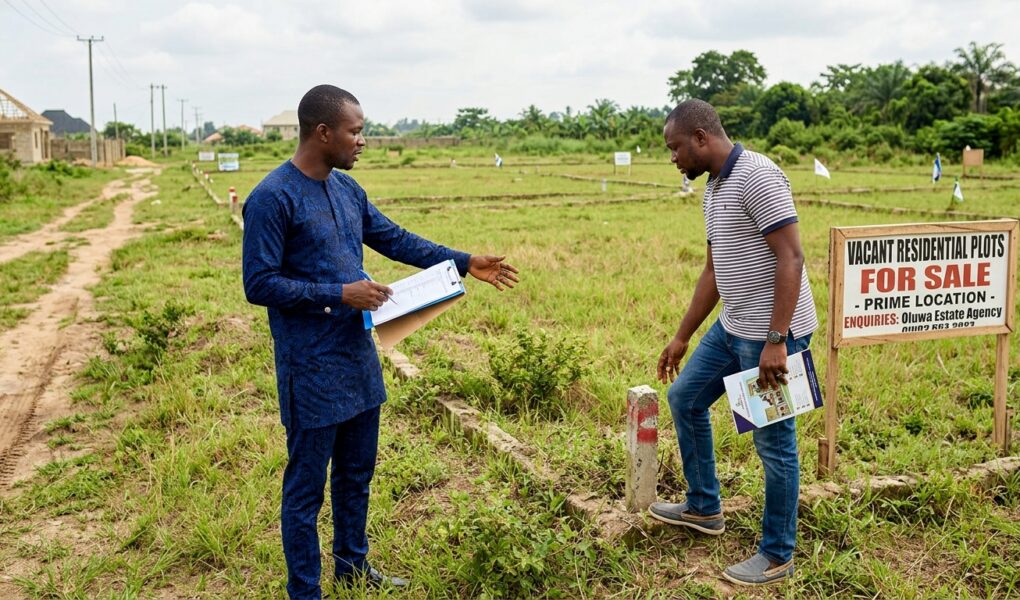
Image Alt Text: A property buyer and estate agent inspecting a residential plot of land in Nigeria.
Image Title: How to Know If a Plot of Land Is Worth Its Asking Price
Image Caption: Compare land prices, verify ownership, and assess a plot’s condition before paying.
Image Description: A buyer examines a vacant residential plot with an estate agent to evaluate its location, land value, and suitability for purchase in Nigeria.
Recommended Image Dimensions: 1200 × 675 pixels.
Recommended Image Format: WebP for faster loading and optimized website performance.