
Buying land is often presented as one of the safest ways to build wealth in Nigeria. You may hear people say, “Buy land now because this area will soon develop.”
That advice can be useful—but it can also make people rush into buying properties in locations they would never consider living in or regularly visiting.
One situation deserves particular caution:
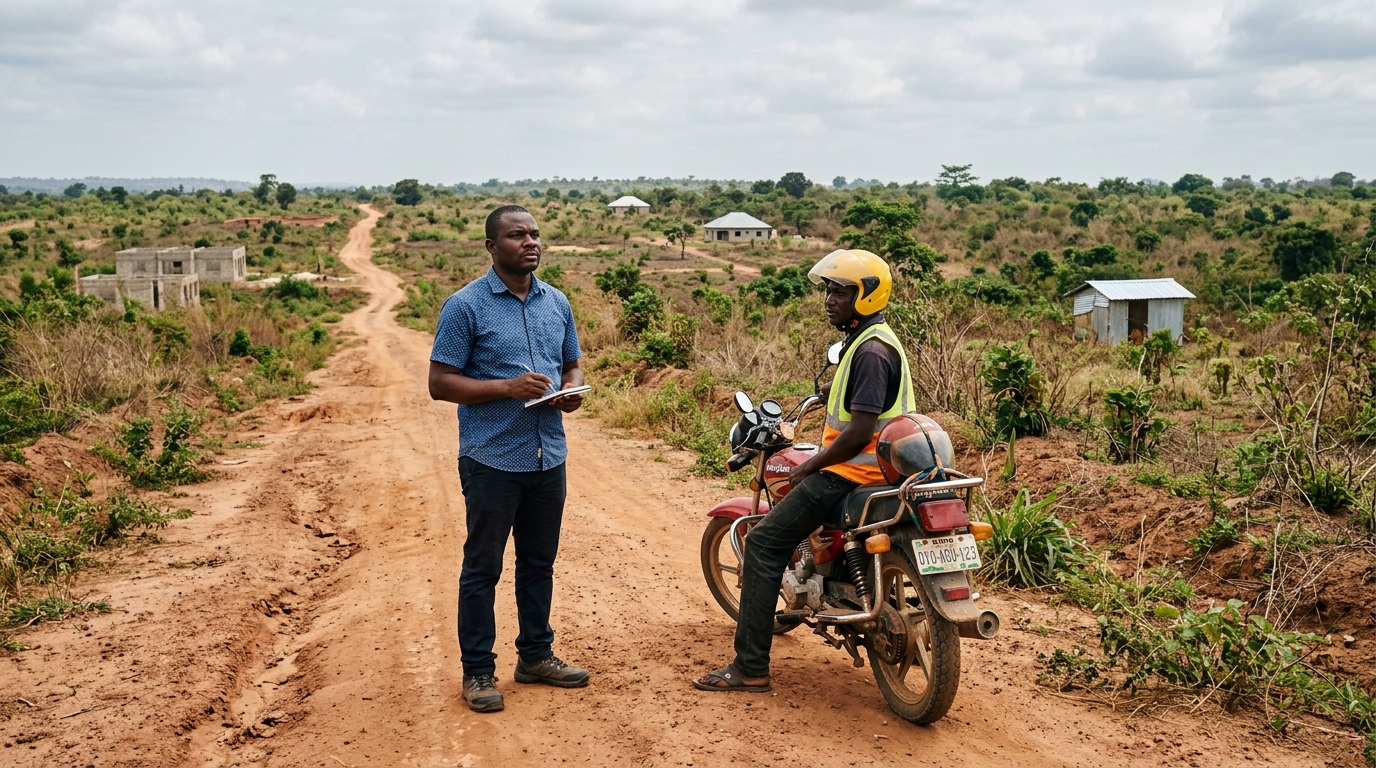
You have to take a cab, motorcycle or another form of transportation from the main road for 30 minutes to one hour before you can even reach the land.
Maybe the seller tells you the area is developing.
Maybe you are told that a major road is coming.
Maybe the land is extremely cheap compared with properties closer to town.
But before you pay for that land, stop and think carefully.
Cheap land is not always a bargain.
Sometimes, the low price is simply reflecting the fact that the property is difficult to access.
If Getting to the Land Is Already Difficult, Pay Attention
Imagine you want to inspect a piece of land.
You drive to the nearest major road, park your vehicle and then have to take a motorcycle for another 40 minutes.
Or perhaps you need to enter a cab that takes you through an unpaved road, dusty paths, narrow streets and poorly developed areas before reaching the property.
Ask yourself:
Would you be comfortable doing this repeatedly?
You may only be thinking about buying the land today.
But ownership can mean visiting that property many times over the years.
You may need to go there to inspect it, clear the land, fence it, build on it, monitor construction, resolve issues or eventually sell it.
That convenient-looking investment may become a constant inconvenience.
Don’t Buy Land Just Because It Is Cheap
One of the biggest mistakes people make when buying land is focusing almost entirely on price.
Someone may show you two plots:
- Plot A costs significantly more but is easily accessible by car.
- Plot B is much cheaper but requires a 30–60-minute motorcycle or cab journey from the main road.
The cheaper option may look like the obvious winner.
But property value is not determined by price alone.
Location and accessibility matter.
A piece of land that is difficult to reach may remain difficult to sell, difficult to develop and difficult to use.
You could eventually discover that the reason it was cheap in the first place was because many buyers simply don’t want the inconvenience.
Think About What Happens When You Want to Build
This is where the problem can become even bigger.
Buying the land is one thing.
Building on it is another.
If you eventually decide to construct a house, how will construction materials get there?
Think about:
- Cement
- Sand
- Granite
- Blocks
- Iron rods
- Roofing materials
- Doors and windows
- Plumbing materials
- Electrical materials
If trucks and delivery vehicles cannot easily reach the property, getting materials to the site can become more complicated and expensive.
Contractors and workers also need to travel there.
You may have to spend additional money arranging transportation.
That cheap land may therefore become expensive before the first block is even laid.
What If You Want to Live There?
This is perhaps the most important question.
If you are buying the property simply to hold for many years, accessibility may be less of an immediate concern.
But if your plan is to build your family home, think carefully.
Do you really want to live somewhere that requires a motorcycle or cab journey of 30–60 minutes before you reach the main road?
Consider your daily routine.
What happens when you are going to work?
What happens when your children are going to school?
What happens when you need to buy something urgently?
What happens when you need to visit a hospital?
What happens when it rains heavily?
What happens when you return home late at night?
Don’t buy land based only on today’s price. Think about the life that will exist around that land tomorrow.
Don’t Depend on “The Road Is Coming Soon”
This is one of the most common arguments used to make buyers feel comfortable about remote property.
“Don’t worry. The government will soon construct the road.”
“This whole area will soon be developed.”
“A major estate is coming.”
“People will soon start moving here.”
Maybe those things will happen.
But maybe they won’t happen when you expect.
And even if development eventually comes, you don’t know whether it will happen in two years, five years, ten years or much longer.
Never spend your hard-earned money solely on a promise about future development.
If the road does not exist today, treat the current accessibility as the reality.
Future development should be a bonus—not the only reason you are willing to buy.
Consider the Resale Problem
You should always think about your exit strategy when investing in property.
What happens if you need your money back?
What happens if you want to sell the land after three years?
Who is going to buy it?
If you found the location difficult to reach, other potential buyers may have the same concern.
You could end up with a property that is technically valuable but difficult to sell quickly.
This is particularly important if you are buying land purely as an investment.
Don’t only ask, “Can I afford this land?”
Ask:
“Will somebody else want to buy this land from me later?”
Poor Accessibility Can Affect Security
A remote property may also create security concerns.
If there are very few houses around the area and the access road is poorly developed, the property may be difficult to monitor.
You should consider:
- How many people live around the area?
- Are there occupied houses nearby?
- Is the road busy?
- Is there lighting?
- How accessible is the area at night?
- How quickly can help reach the property?
A property that is isolated today may not necessarily remain unsafe forever, but you should not ignore the present situation simply because someone says the area will eventually develop.
What Happens During the Rainy Season?
Never judge a remote property only during perfect weather.
An access road can look perfectly manageable on a dry afternoon and become extremely difficult after heavy rainfall.
Ask residents:
“Can cars reach this place during the rainy season?”
Also ask:
“Does this road get flooded?”
“How long does the road remain bad after rainfall?”
These questions can reveal problems that a sales agent may not volunteer.
If possible, inspect the area under different conditions.
Transportation Costs Can Become a Hidden Expense
Let’s say you spend ₦3,000 to ₦5,000 each time you travel from the main road to the property and back.
At first, that may not seem significant.
But if you regularly visit the property, the costs can accumulate.
And remember that you may not be the only person paying transportation costs.
If you build there, workers, contractors, surveyors, engineers and suppliers may also need to deal with the difficult access.
Those additional costs can eventually affect the total value of your investment.
Don’t Confuse “Developing Area” With “Good Investment”
This distinction is extremely important.
Not every undeveloped area will become a successful neighbourhood.
A salesperson may point at empty land and say:
“Look at all this space. In a few years, everywhere will be developed.”
But property development requires more than empty space.
You need infrastructure, roads, population growth, economic activity, services and demand.
Instead of asking only:
“Will this place develop?”
Ask:
“What evidence do I have that this place is actually developing?”
Look for real signs—not just predictions.
Sometimes, Walking Away Is the Smart Investment Decision
There is nothing wrong with telling a seller:
“Thank you, but this location is not suitable for me.”
You don’t have to buy land simply because the price is attractive.
You don’t have to buy because someone says the price will increase.
And you certainly don’t have to buy because you are afraid that someone else will purchase it before you.
There will always be another property.
Your money deserves careful consideration.
If the location already makes you uncomfortable, don’t allow the excitement of getting cheap land to override your judgment.
A Simple Rule to Remember
Before buying land that requires a 30–60-minute cab or motorcycle journey from the main road, ask yourself these five questions:
1. Can I comfortably access this property today?
If the answer is no, take that seriously.
2. Would I still want this property if the promised road development never happened?
If the answer is no, you may be relying too heavily on speculation.
3. How much will accessibility cost me over the years?
Calculate transportation and construction-related costs.
4. Would another buyer want this property later?
Think about resale demand.
5. Am I buying because the property is genuinely good—or simply because it is cheap?
This last question can save you from a costly mistake.
Final Thoughts: Don’t Let Cheap Land Trap Your Money
There is nothing inherently wrong with buying land outside the city or in a developing community.
But extreme inconvenience should be a warning sign—not something you simply ignore because the land is cheap.
If reaching the property requires a 30-minute, 45-minute or one-hour cab or motorcycle journey after leaving the main road, think very carefully before committing your money.
The longer and more difficult the journey, the more questions you should ask about:
- Road access
- Transportation costs
- Security
- Construction expenses
- Future development
- Resale demand
- Flooding
- Infrastructure
- Documentation
- Your intended use of the property
And if you cannot find convincing answers, walk away.
You don’t need to own every piece of land that is offered to you.
Sometimes the best property investment you can make is the one you decide not to buy.
Before you pay for that “cheap” piece of land far from the main road, remember:
If getting there is already a problem before you buy it, ownership may not make the problem disappear.