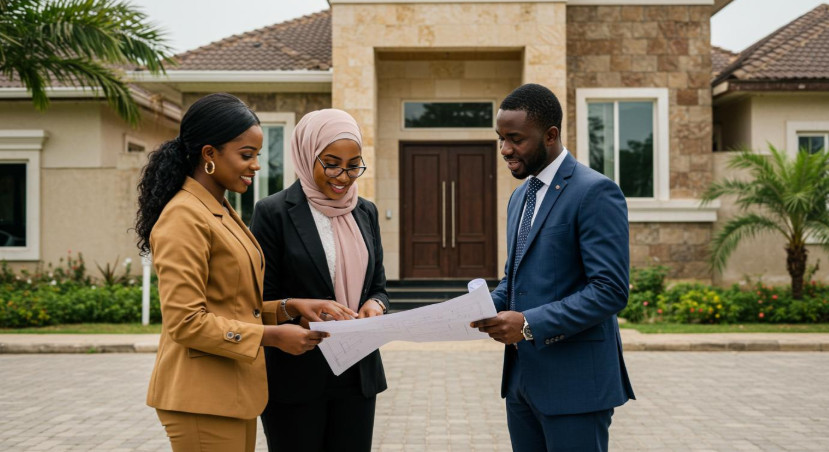

Buying a house is one of the biggest financial decisions you can make in Nigeria. Whether you are buying your first home, moving to a better location, or purchasing property as an investment, the process can be exciting—but it can also become very expensive if you make the wrong decision.
From buying a property with questionable ownership to underestimating renovation costs, skipping legal checks, or paying too much for a house, there are several mistakes that can turn your dream home into a financial burden.
The good news is that most of these mistakes are avoidable.
With proper research, professional advice, and careful financial planning, you can significantly reduce the risks involved in buying a house in Nigeria.
Here are the important things to consider before handing over your money.
1. Know How Much You Can Actually Afford
The first mistake many prospective homeowners make is starting their property search before determining their actual budget.
Knowing that you have ₦50 million available does not necessarily mean you should buy a ₦50 million house.
You also need to consider other expenses associated with the purchase.
Depending on the property and location, you may have to budget for:
- Legal fees
- Agency fees
- Survey costs
- Property searches
- Stamp duty
- Registration fees
- Renovation or repairs
- Moving expenses
- Security and estate charges
- Utility connections
- Taxes and other government-related charges
For example, someone who has ₦40 million available may be better off looking at properties around ₦32–₦35 million rather than spending the entire ₦40 million on the purchase price.
Always leave room for unexpected expenses.
2. Choose the Location Carefully
A beautiful house in the wrong location can become a poor investment.
Before buying, investigate the area thoroughly.
Consider factors such as:
- Road accessibility
- Electricity supply
- Water availability
- Drainage
- Security
- Proximity to schools
- Hospitals and healthcare facilities
- Markets and shopping areas
- Public transportation
- Traffic conditions
- Flooding history
- Future development
Do not judge a location solely by visiting during the weekend or during good weather.
Visit the area at different times of the day if possible.
A neighbourhood that looks peaceful at 11 a.m. could have serious traffic, flooding or accessibility problems during the rainy season or evening rush hour.
3. Don’t Rely Only on the Estate Agent
A real estate agent can help you find properties and negotiate with sellers, but you should independently verify important information.
Do not assume that everything an agent tells you about a property is automatically correct.
Ask questions about:
- Who owns the property?
- What title does the property have?
- Is there an existing mortgage?
- Is the property involved in a dispute?
- Are there outstanding government issues?
- Are there unpaid charges?
- Is the property within an acquisition area?
- Are there existing tenants?
- Why is the owner selling?
An agent’s job is often to facilitate a transaction. Your job as the buyer is to protect your money.
4. Verify the Seller’s Ownership
One of the most important steps when buying a house in Nigeria is confirming that the person selling the property actually has the legal right to sell it.
Do not simply accept statements such as:
“This is my family property.”
or
“I have all the documents.”
Ownership should be independently verified.
Depending on the circumstances, you may need to examine documents such as:
- Certificate of Occupancy (C of O)
- Deed of Assignment
- Deed of Conveyance
- Governor’s Consent
- Survey Plan
- Registered title documents
- Probate or letters of administration where applicable
If the property belongs to an estate or family, additional documentation and consent may be necessary.
This is one area where hiring a qualified property lawyer can save you from potentially losing millions of naira.
5. Conduct a Proper Property Search
Never make a major payment for a house simply because the seller has shown you property documents.
Documents can be incomplete, outdated, or even fraudulent.
A proper search should be conducted with the relevant authorities to establish the status of the property.
The exact process varies depending on the location and type of property.
Your lawyer can help determine:
- Whether the title is registered
- Whether the seller’s ownership is legitimate
- Whether there is an encumbrance on the property
- Whether the property has been pledged or mortgaged
- Whether there are competing claims
- Whether government acquisition affects the land
This step may cost money, but it is considerably cheaper than discovering a major title problem after completing the purchase.
6. Get a Surveyor to Confirm the Property
A survey is not just another document to put in your file.
It can help establish the property’s location, boundaries and relationship to surrounding land.
Before buying, consider engaging a registered surveyor to verify the property.
This is particularly important when buying land or a house where the exact boundaries are unclear.
A professional survey can help identify problems such as:
- Encroachment
- Boundary disputes
- Incorrect measurements
- Wrong location information
- Overlapping claims
- Development restrictions
Never assume that the physical property you are being shown perfectly matches the description in the documents.
7. Inspect the House Thoroughly
A house can look perfect during a short inspection and still have expensive hidden problems.
Before buying, inspect the property carefully.
Look at:
Roof
Check for leaks, damaged roofing sheets, weak structures and signs of previous water damage.
Walls
Look for cracks, dampness, peeling paint and unusual stains.
Plumbing
Check taps, toilets, drainage systems, water tanks and pipes.
Electrical System
Check sockets, switches, wiring, distribution boards and the general condition of the electrical installation.
Doors and Windows
Check whether they open properly and whether locks and frames are in good condition.
Foundation and Structure
Major structural problems can be extremely expensive to repair.
If you are unsure about the condition of the building, hire a qualified building professional or structural engineer to inspect it.
Spending money on an inspection before buying is better than discovering a ₦10 million repair bill after moving in.
8. Investigate the Property’s Flood Risk
Flooding is an important consideration when buying property in many parts of Nigeria.
Do not rely solely on what the seller says.
Ask neighbours about the area’s history during heavy rainfall.
Look at:
- Drainage systems
- Road levels
- Nearby waterways
- Previous flood marks
- Ground elevation
- Estate drainage
- Access roads
If possible, visit the property during or shortly after heavy rainfall.
A cheap house that regularly floods may eventually cost more than a more expensive property in a safer location.
9. Find Out Why the Property Is Being Sold
The seller’s reason for selling can provide useful information.
There is nothing inherently wrong with selling a property, but you should understand the circumstances.
Ask whether the sale is because of:
- Relocation
- Financial pressure
- Inheritance
- Business reasons
- Family disagreements
- Divorce
- Debt
- Property disputes
- Development issues
If the seller is unusually desperate to complete the transaction immediately, slow down rather than rushing to pay.
Pressure is one of the most common tools used in questionable property transactions.
10. Be Careful With “Urgent Sale” Properties
You may come across advertisements saying:
“Urgent Sale!”
“Owner Relocating!”
“Distress Sale!”
“Below Market Price!”
Sometimes these are genuine opportunities.
Other times, they are used to pressure buyers into making quick decisions.
Before paying, verify why the property is being sold and whether the documents are clean.
A bargain is only a bargain if you actually acquire good title to the property.
11. Don’t Pay Money Without Proper Documentation
Avoid making large payments based only on verbal promises.
Before making substantial payments, make sure the transaction has been properly documented and reviewed by a qualified professional.
Your lawyer should help you understand the relevant agreement and ensure the transaction reflects what you have actually agreed to purchase.
Keep copies of:
- Agreements
- Receipts
- Payment evidence
- Property documents
- Survey documents
- Correspondence
- Identification documents
- Relevant searches and reports
Bank transfers and other payment records should also be retained.
12. Use a Property Lawyer
Hiring a lawyer may seem like an additional expense when you are already spending millions on a house.
However, it can be one of the most valuable expenses in the entire transaction.
A qualified property lawyer can help with:
- Title verification
- Property searches
- Contract review
- Deeds
- Ownership verification
- Government records
- Existing encumbrances
- Negotiation
- Completion documentation
Do not choose a lawyer simply because someone recommended them as “cheap.”
When millions of naira are involved, experience and competence matter.
13. Don’t Assume a C of O Means Everything Is Fine
A Certificate of Occupancy is an important property document, but buyers should not treat the presence of a C of O as a substitute for all other due diligence.
You still need to establish that the person selling the property has the right to sell it and that the particular transaction can legally be completed.
Your lawyer should examine the entire chain of title and relevant records.
The important question isn’t simply:
“Does this property have a C of O?”
It is:
“Does this seller have good and transferable title to this particular property?”
14. Compare Similar Properties Before Making an Offer
Never assume that the first asking price you see is the property’s true market value.
Look at similar properties in the same area.
Compare:
- Location
- Land size
- Building size
- Age of the property
- Condition
- Road access
- Title documentation
- Estate facilities
- Security
- Amenities
Two houses in the same neighbourhood can have significantly different values because of their condition, documentation, location and other factors.
Research gives you a stronger position when negotiating.
15. Don’t Let Emotions Control the Purchase
Buying a home is emotional.
You may walk into a beautiful house, imagine your family living there and immediately decide that you must have it.
Try to separate emotion from the financial decision.
Ask yourself:
Would I still buy this property if I had never seen the interior decoration?
Focus on the fundamentals:
- Location
- Price
- Title
- Structure
- Accessibility
- Resale value
- Rental potential
- Neighbourhood
- Future development
Paint, tiles, chandeliers and furniture can be changed.
A problematic title or bad location is much harder to fix.
16. Think About Resale Value
Even if you are buying a house to live in, think about what happens if you eventually need to sell it.
Life circumstances can change.
You may relocate, expand your family, change jobs or decide to invest elsewhere.
A property with:
- Good access roads
- Strong documentation
- Good infrastructure
- Desirable location
- Quality construction
- Growing demand
will generally be easier to sell than a property with major disadvantages.
17. Don’t Ignore Neighbours and the Community
Talk to people who already live in the neighbourhood.
Neighbours can provide information that property advertisements will never mention.
Ask about:
- Security
- Flooding
- Water
- Electricity
- Noise
- Land disputes
- Community levies
- Road conditions
- Local problems
You may learn more from a 15-minute conversation with a neighbour than from an hour-long sales presentation.
18. Get Everything in Writing
Never rely on verbal agreements for major property transactions.
If the seller promises to repair the roof before completion, put it in writing.
If certain furniture or equipment is included, document it.
If the seller agrees to settle a particular outstanding charge, document it.
If there is a specific completion date, document it.
Written agreements reduce misunderstandings and provide evidence if disagreements arise.
19. Don’t Rush Because Someone Says Another Buyer Is Waiting
One common sales tactic is:
“Another buyer is ready to pay today.”
Sometimes it is true.
Sometimes it is simply designed to make you act quickly.
Do not skip title verification, inspection or legal review because you are afraid someone else will buy the property.
Losing a questionable property opportunity is better than losing your money.
20. Have a Final Checklist Before Paying
Before completing the purchase, confirm that you have addressed the major issues.
Your checklist should include:
- Property location verified
- Seller’s identity verified
- Ownership verified
- Title documents reviewed
- Property search completed
- Survey checked
- Building inspected
- Flood risk considered
- Property valuation researched
- Outstanding charges investigated
- Agreement reviewed by a lawyer
- Payment arrangements documented
- Completion requirements understood
- All relevant documents collected
If several important boxes remain unchecked, consider delaying the purchase.
Final Thoughts
Buying a house in Nigeria does not have to be a stressful or dangerous process.
The biggest protection is due diligence.
Do not allow excitement, pressure from an agent, a seemingly cheap price or fear of losing a property to make you skip important checks.
Research the location. Inspect the building. Verify ownership. Check the title. Conduct the necessary searches. Use qualified professionals. Understand every cost before committing your money.
Most importantly, remember that a house is not a good deal simply because it is beautiful or cheap.
A good property purchase is one where the price, location, condition, documentation and future value all make sense.
Taking a little more time before buying can save you years of financial stress later.